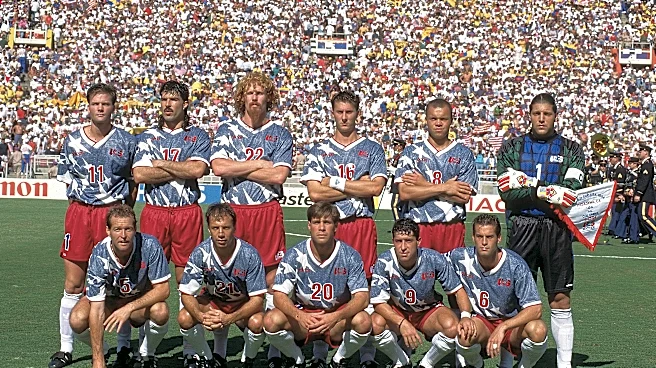






The World Cup provides host nations with a unique advantage in sports – every game is a home game. Host nations have reached the final in eight of 22 World Cups with six of them emerging as winners. Other teams have outperformed expectations. South Korea had one of the deepest runs in a World Cup by a nation not typically seen as a contender in 2002, Russia made the quarterfinals in 2018 after entering the tournament as deep underdogs, the USA made it out of the group in 1994 having only qualified
for one World Cup since 1950 until then, and Sweden reached the final in 1958 unexpectedly before losing to Brazil.
That said, home field hasn’t been kind to hosts in recent tournaments. Qatar and South Africa did not emerge from the groups when they hosted and Brazil had an uneven tournament before being blown out in 2014 by eventual champions Germany.
As the USMNT takes the field, the side faces questions and doubts about how far it can go this summer. After losses to Belgium and Portugal, manager Mauricio Pochettino told the press, “I think for sure Belgium and Portugal have in the top 100 players, a few or some playing in that top 100. I think we don’t have.” It was a direct response to a question about why the team struggled in those matches and one that points to the elephant in the room when it comes to the USMNT: the players are good but are not at the level of nations expected to reach the deep rounds of the tournament.
In those friendlies, the USA was supported by 70,000 plus fans in consecutive games in Atlanta. The home field support was there and the team played well for stretches but in the end couldn’t run with the big dogs. It will take more than home field for the side to make a run in the tournament.
While there have been memorable games, the USMNT does not have an excellent record in the World Cup. It has won a total of nine matches in 34 World Cup games since 1990. It has not won more than two games in a World Cup in that time. However, when the team has been at its best it’s gotten some surprising results and several games where the score line doesn’t do justice to an incredible team performance.
In 1994, the side beat Colombia and pushed Brazil in a hard fought game after getting out of the group. The 2002 World Cup saw the USA beat Mexico and Portugal before falling to Germany in a game featuring a missed handball that could have sent the team through to the semi-finals. In 2006 the team was desperate for a positive performance in a difficult tournament and came away with a gritty draw against eventual champions Italy. The 2010 World Cup saw the team with its back to the wall facing elimination in the group against Algeria only to come away with a last minute goal to advance.
In 2014, the team outplayed Portugal and was ahead 2-1 before a total debacle led to an equalizer at the death. While it was an example of snatching a draw from the jaws of victory, it was the team’s best match in the tournament. Most recently, the Americans held England to a 0-0 draw with the youngest team in the World Cup standing strong against a world soccer power.
In all of those games, the team thrived in high pressure situations where the players fought for each other. Where they played their club ball didn’t matter as these teams were made up of players representing semi-pro teams, graduates of the NCAA, the fledgling MLS, second divisions in Europe and leagues outside of the top 5 abroad. These were teams that didn’t have the most gifted soccer players technically, rather they relied on their strengths – athleticism, being tall on set pieces, and a chip on their shoulders to get surprise results.
Home field advantage will help the USMNT – there’s no question that playing on home soil in front of a crowd wearing red, white, and blue will give the team energy that it can feed off of. That said, it won’t be enough to win games.
The matches against Belgium and Portugal illustrate Poch’s comments and the limits to home field support. However, the Americans can match those countries when it comes to intensity and leverage its underdog mentality to get results thanks to counterattacks, resilience, opportunistic scoring, and – if we’re being honest – luck. It also will need Poch to conjure whatever magic he had with Tottenham when the club often punched above its weight. Playing in front of home fans won’t give the USMNT more players in the top 100, but it can raise belief and in a tournament where unexpected moments can become legendary – it can be the difference between triumph and disappointment.