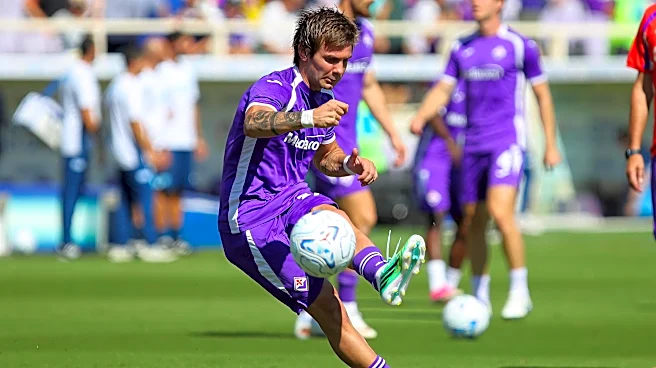


After 5 games of this season, one of the more interesting trends I’ve noticed across Serie A is the increase in long shots. This year, teams are averaging 5.02 shots from 0utside the box. Last year, that number was 4.4. In a lot of ways, that’s a good thing. The number of things that are funner to watch than someone line up to leather one from 25 yards out is vanishingly small. More opportunities to enjoy that can only be a positive thing, right?
Being the insufferable dork I am, I wanted to get a better
handle on why this is happening. My first thought was, alas, of the Premier League. England has the richest, most visible, and thus most powerful division in the world. That means the market often mirrors it, albeit with a slight delay. Over the past few years, the most notable trend in the EPL has been the increased focus on physicality. Big lads and getting it in the mixer are back. Bantamweight schemers and possession control are out. If you consume any media focused on tactics and analysis, you’ve noticed this.
As goes the Premier League, so goes the rest of the world. The increase in long shots might be Serie A noticing what’s happening in England and following suit. That doesn’t answer the question of why teams have decided to shoot more, though. I think it’s related to the increased importance of out-of-possession stuff. Every defensive game plan is about minimizing opposing opportunities in transition, which often means dropping back into a deep block as quickly as possible upon ceding possession. The basic principle is that you need to break down an opponent sitting in its own penalty area while not committing too many bodies forward.
One way to mitigate the danger of getting countered is increased shooting distance. It reduces the distance players have to retreat when they miss. For big teams worried about getting done on the break, that’s very important. For smaller teams playing on the break, long shots into a packed area can ricochet around, increasing chaos and proportionally loosening a bigger opponent’s control. This is a Fiorentina blog, of course, so I wanted to know how the Viola stacked up against Serie A as a whole in long shots. You know what’s coming. Chart time!
What we talk about when we talk about long shots
A few things jumped out to me here. The first is the precipitous decline in long shots during the Covid years. Smarter people than me have surmised that empty stadia meant players weren’t swayed by crowds screaming at them to shoot when space opened up outside the box. For Fiorentina, I’d argue that the decline in long shots mirrors the decline in total shots for those seasons and that the reason for both was the team’s overwhelming assness.
I was initially surprised to see that Fiorentina was well above average in distance shooting for a lot of these years. The Montella Era 1.0 featured plenty of guys who could spank one from distance (Josip Iličić, Alberto Aquilani, Matías Fernández, Facundo Roncaglia) but my impression was always more of clever interplay around the box slipping in a clever striker like Stevan Jovetić or Giuseppe Rossi to slide home a finish after a creative maestro like Borja Valero or David Pizarro played the killer pass.
Looking back, though, it made sense for those teams to shoot from range. They didn’t have an overwhelming physical presence in the box (sad Mario Gómez button) and thus had to create space for smaller players. One way to do that is to have shooters who scare opposing defenses such that they have to close them down farther away. That doesn’t just drag the defense forward, opening space in behind. It opens little pockets of space as defenders step up to prevent shots, pockets that smaller players can exploit.
The post-Montella 1.0 years all conform more or less to my recollection. Giacomo Bonaventura loved having a pop but nobody else under Vincenzo Montella was really a threat from range. His best attackers—Dušan Vlahović, Nicolás González, Arthur Cabral?—all did their damage close to the goal, so the gameplan was always getting the ball into them. Moise Kean is similarly a close-range finisher. And then we get to this season, in which Fiorentina’s 6.4 shots from outside the box is 1.38 more than league average.
Oh right, rate stats matter
This is probably a better visualization of the decline in long shots across Serie A over the past 15 years. Instead of looking at the total number of long shots, I graphed long shots as a percent of total shots. The decline over that 5-year period from 2015 to 2020 is even more noticeable here. Once again, I think this is an echo of Pep Guardiola: everyone saw his Manchester City refuse to shoot from distance and win everything and correlated those points.
That was, in a word, very dumb. Guardiola’s City was excellent for many reasons. I’ll restrict myself to the on-pitch stuff because I don’t want to derail this into a discussion about financial doping, cheating, and how sports and geopolitics interact (tl;dr not great, Bob) but Pep’s teams worked because he had access to a roster full of players that completely matched every bit of his tactics. Nobody else employed such a holistic approach to squad construction and playing philosophy. Jürgen Klopp’s Liverpool and Mikel Arteta’s Arsenal occasionally came close but the idiocy of trying to beat Man City by being Man City But Better At It was always starkly apparent.
Nevertheless, everyone wanted that success, leading to imitation instead of innovation. The decline of long shots was one of the more notable statistical results because it introduced an element of chaos to the game when the keystone for every tactical plan was control. It took a few years for everyone to realize that chaos isn’t the enemy, especially for underdogs. I think that partly explains the increase in long shots over the past half decade in Serie A.
The other thing to consider here is why teams shoot from distance. Sometimes it’s because they’ve got better players who strike the ball better and are thus more likely to score long shots. There’s a big difference between Roncaglia and Iličić shooting from 30 yards out but for surface-level analysis like this one, they’re indistinguishable events. Combine that with the previously-mentioned importance of shooting from distance to create more space in the box and there are reasons that better teams would want to take those. Conversely, teams that lack the quality to break down an opposing defense might find themselves restricted to hopeful pops from distance. Good teams might also be better at generating chances closer to goal and thus eschew farther ones a la Man City.
In Fiorentina’s case, I think it’s a bit of both over the past 15 years. Montella’s personnel and tactics meant that he wanted his guys to shoot it. Rather oddly for a former poacher, his coaching career has always relied on long shots; his Türkiye side let fly with such reckless abandon at the World Cup that the stat dorks couldn’t help but obsess over it, reawakening some recollections of his Viola tenure and helping plant the seed for this very article in my mind. Italiano, lacking the shooters, use a more risk-averse approach to shooting.
Yeah, but what about now? Right now?
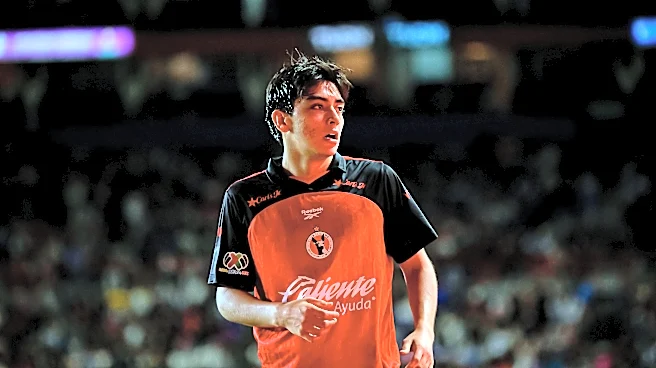
Here’s the part where I try to figure out what these lovely charts say about Paolo Vanoli’s Fiorentina. The dramatic increase doesn’t mean too much: Franco Mastantuono is taking 1.9 shots from outside the box per 90 minutes, but he’s still only 3rd on the team in per-90 attempts from outside the box. Weirdly enough, 3 of the other top 5 are gone: Moise Kean (3.3), Rolando Mandragora (2.6), and Albert Guðmundsson (1.3) played a combined 133 minutes. After just 5 games, that’s enough to nuke the numbers. It also bears mentioning that all their long shots came under Fabio Grosso.
It’s not surprising that players who know they’re leaving the team would take some self-indulgent shots, especially under a coach who in hindsight didn’t inspire much confidence. My guess is that the shots from distance will trend downwards over time. Nicolò Fagioli’s 1.5 shots/90 will likely decrease if he sticks at regista (oh hey) and of the remaining squad, only Arthur Atta (1.1) is taking over 1 shot from distance per 90. At Udinese, that was 0.8 and 0.9 (both under half his total shots for you rate stat fiends) so I’d expect a decline from him, too, although I could be wrong.
Cher Ndour can obviously hit them and isn’t afraid to do so, at least for the Azzurrini, so perhaps encouraging him to take those chances at club level will lead to similar results. Pedro Gonçalves is also a sniper but looks like staying glued to the bench for now. No one else has a reputation for long range shooting. Maybe someone like Alieu Njie or Christ Inao Oulaï will develop that ability over the course of the season but my guess is that Mastantuono, Fagioli, Gonçalves, and Ndour will be the primary threats to hit it from long.
How that impacts the rest of the attack is interesting. Mateo Pellegrino is a big lad who thrives on service into the box. If Fiorentina can leverage the threat of its long shooting, it could create more opportunities for him as passing angles open up. The other attack-minded players—Njie, Wilfred Gnonto, Beto—are transition threats more than deep block unlockers. More space obviously helps everyone but I don’t think they’ll get any massive boost in production from their teammates’ shooting.
The other consideration here is set pieces. More shots from distance will probably translate to more corner kicks. Fabio Paratici spent all summer getting in big lads and Vanoli’s playing them. Pellegrino and Beto are massive. So’s Radu Dragušin. Ndour, Atta, Viery, Víctor Valdpeñas, and Marco Brescianini aren’t typical aerial threats but they’re all big and strong and capable of blocking markers at set pieces and freeing up the real targets. Last year, the only guy who was better than average for his position in the air was Robin Gosens. Vanoli likely understands that he should lean into being beefy and part of that is embracing set pieces in a way he very much didn’t last year.
The inevitable conclusion
Okay, fine, I’ve got a little more to add. I think the trend around the world is to take more long shots because the elite teams are moving away from Guardiola-style, full-field control and focusing all their energies on transitions, and everyone else follows where the elite teams lead. That means more deep defenses to minimize those defensive transitions. With less space in the penalty box, teams need to find more ways to get shots away. That will lead to an increase in long shots and an increase in the marketplace for players who are good at shooting from distance.
If that’s the tactical landscape for this season, Fiorentina’s in a decent position. The squad is full of quick, athletic attackers who can win individual battles and cause opponents problems in transition. When that fails, there are probably enough guys on the roster who can create danger with their long-range shooting, with Mastantuono looking like the standout so far. I don’t think Vanoli’s the type of manager to innovate tactically. He’ll figure out what his guys do best and make them do it. Part of that will be letting Mastantuono and company let fly when space opens up for them.
If Vanoli continues to improve the Viola as I expect he will, he’ll probably have to shake up the XI at some point. If Fiorentina gets better on the ball, opponents will drop deeper and restrict transitional opportunities. That could devalue Njie and Gnonto, who are both rapid but not particularly technical and not particularly good at shooting. Gonçalves, on the other hand, could become a key part of the team in that circumstance because his threat from distance will become more valuable. These considerations are neither binary nor sequential, of course. They’re just single threads running through fabric of the season’s sweater. Whether they’re important or just so much pilled material is what I’m really watching for.