

The conductor raises his baton, the orchestra readies their instruments, and in an instant, with a downward sweep of the arm, a collection of individuals, each with their own talents and skills, merges into a single thing, a whole greater than the sum of its parts, and for a while the audience is witness to our ability to transcend ourselves and become a part of something more than what we are capable of on our own.
Basketball is music, and the music once ascribed by Johannes Kepler to the heavenly spheres belonged to Boston this year; it was music that you did not so much hear with your ears as feel within your soul.
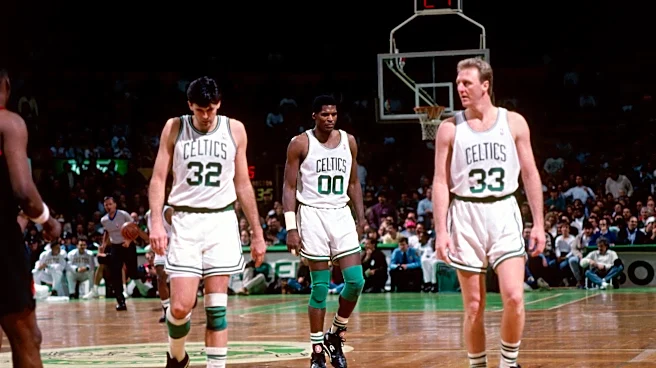
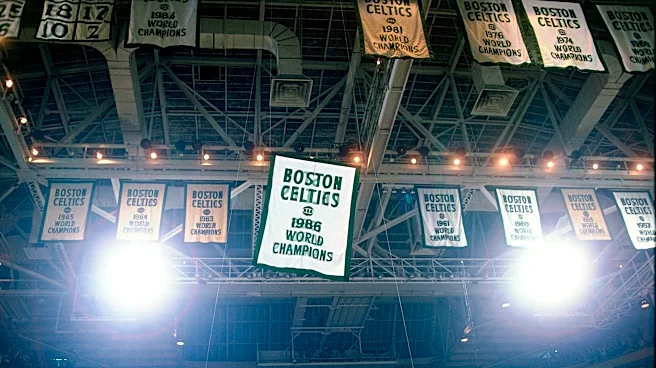
Again and again, for 48 minutes at a go, during the 1985/86 season, the Boston Celtics took the court and put on a display of such transcendence that it left an indelible mark on everyone who saw them at their best.
The story of this season begins with the acquisition of Bill Walton.
Walton was languishing out in L.A., “I had just spent six brutally long, painful, lonely, disastrous years on the Clippers,” he would later recall. Walton was relatively healthy, but the Clippers were going nowhere on a rocket sled. He wanted out. “I just desperately wanted to have it be fun again.”
His first call? Jerry West. West turned Walton down flat. “I’ve seen your feet,” said West, according to Walton, “I don’t want any part of them.”
So Walton turned to his second choice, Boston. When Walton got ahold of Red, he was in a meeting with Larry Bird. He told Bird that Walton wanted to join the team and Larry said, “Go get him.”
Red then set about the odious task of negotiating with Donald Sterling.
Walton’s request was well-timed. Cedric Maxwell was on his way out. Red had wanted Max to come back to Boston to have his injured knee checked and Cedric’s agent told him that it was a no-go because Max was busy building a house. “Who’s paying for the house?” was Red’s curt response.
At the other end of the deal, Donald Sterling wanted concessions, not from Red, but from Walton. In a scenario that reflected the relative weakness of the player’s union at the time, Sterling got Bill Walton to forego all the deferred compensation he was owed in order for the deal to go through.
“I owe you a fortune in deferred compensation,” Sterling said, according to Walton, “if you want to make this deal go down and you go to Boston you’ve got to leave every dime of that money here with me today.”
“I took that pen, and I signed that paper with as much confidence and bravado as I could possibly muster. I signed it, got up, turned, and never looked back.”
The Team
Larry Bird would win the MVP for the third consecutive year in 1985/86, and it’s tough to argue with the logic behind that. He led the league in win shares, despite playing on a team with four other Hall-of-Famers, and for all the highlight reels of his offense, he proved his value at the other end of the court as well by leading the league in defensive win shares. His ten triple doubles led the league, and he led the league in free throw percentage. He led the Celtics in points, rebounds, and assists.
“Here’s a guy who wasn’t the fastest, wasn’t the highest jumper, wasn’t the tallest, wasn’t the strongest, but he was the best,” was Bill Walton’s assessment.
This was the year that Larry walked into the locker room before the league’s inaugural three-point contest and said, “Alright, which one of you guys is finishing second?”
It was the year that, in a revenge game against the Trail Blazers, who served up the Celtics’ only home loss, Larry took about half his shots left-handed on his way to scoring 47 points. “You have to play games left-handed, or do different things, to keep your interest in the game,” Bird recalls with a chuckle. “This stuff really happened,” adds teammate Rick Carlisle, who played with Bird from 1984 to 1987.
The decision to trade Cedric Maxwell for Bill Walton brought Kevin McHale into the starting lineup full-time, as Larry Bird moved to the small forward position. McHale responded by averaging 21.3 points per game on 57.4% shooting from the field. He had developed a low-post game the likes of which the league has seldom seen.
Dan Shaughnessy might have been the person who first described McHale’s low-post office as the “torture chamber,” but regardless of who first applied the term, it was an apt description of McHale’s toolkit of moves that invariably put his defender, no matter how good, out of position. Players guarding McHale would helplessly watch as McHale put the ball in the hoop or send him to the line where he was a steadily improving free throw shooter (the following year he would become the first player in NBA history to shoot 60% from the field and 80% from the line).
McHale’s less serious demeanor was a balance to Bird’s intensity. “I just show up and play,” was Kevin’s stock response to questions about his performance, although this couldn’t have been farther from the truth. McHale put in the work, but he never wanted people to know just how hard he worked, “I did all this work, but I never wanted to tell anybody what the hell I did,” he recalled.
Robert Parish was a steady presence on the court, intimidating on defense, and good for 16.1 points per game on offense. The Centenary product had been drafted three times, despite playing for a program whose existence was essentially denied by the NCAA during his career there. He was selected twice in the ABA draft and finally by the Golden State Warriors, who had traded him because they were enamored with Joe Barry Carroll and saw no further need for his services.
Red wanted Parish because he could run. “I’ve never seen another center run the floor as beautifully,” claims Jackie MacMullan, who covered the Celtics for the Globe.
He was in his tenth season in the pros in 1985/86; for most players at that time, this was about when careers start to wind down, but Parish would put eleven more seasons under his belt, retiring after 21 years in the pros.
The Chief didn’t assemble a gaudy stat line, being in the middle of a 17-year run of double digit scoring averages, but he was a key factor in the Celtics’ league leading opponent field goal percentage. Parish was extremely effective at altering the shots that opponents took. He didn’t lead the team in blocks, McHale did, but his intimidating and largely unmovable 7’-1” presence in the paint prevented a lot of easy buckets.
“If he’s the third best player on the team, you can argue that he would have been the best player in the history of about ten other teams,” says Bob Ryan. “He probably gave up more than anybody,” adds Bird, regarding Parish’s deference to McHale and Bird in terms of buckets and rebounds.
Dennis Johnson made the All-Defensive team for the eighth consecutive year in 1985/86.
A player who was quick rather than fast, DJ’s performance improved when there was more at stake. His playoff scoring was consistently higher than his scoring in the regular season, and he was never afraid of the big moments. DJ had a competitive fire that matched Bird’s, and Larry would claim, years later, that DJ was his favorite teammate.
Johnson was a long way removed from the ‘cancer’ accusation leveled by Phoenix coach John MacLeod. “Joining the Celtics was perfect situation for me,” said Dennis in a 2002 interview, “It was a dream come true to play with Larry, Robert, and Kevin.”
Johnson is perhaps a bit underrated as a contributor to Boston’s success in the 1980s. The Celtics were not a run-and-gun team—even though they led the league in defensive rebounding, they did not push the pace the way other teams in the league did. This meant that DJ’s skills as a ball-handler and a passer were showcased less often than they might have been on a team that spent more time pushing the ball in transition.
DJ’s connection with Larry Bird was the stuff of legend, “They were in sync,” is how Kurt Rambis of the Lakers described it. “I can’t tell you the number of times when he and Larry would make eye contact—Larry’s guy would have his head turned—and DJ would throw the ball right by his defender’s ear,” recalls Rick Carlisle.
“Dennis was just an awesome player,” said K.C. Jones after DJ passed in 2007, “He played hard and he took the big shots.”
The only player in the Celtics’ starting five who hasn’t been enshrined in Springfield was Danny Ainge.
Red wanted Ainge bad enough to go to court to get him.
Danny had been burning the candle at both ends, playing baseball for the Toronto Blue Jays and basketball for Brigham Young from 1977 to 1981. He had worked his way through the Blue Jays farm system, and, partially as a testament to how bad the Blue Jays were in those days, he had spent some of his summer vacations playing for the parent team where he was a serviceable fielder and an underwhelming batter.
His basketball prospects were considerably better. He was the John Wooden player of the year in 1981, a year where he delivered one of the most memorable shots in NCAA tournament history, when he went coast to coast in the waning seconds of the game to deliver a one point win for BYU over Notre Dame that sent the Cougars to the Elite Eight.
After the end of his college season, and after he had signed a contract with the Blue Jays that expressly forbade playing professional basketball, Ainge decided that he wanted to play basketball instead. Red obliged him by picking him with the 31st overall selection in the 1981 draft.
Then the lawsuits began.
The Blue Jays were unwilling to release him from the contract without extracting one million dollars from the Celtics, as well as an agreement by Ainge to return the bonus money he’d already been paid. After the Celtics lost in court, Red ponied up the cash.
By 1985/86, Ainge was firmly ensconced in a ‘villain’ role with the Celtics.
If fans around the league were, basically, in awe of Bird, intimidated by Parish, incapable of hating the rather lovable McHale, and unable to decipher DJ, that left them one target for taking out their anger at the Celtics’ sustained excellence: Daniel R. Ainge.
It was a role that he relished.
“He was irritating. He was a little gnat. He was bothersome. And boy could he shoot,” recalled Jackie MacMullan. “He gave you everything he had, every minute,” added Bird.
Bill Walton once paid Ainge a compliment by saying, to the rest of the team, “He’s the only one doing his job, because he’s the only one being booed in every arena in the NBA.”
Walton spearheaded the “Green Team”, the internal name for the Celtics’ bench, which donned green jerseys when they played against Boston’s starters in practice. Red had acquired Jerry Sichting in the off-season along with Walton, and Jerry was a feisty point guard who converted his shots at a 57% clip. Sichting and Walton joined established bench contributors Scott Wedman, Rick Carlisle, Greg Kite, and others who anchored the team when the starters were off the court.
“The practices were more intense than some of the actual games that we played,” Dennis Johnson recalled, “we had some real battles—the first and second units going at each other like it was war.”
“Every practice was a fierce competition, and it made us a better team. The second unit made sure that we were always ready to compete, that we were always prepared whenever we stepped out on the floor.”
“They had shooting depth, they had defensive depth, they had rebounding depth. That green team—they were the difference between ’85 and ’86,” claims MacMullan.

The Regular Season
The regular season began inauspiciously for the Celtics. They lost the opener to the New Jersey Nets in overtime. The Nets, inexplicably, managed to snatch a pair of victories from the Celtics during the regular season. Only the Nets, Sixers and Rockets managed to beat Boston twice between October of 1985 and June of 1986.
The season featured thirteen and fourteen game winning streaks. The Celtics lost two in a row twice, but never more than that.
At the end of the season, they had won 67 games, including a 40-1 home record that has been tied but never bested.
This was not the most wins in Celtics history—that record, 68-14, belonged to the ill-starred 1972/73 team that had its championship prospects dashed by an injury to John Havlicek in the Eastern Conference Finals.
But the Celtics absolutely dominated their opponents in 1985/86. Their net rating, +9.2 points per 100 possessions, was the best in the league, as was their average margin of victory at 9.06 points per contest. Once again, defense was their calling card, as they held their opponents to a league worst 46.1% field goal percentage. The Celtics capitalized on those misses too, as they were the league’s best defensive rebounding team. Despite playing the toughest defense in the NBA, they were the second-best team in the league when it came to fouls called.
At the other end of the court, they were the second-best team in the league in terms of assists and field goal percentage.
And in terms of assists, while they were the second best statistically, they were, quite possibly, the best ever from an aesthetic perspective. “It’s ballet,” said Dan Shaughnessy. “It was death by a thousand cuts,” adds Peter May, “They took teams apart by passing, and they took great pride in that.”
As good as the Celtics were during the regular season, Danny Ainge would later admit that the team viewed those 82 games as just a prelude, “our minds were, really, always on the Lakers and the NBA championship.”
After a rather embarrassing loss to the Knicks on Christmas Day, in an effort to regain their focus on the grind of the regular season, the team swore off alcohol until they won a championship, although as McHale would later observe, “we found a way to sneak around that rule every once in a while.”
The Celtics punched their playoff ticket on February 28th, setting a league record that would stand for thirty years.
The Eastern Playoffs
Boston went 11-1 on their way to the Finals. Their sole loss was to Atlanta, which got the best of Boston on their tenth try.
Their first-round opponent was, basically, Michael Jordan.

The Celtics swept the Bulls, but Michael Jordan set an NBA record that still stands by averaging 43.7 points per game.
The Celtics easily handled the Bulls in games one and three, by nearly identical margins of 123-104 and 122-104 respectively, as Jordan had no real help to speak of, but game two was a double overtime affair.
Jordan poured in 63 points, which is also still an NBA record. “I didn’t think anyone could do against us what Jordan has done in the first two games,” Bird said after the double overtime thriller, adding, “I think it’s just God, disguised as Michael Jordan.”
Yet it was a green-teamer that delivered the tie-breaker for Boston, nullifying all of Jordan’s heroics. Jerry Sichting took a pass from McHale at the foul line and swished a fifteen-footer that gave Boston the lead they needed, 137-135 in the second overtime. A bucket by Parish off a rare Jordan miss sealed the deal 139-135.
In game three, the Celtics double-teamed Jordan relentlessly, and held him to just 19 points, with fourteen of those coming in the first quarter—but the world would hear from Jordan again.
Boston’s second round opponent was Atlanta, which featured a lineup of really pretty good players that somehow never quite gelled into a contending team. After winning the first two games at home by a combined 23 points, things tightened up a bit at the Omni. Game three went to Boston by a slimmer 4 point margin, and the Celtics lost game four by a rather embarrassing 12 point margin. Bird and McHale were a combined 12-38.
McHale, for his part, blamed his poor shooting on a hockey game that bored him to sleep—and not even a Bruins game at that. He was watching the Rangers play the Canadiens, “The Rangers are in it, and all of a sudden it’s 5-1. I fall asleep—ten hours asleep. I come to the game. I’m groggy. I play like diddly.”
The Celtics, bent on extinguishing any hope that might have been blossoming in Atlanta, terminated the Hawks 132-99 in the following game.
This brought on a matchup with the Milwaukee Bucks, the number two team in the conference. The Bucks and Celtics had nearly identical offensive and defensive ratings per 100 possessions, although the Bucks had been less fortunate in the wins column, with 57 wins, as compared to Boston’s 67.
During the regular season, the Celtics won all five games against the Bucks, and though, from certain angles, the teams were evenly matched, the series wasn’t.
Boston won three games going away, with Milwaukee putting in a valiant effort in game three, losing by just four.
For the series, Bird led everyone on both teams in points per game, rebounds, and assists. He missed exactly one free throw across all four games and shot 50% from three, taking a rather high for the time 4.5 attempts per game.
Western Playoffs
A funny thing happened on the way to the third consecutive matchup between the Lakers and Celtics.
A Nigerian immigrant, who had spent his childhood playing soccer, not basketball, came between Los Angeles and Boston.
The Lakers must have been flying high. They had beaten Boston in six the year before, they had won 62 games, and they were the top seed in the West. They cruised past the Spurs in the first round 3-0, and the Mavs had been little more than a bump in the road in the second round, overcome 4-2. Facing them in the conference finals were the Houston Rockets, who had notched a 51-31 record despite losing guard John Lucas after 65 games to a violation of the league’s substance abuse policy. Lucas, who struggled with cocaine addiction throughout his NBA career, would get sober once he was out of the league, and now runs a recovery program for athletes.
The Lakers had taken four of five from the Rockets during the regular season, and they must have figured that the conference finals would play out in much the same fashion.
It didn’t.
The Rockets prevailed 4-1. After the Lakers won the first game by 12 points, they proceeded to lose four straight, as the Rockets’ twin towers of Ralph Sampson and Hakeem Olajuwon made Kareem look old and L.A.’s power forward-by-committee strategy deeply flawed.
Olajuwon was in just his second season with the Rockets, but he was averaging 26.9 points per game along with 11.8 rebounds in the playoffs. Against the Lakers he averaged 31 points and 11.2 rebounds per game.
Ralph Sampson, the other half of Houston’s twin towers averaged 20 points per game and 10.8 rebounds per game during the playoffs.
This set up a rematch, of sorts, with the Celtics. In reality, Allen Leavell and Robert Reid were the only players on the Rockets that had been with the team when they’d faced off against the Celtics in 1981.
Actually, the real story wasn’t that the Celtics and Rockets were facing off against each other for the second time in five years.
The real story was the Rockets’ coach: Bill Fitch.
The man who led the Celtics to their fourteenth title was going to be sitting on the opposite bench as they tried for their sixteenth.
This was just the second time that a Finals coach was squared off against a team that he had also coached to the Finals (Alex Hannum coached the San Francisco Warriors to a Finals loss against the Celtics and then coached the Sixers to a Finals victory over the Warriors in 1964 and 1967 respectively).
The Finals

Deprived of a third consecutive Bird/Magic showdown, the Finals were something of a let-down for fans in general; and the games themselves weren’t as compelling as the Celtics’ championship duel with Los Angeles in 1984.
Games one and two went to the green and white in the friendly confines of Boston Garden by scores of 112-100 and 117-95, and it looked like this series was going to play out the same way as the previous three rounds. However, the Rockets proved their mettle in the following contest.
In game three, the Celtics held an eight point lead with 3:18 to go, only to be outscored by Houston 12-2 over the distance. Bird had an uncharacteristically bad night on the big stage, missing 15 of his final 21 shots. The close loss gave the Rockets a great deal of optimism.
“We just had to get over the hump of playing these guys,” Ralph Sampson said after their game three victory. “Didn’t I tell you things would be different in the Summit?” crowed Jim Peterson, adding, “we’re feeling the weight lifted off our chest right now.”
It was down to the Celtics to squash all those hopes in game four.
The Rockets had a two point lead when Bird nailed a three-pointer to give the Celtics the lead. Bill Walton tipped in a miss to give the Celtics a bit of a cushion, and then, for the final minute of the game, neither team scored. The Celtics, whose defense, even in this inspired year, was still better than their offense, locked down the Rockets in a game that Houston absolutely positively had to win.
With 46 seconds to go, McHale anticipated a Mitchell Wiggins pass into Olajuwon, jumped it and deflected it to DJ. Off a Bird miss, the Rockets came out of a timeout and ran a play that rapidly broke down in the face of Boston’s defensive pressure. Ralph Sampson ended up with the ball 28 feet from the basket and a long way from where he felt comfortable. Once again, McHale made the difference. Unable to pass the ball up court due to excellent Celtic coverage, Sampson opted to try resetting the offense by passing the ball to Wiggins, who was behind him. McHale anticipated the pass again, and stuck an arm into the lane, and deflected the ball to Danny Ainge.
“Games like this are why I came to Boston,” said Walton after the dust settled and he was back in the locker room, “This is the thrill of a lifetime.”
Game five was keyed by a brawl that broke out in the second quarter.
In a gross mismatch, Jerry Sichting had gotten switched onto Sampson under the basket. For reasons best known to himself, Sampson decided to take on the barely-six-foot-tall-in-his-shoes point guard, “I thought a foul should have been called,” he said after the game. Sampson, who had about 15 inches of height on Sichting, responded to the alleged foul by elbowing Jerry and then punching him twice.
DJ came in to back up Sichting, as did Walton. DJ paid for his interference when Hakeem Olajuwon lost his temper and punched Johnson in the face, leaving him bleeding onto his jersey.
Referees ejected Sampson and awarded a free throw to Sichting, but the move had galvanized the Rockets. The team felt that pint-size Sichting should have been ejected, apparently for the offense of getting in the way of Sampson’s fist, and that DJ should’ve gotten tossed as well.
They proceeded to dismantle Boston, as the Celtics failed to take advantage of the absence of Sampson. Jim Peterson, subbing for the ejected Sampson, did yeoman’s work, and then shot his mouth off after the game ended, “I guess they wasted a lot of chapagne,” he said, motioning toward the Celtics’ locker room.
The Celtics, of course, didn’t waste that champagne. They simply packed it up and took it back to Boston.
It was uncorked three days later when the Celtics put the Rockets to bed 114-97 in a contest that Houston lost before the opening tip. “They weren’t beating us here, today,” McHale said after the game.
Bird won his second Finals MVP and closed the series with a triple double in game six: 29/11/12 in points, rebounds and assists. He shot 11-12 from the line and notched three steals to further pad his stat line. “I saw him take on five guys at once,” said Houston’s Jim Peterson, “He’s the best.” “He has reached the pinnacle of basketball,” added K.C. Jones. “Nothing Larry Bird does surprises me,” Walton remarked, “and everything he does impresses me.”
McHale matched Bird in points at 29, and nabbed an even ten rebounds. None of the Rockets managed to crack 20 points, and Ralph Sampson, who was showered with boos and hung in effigy by the Garden faithful, managed a meagre eight points on 4-12 shooting.
For the first time in three Finals victories, Larry Bird did not lead all players in points and rebounds. It was Kevin McHale who got the better of Hakeem in a battle of smooth moving front court wizards. McHale edged out Hakeem in points, at 25.8 per game vs. 24.7.
Where the Celtics really shined was the lockdown defense played on Ralph Sampson. Sampson went from 20 points per game in the previous round to just 14.8 in the Finals.
While the Celtics failed to put together a perfect season—whatever such a Platonic ideal may look like—they put together what was arguably the greatest season ever, for the greatest franchise in the NBA.
There have been other great teams in NBA history—but there has never been a greater one.
The final words on this season belong to Bill Walton, who was a fan of the game even when he was playing it…
“Thank you, Red Auerbach. Thank you, Larry Bird. Thank you, Boston Celtics.”