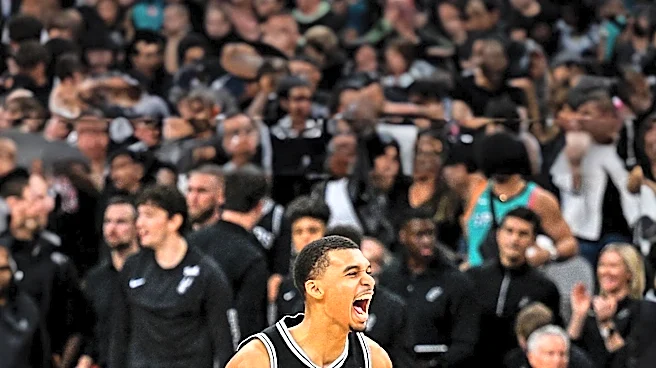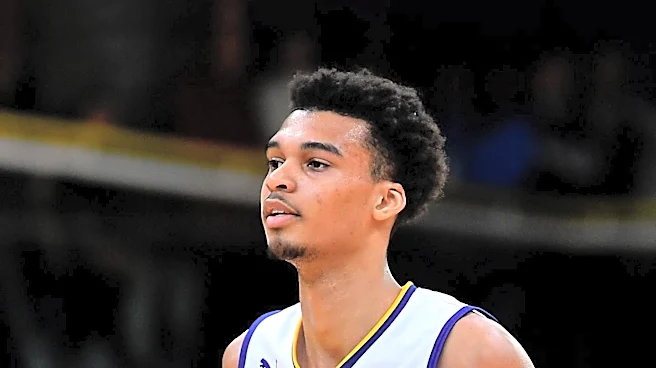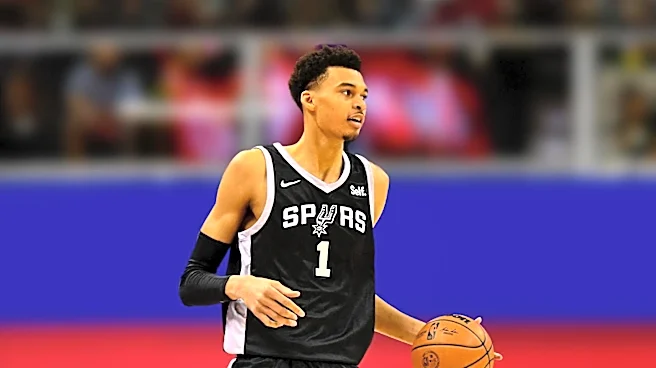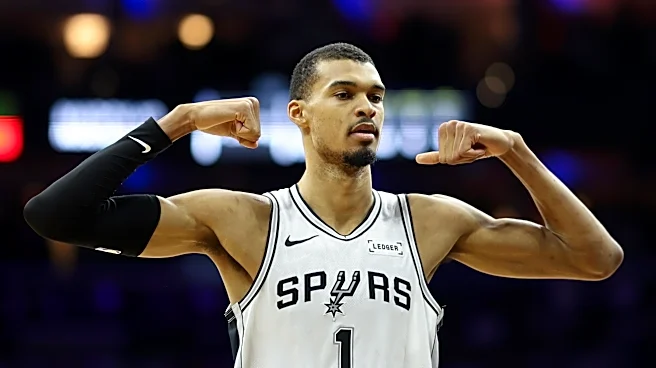



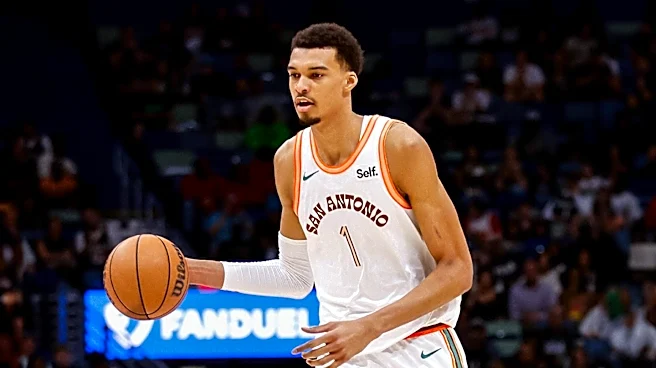


The Spurs re-signed Victor Wembanyama, something everyone expected to happen. What was surprising about it was that Wembanyama, a consensus top-five player in the league, decided to settle for the normal maximum contract instead of one that would have gotten him a bigger payday if he simply met some criteria he was likely to meet.
While not providing an immediate impact on the cap situation, as the extension doesn’t kick in until next season, Wemby’s decision does help the Spurs in several ways going
forward.
The Spurs have gained a lot of certainty about their cap situation
While Wembanyama’s decision has been described as a pay cut, that’s not technically accurate. Not yet, at least. The most Wembanyama could have signed for was 25 percent of the salary cap, which is what he’s slated to get. What The Alien gave up is the possibility of getting paid 30 percent of the cap if he had made an All-NBA team or won Most Valuable Player or Defensive Player of the Year in the 2026/27 season.
The chances of Wembanyama reaching one of those benchmarks were likely, as he was recently unanimously named DPoY and made first-team All-NBA. Now, Wemby only just made it to the 65-game threshold for the awards, so there’s a case to be made that health could have prevented him from getting the 30 percent max. Even then, the Spurs wouldn’t have known until next season how much money Wemby would command.
The biggest immediate benefit to the Spurs is that they have gained certainty. They know for a fact that the most Wembanyama will get is 25 percent of the cap and can prepare for the future accordingly. They’ll also get to avoid the awkwardness of having Wembanyama’s health and rest intertwined with his earning power, but that’s a bonus.
Wemby’s sacrifice could push back the time for painful decisions
The added predictability to their cap situation should allow the Spurs to push back some tough decisions. Instead of making $54 million in 2027/28, Wembanyama will make $43 million. San Antonio will have around $202 million in committed salary for 11 players, including Luke Kornet’s partially guaranteed deal, narrowly below the tax line, estimated to be set at $211 million. The aprons will be set over the tax line.
In theory, the Spurs could keep Kornet, bring back Keldon Johnson to a smaller contract, and sign their first-round pick while not crossing the second apron line. If Johnson commands a higher salary than they are comfortable paying, they could let him go and use their mid-level exception to replace him while likely still remaining below the first apron. If they want to stay under the tax while signing their first-rounder, they could easily do so by letting Johnson go, waiving Kornet to save around $7 million, and filling out the roster with minimum contracts.
It’s unclear whether the Spurs will want to duck the tax or be fine with paying it while not crossing the second apron. What Wembanyama’s new extension does is likely allow them to do either while retaining their core rotation players. For now, at least.
The cap reckoning is still coming, but Wemby’s sacrifice could inspire others to take less to stay together
Wembanyama deciding to take 25 percent of the cap no matter what brought predictability and potentially delayed some tough decisions, but those tough decisions are still coming. What the Spurs can hope for is Wembanyama’s sacrifice to inspire others.
Eventually parting ways with De’Aaron Fox, who signed a veteran extension for 30 percent of the cap, seems inevitable, as the young Spurs whose small contracts are making his deal palatable become more expensive. Especially since the two players likely to earn max or near-max contracts are also on-ball guards. By 2028/29, San Antonio will have to get money off the books for a Stephon Castle extension, and if it doesn’t come at the expense of trading Fox for expiring deals before then, it will likely cost them their depth. There’s no escaping that reality.
What Wembanyama’s decision can affect is what happens next. Now, there would be nothing wrong about Castle and Dylan Harper signing for the maximum, whatever that might end up being. It’s not their fault the tax and the aprons are so punishing. But if they do take less, keeping both of them, along with Wembanyama, could be possible, at least for a while. Having 75 percent of the cap or more tied to three players would make team-building hard, but if the Spurs can get even small discounts from the guards, they could use their draft picks to add cheap depth while still having room for a couple of mid-sized deals.
Unless the CBA changes dramatically in 2029, paying three stars for the rest of their careers will be close to impossible, but pay cuts across the board could buy the core some time.