
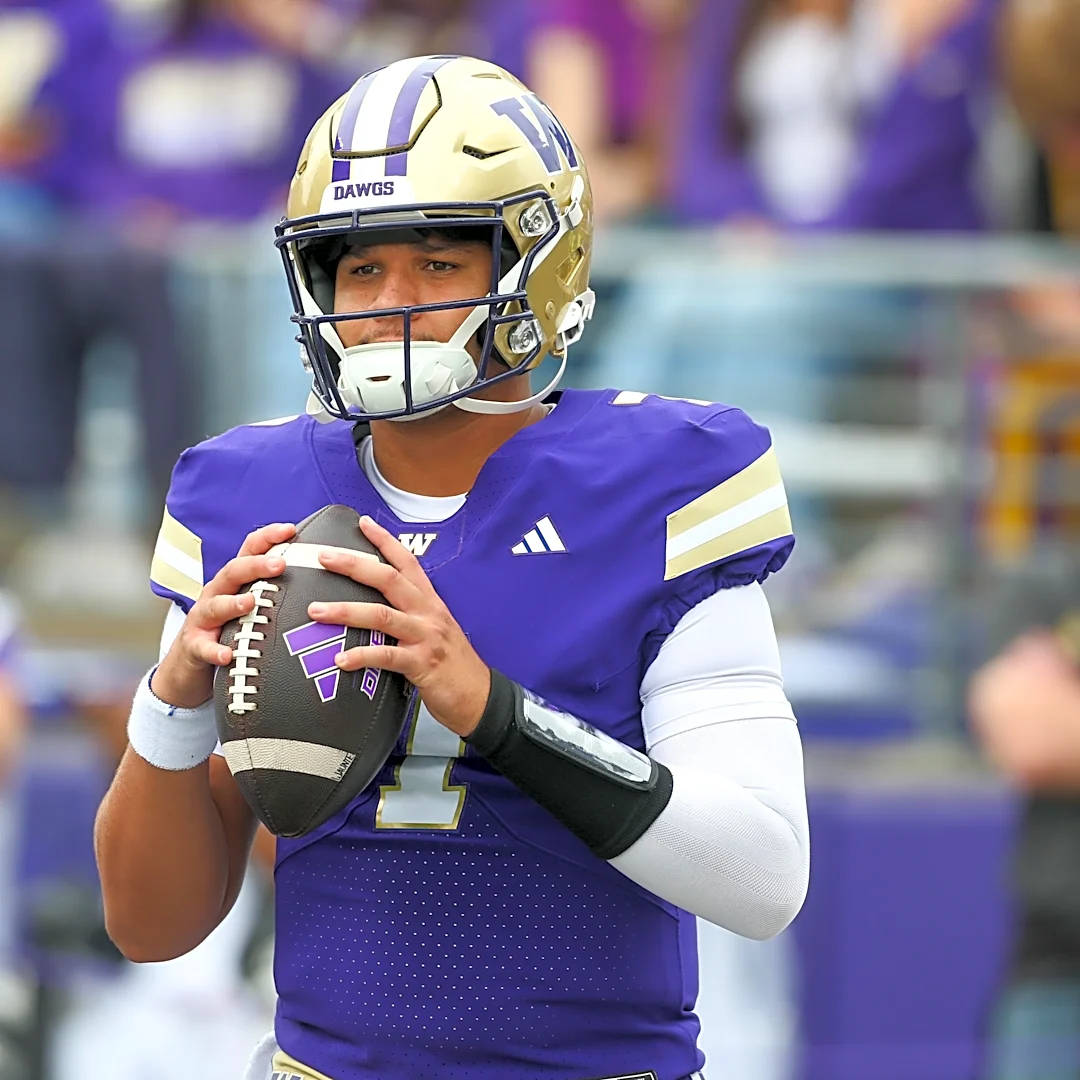
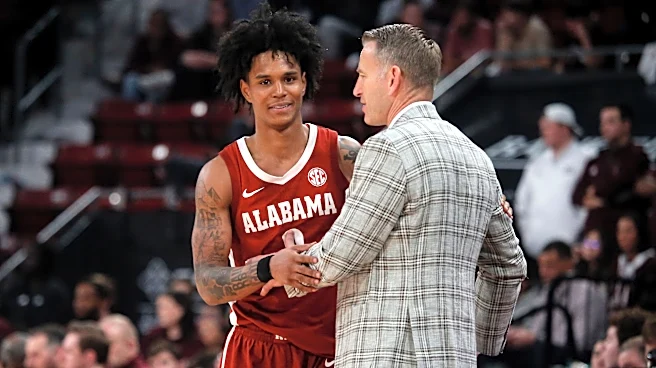
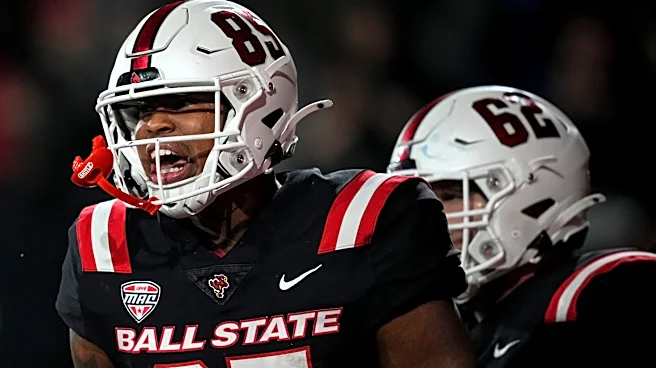
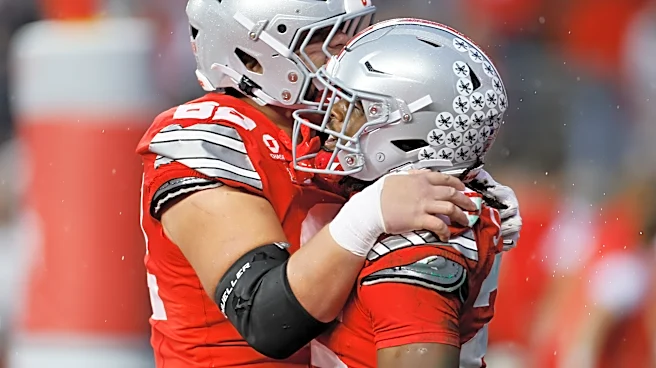

How do you fix something that’s careening off course?
Of course, the answer varies. It depends on what you’re trying to correct, after all. You’d realign a train’s wheels with the tracks. You’d try to balance the books if a company was in the pits. An off-the-rails party… well, if it isn’t your house at stake, you might try calling Seth Rogen and Bill Hader in their Superbad costumes.
What about college sports?
The NCAA — once an all-powerful organization that wielded nearly complete power over collegiate
athletics — has been rendered impotent. Student-athletes, who operated under a stringent financial code for the better part of a century, have suddenly been given nearly full autonomy over their earning power. Constant player movement, fifth (and sometimes sixth) years of eligibility, European football-style transfer sagas — you name it, we’ve got it in the Wild West era of college sports.
It isn’t sustainable for a wide variety of reasons. To put it most simply, operating under abject chaos at all times is unhealthy both internally and externally. And, to boot, the schools that have suffered, and stand to suffer, the most in this new age are the little guys: the mid-majors, the DII and DIII schools, and anyone else who lacks the budget to compete with the top dogs.
What can be done?
The idea of athlete unionization is far from a new one. Professionally, of course, it’s common practice; athletes from the NFL, NBA, and MLB all unionized in the 1950s with the NHL following suit in the 1960s. That allowed athletes to collectively bargain with the league, earning provisions such as salary increases, free agency, benefits like health insurance in retirement, and so on, while simultaneously making it easier for the league — and the owners — to set rules of their own, outlined in an agreed-upon collective bargaining agreement (CBA).
The same, in theory, can be done in college sports. In fact, it’s been attempted before: Northwestern football, Dartmouth men’s basketball, and USC football and basketball each tried their hand at unionizing over the past 12 years. Each attempt either failed or stalled out, mostly due to the uncertainty of whether college athletes can be legally recognized as employees (a necessary threshold to meet in order to unionize).
That door is open now, thanks to a favorable ruling (and subsequent uphold on appeal) in Johnson v. NCAA, which stated that college athletes cannot be barred from claiming employee status.
Enter the United College Athletes Association, an organization founded by former NCAA athlete Andrew Cooper in 2021. In 2024, more than 100 women’s college basketball players signed on, sending a letter to Big 10 and SEC figureheads requesting to meet as a collective, and in 2026, the UCAA formally launched a national unionization complaint. Concurrently, with the help of the UCAA, the Oregon State women’s basketball team filed a petition for union representation with the Oregon Employment Relations Board, a brand new frontier in the ongoing tug of war.
To understand more about the UCAA, the future of college athletics, and what it all means for mid-major schools, Mid-Major Madness sat down with Lance Geren, general counsel for the UCAA. A modified transcript of our interview is below, divided by section.
Origins of the UCAA
MMM: Walk me through the creation of the UCAA, and when did [the organization] come to your attention?
Mr. Geren: The UCAA was formed three or four years ago, by a guy named Andrew Cooper, who’s a graduate of Washington State. While he was there, the quarterback on the football team committed suicide, and [Cooper] got involved in athletes trying to address mental health issues. He was elected to an organization that the NCAA basically created to give nominal representation to student-athletes to deal with mental health issues. … He found it to be pretty unsatisfying because it was really just a way for the NCAA to say, ‘no, there’s not really a problem here.’ Since then, he’s been working to organize college athletes.
Back in 2014, the Northwestern University football team attempted to organize. Ultimately, the NLRB (National Labor Relations Board) declined jurisdiction, and it’s been sort of left in limbo. After [President Donald] Trump got elected, [Cooper] changed strategy. Now, his focus has been on women’s college basketball, [at] the public sector universities. He’s been working with Oregon State [basketball] grad Mikayla Pivec, and she’s been working with [him] to organize women’s basketball players, and that’s the focus right now.
UCAA Leadership
Mr. Geren: They’ve established interim officers. Right now, the president of the union is Oluchi Okananwa, a basketball player at Maryland. There’s also an advisory board, which for someone like me is the most celebrity thing in the world. … It’s got Jennifer Abruzzo, former general counsel of the NLRB, former lawyers from the AFL-CIO (American Federation of Labor and Congress of Industrial Organizations), current WNBA players, the WNBA Players Association’s President, women’s soccer league players, Dominique Foxworth…
So, it’s this nice blend of athletes, former athletes, and labor people on the advisory board. [The UCAA] is currently working hard to create partnerships with the AFL-CIO, and within the AFL-CIO, there’s a sports council that is comprised of the players’ associations. The UCAA has been meeting with them on a pretty regular basis, and that’s been going very well, to the point where both the sports council and the AFL-CIO have issued statements of endorsement of the UCAA.
Battle in Oregon
MMM: What is the UCAA doing now?
Mr. Geren: Back on July 31, I believe, the UCAA filed a petition with the Oregon Employment Relations Board seeking to represent the Oregon State women’s basketball players. [Recently] the University responded to the petition… which [they] objected to on a number of grounds, one predictably [being] that the athletes are not employees. They also [made] a constitutional argument on whether the OERB has authority to find that the athletes are employees.
Now, we’re in the process of scheduling a hearing, which will take place sometime [late this year], and then the OERB will issue a decision.
MMM: What’s next?
Mr. Geren: We’ll have a hearing, and I think that once we get a decision from that hearing, we’re pretty optimistic that the OERB will find that these women’s basketball players are employees under state law, and that they are an appropriate unit to join the UCAA. We think that’ll open up a path for collective bargaining. We’ll see how far the university wants to continue to challenge that process, challenge their status as employees.
But, I think, this issue’s been around for 10 years or so. We knew that this would be sort of a threshold that we’d have to cross in order to move on to other campaigns with other universities.
Bigger Issues
MMM: What issues is UCAA aiming to fix through athlete unionization?
Mr. Geren: I think most would agree that the new system [has] issues that have been identified by universities, by athletes, by athletic directors, by coaches, by pundits on TV, on ESPN and whatnot. And, frankly, by Congress, which [recently] fell just short of passing a piece of legislation called the Protect College Sports Act. The UCAA campaigned against [the act] because it really would’ve curtailed the rights of athletes to organize and collectively bargain. All of the issues being discussed [in the act] are wearing sort of a different cloak. And we [at the UCAA] really think that the solution is collective bargaining.
They’re dressed up as NIL and the transfer portal and the ability of player movement. We’ve seen [similar] issues in professional sports, and what does professional sports have? Collective bargaining, and through collective bargaining, both management and labor have won certain things. We think that’s the solution to a lot of these issues that’ve come up.
MMM: Why is unionization better than any alternative solution?
Mr. Geren: Well, it’s the NCAA who’s mismanaged the situation altogether, and now [they want us] to trust [them] to fix it. I mean, that’s just not something that could really function, and the other issue with the NCAA is they’re sort of in a battle with college football.
If you watch college football games, they don’t have the NCAA logo anywhere on their uniforms. They have the college football logo. [That’s just one example] of an NCAA power struggle. I think it’d be more likely to see collective bargaining and an irrelevant NCAA than it would be to see the NCAA step up and solve all these problems on their own.
How could unionization impact mid-major schools and programs?
MMM: Schools at the mid-major level are seeing our best players, our neighboring schools’ best players, anybody worth a dollar more than they’re being paid hitting the door, while the school that recruited them and developed them is left with nothing. Is there some goal of changing that?
Mr. Geren: Right now, there’s no salary cap; there’s no NIL cap; there’s no anything. There’s no limitation. It’s the Wild West. [Under collective bargaining], there would be the opportunity for whoever’s at the table, whether it’s the university, the conference, the NCAA, to put forward proposals to create some stability. And I’d be very excited to hear some of those ideas.
I think players, on an individual basis, want the freedom of movement, but players also want a stable team, right? As an athlete, you want to know what your team looks like year-to-year. There’s an appetite to have some stability. [I hope] there’s some stability for the players, for the universities and colleges, and for the fans. I think fans have been really demanding for some sort of change that results in some stability. So, I think collective bargaining is the easy answer to all these very complicated problems.
I think the UCAA’s view is that there will be multilevel bargaining, both at the NCAA level and the conference level, and then within each sport. There are going to be sports-specific negotiations and conference-specific negotiations [to protect smaller schools].
The Future
MMM: In an ideal world, where do you see college sports in 10 years?
Mr. Geren: I played soccer at a little school called Hiram College out in Northeast Ohio… even growing up, knowing the difference between, my father’s era of playing college football to mine playing college soccer was markedly different.
The advent of television contracts has substantially changed the face and the finances of college sports. My hope down the road is we have a system where players have a voice in terms of what the industry looks like, and they have a share of what the revenue is. [I’d like to see] stability.
It’s a really interesting issue and something that matters to a lot of people, including myself. And it’s fascinating to see it develop.