

Ohio State’s defense has been one of the best stories of the season’s first half.
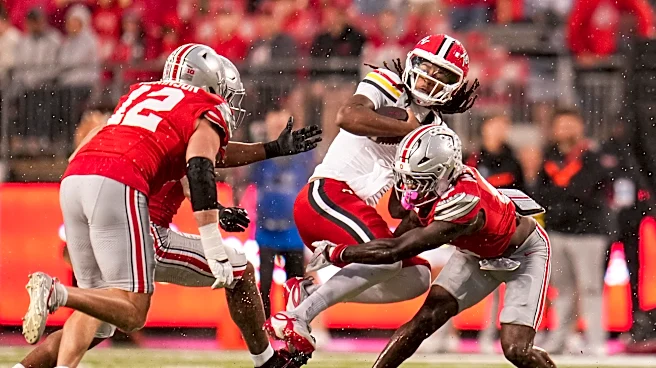
Since the Illinois game, the Buckeyes have held Iowa and Maryland to a combined 384 total yards. They rank fifth nationally in total defense and eighth in pass defense. Against Maryland, the secondary held Malik Washington to 64 passing yards.
But there’s one number that doesn’t fit with the rest. Ohio State didn’t sack Washington once on Saturday.
Through six games, the Buckeyes only have nine sacks, tied for 94th nationally
and tied for 10th in the Big Ten. That might not matter against Maryland, but it will matter in Bloomington.

Josh Hoover is lethal with time
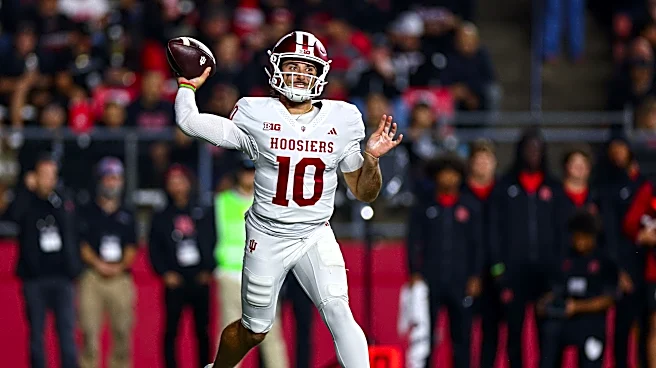
Indiana’s new quarterback has been everything the Hoosiers could have hoped for after losing Fernando Mendoza.
Josh Hoover, a transfer from TCU, has completed 68.2% of his passes for 1,364 yards, 17 touchdowns and zero interceptions through six games. He’s averaging 10.6 yards per attempt. When he has time to set his feet and push the ball downfield, he’s been close to unstoppable.
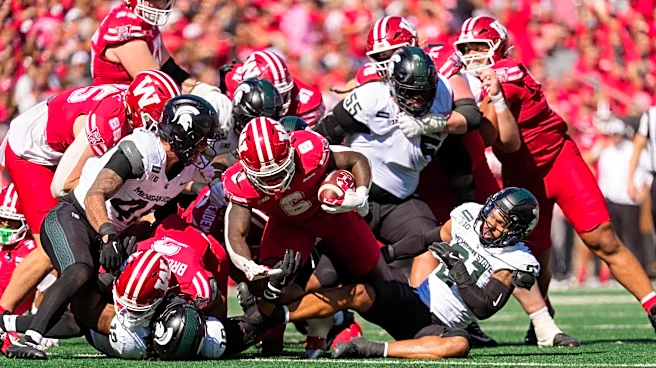
Look at what happened at Nebraska. For three quarters, Indiana couldn’t do anything. The Hoosiers ran only 16 plays in the first half and managed just 65 rushing yards on 22 carries all day.
Then Hoover found Nick Marsh for a 75-yard touchdown, followed by a 44-yarder on fourth and one for the lead. Two throws completely changed the game. Marsh finished with six catches for 187 yards and has scored in three straight games.
That’s the Indiana offense in a nutshell. It doesn’t need to be efficient for four quarters. It needs two or three explosive plays, and those plays come when Hoover has a clean pocket.
He’s been brilliant off play-action, completing 23-of-29 play-action passes for 469 yards and six touchdowns through his first four games. His average throw on those plays traveled more than 16 yards downfield.
Through those same four games, though, there was a warning sign. Hoover was pressured on only 14.4% of his dropbacks, the lowest rate among Big Ten starters. When he was pressured, he went 2-for-6 for 51 yards. 38.5% of his pressured dropbacks ended in sacks, the highest rate among qualified Big Ten quarterbacks.
Indiana’s offensive line, which returned four starters from a Joe Moore Award finalist, has kept him clean. But when someone has gotten to him, he hasn’t been nearly the same quarterback. That’s the blueprint for the Buckeyes.
Ohio State can’t just let Hoover sit back and wait for Marsh or Charlie Becker to come open deep.
Who has to step up on the edge?
Ohio State knew it would need someone to replace Caden Curry, who led the team with 11 sacks a year ago. So far, nobody has fully taken over that role.
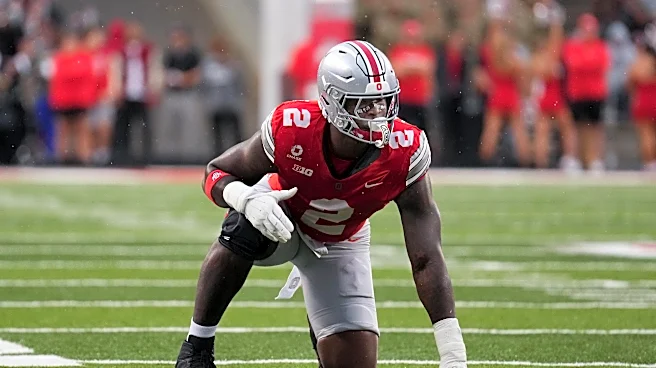
Kenyatta Jackson Jr. has been the most consistent, with three sacks this season, one against Texas, Illinois and Iowa. The strip sack on Iowa’s second play from scrimmage set the tone for that entire game. He came back for his fifth year to lead this pass rush, and he got home against Indiana in last year’s Big Ten title game. He has to do it again Saturday.
Qua Russaw might be the biggest X-factor. The Alabama transfer has started opposite Jackson for four straight games, and Iowa was the best performance of his Ohio State career. He had five tackles, 1.5 tackles for loss and his first sack as a Buckeye on a bull rush that collapsed the pocket.
If that version of Russaw shows up in Bloomington, Ohio State’s pass rush looks very different.
Then there’s Zion Grady. Before the season, he looked like the young player most likely to break out on the edge. A knee injury against Texas cost him the Kent State and Illinois games, and he played 23 snaps in his return at Iowa.
Ohio State needs him back at full speed. He’s the most natural pure pass rusher in the rotation, and the Buckeyes don’t have enough of those to keep him limited.
Khary Wilder and Beau Atkinson could help too, but both have work to do.
Wilder had eight pressures on just 35 pass rush snaps through four games, but he didn’t play at Iowa after Ryan Day asked for more discipline, then missed Maryland with an injury.
Atkinson has the length and motor, but his roughing-the-passer penalty on a third down incompletion kept alive Maryland’s only offensive touchdown drive. Ohio State can’t afford that kind of a mistake in Bloomington.
Matt Patricia has called this a committee driven pass rush, and that’s fine. Not every team needs a Chase Young or a Bosa. Somebody has to win one-on-one matchups on obvious passing downs, and so far, that hasn’t happened consistently.
Win early downs, then let the rush go
The good news is that Ohio State’s run defense has given the pass rush a real chance.
The Buckeyes are allowing about 96 rushing yards a game, and Indiana’s ground game just struggled badly at Nebraska. If Ohio State can stop the run on first and second down, Indiana’s play-action game loses a lot of its power.
That puts Hoover in a lot of third and long situations, which is exactly where the edge rushers can finally pin their ears back.
The interior has to help too. Eddrick Houston, John Walker and James Smith have played well in the run game, but collapsing the pocket from the inside would keep Hoover from stepping up to avoid the edge rush.
Ohio State doesn’t need six sacks on Saturday. They just need enough pressure that Hoover can’t comfortably hold the ball for three or four seconds waiting for a deep shot.
Last December, Indiana won 13-10 because it made a couple more big plays than Ohio State did. This Indiana offense lives on the same formula.
Stop the run, force Hoover into obvious passing situations and make him uncomfortable. If Ohio State does that, the secondary is good enough to handle the rest. If Hoover has all day to throw though, Indiana will find its explosive plays, and Ohio State will be in another one score game against the defending national champs.