


Welcome to the third installment of my preliminary rankings and tiers for each major position for fantasy. I’ve already hit the two big “onesie” positions of quarterback and tight end. I hope you enjoyed those columns, but it’s time to get serious. Today I’m diving into the most important position in fantasy: Running back.
You can find all my preseason fantasy content, including my other rankings and tiers, here. I’ll update rankings in late August. Hopefully, these initial looks will help you to
start thinking about player values and draft strategies.
Why do I say that running back is the most important position in fantasy? Because it’s the position that’s most detrimental, and hardest to fix, if a poor draft or injuries leave you shorthanded. It’s a question of supply and demand. Running back is a very high scoring position, but the scoreboard spinners are in limited supply. In most leagues you have to start two at the position. Even if you regularly flex a wide receiver, there’s so much more depth at that position that you can always find suitable Flex/WR3 types on the waiver wire, or via trade. Running back? I hate making those trade calls or scouring the wire for a warm body.
Workhorse running backs (20+ touches per game) are rare gems — only four backs hit that threshold last season. Even 15 touches is a limited group. Last season, 19 running backs hit that mark. That may seem like a big number, but if you’re playing in a 12-team league where each franchise MUST start two running backs and is allowed to start three, well, you see where I’m going. We’ve all been there – week in and week out, you’re struggling to find a second running back who can give you more than five fantasy points absent a lucky touchdown. So yeah, this position matters. A lot.
Before we get to the rankings, here are two quick observations on the position.
- Backs are back! And have stayed remarkably healthy the last two seasons. We’ve seen a resurgence of RB dominance in fantasy. First off, teams are running a little more, in response to what defenses are giving them. NFL teams averaged almost 34 pass attempts per game in 2023 and that number dropped to 32 last season. In 2023, 26 teams attempted a pass on at least 55% of their plays. In 2025, that number was down to 20 teams. We’re seeing more heavy formations with multiple tight ends. Of greater consequence than those trends, RBs aren’t getting hurt at typical levels. Last season, 24 backs who opened the season as their team’s starter missed two games or fewer due to injury. 2024 was similar. Will we get regression in 2026? Maybe.
- The top running backs are outscoring the best receivers. This follows a bit from the first observation, and this was not the case for much of the last two decades, when passing exploded. Generally speaking, receivers haven’t enjoyed the same good health luck over the last two seasons. Of the top 14 players in touchdowns last season, 11 were running backs and only one was a wide receiver. And of the top 22 non-QB scorers in fantasy last season, 15 were running backs, six were receivers, and one was a tight end. I’ll talk strategy in a later column, but I’m a big fan of investing early in running back, before they’re gone.
I’ve organized the RBs into tiers, as I do at every position. You should do the same. To reiterate, everyone wants the best players, and a tiered approach allows fantasy managers to have a great view of (a) ranges of players who can be expected to have similar fantasy production, (b) where the drop-offs are between those ranges, and (c) how many players in a range remain available at any given time. Tiers really help when position runs come, and they facilitate more effective drafting, regardless of format.
My running back rankings and tiers are for Half-Point PPR. Season-long rankings shown are on a fantasy points per game (FPPG) basis and exclude the final week of the season. I’ve ranked 65 players.

TIER I – The Absolute Studs
- J. Gibbs
- Bij. Robinson
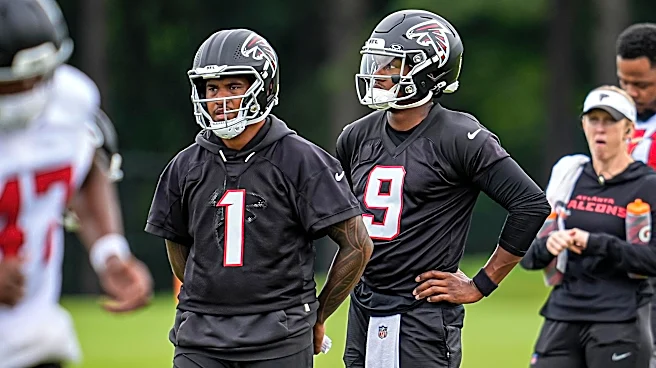
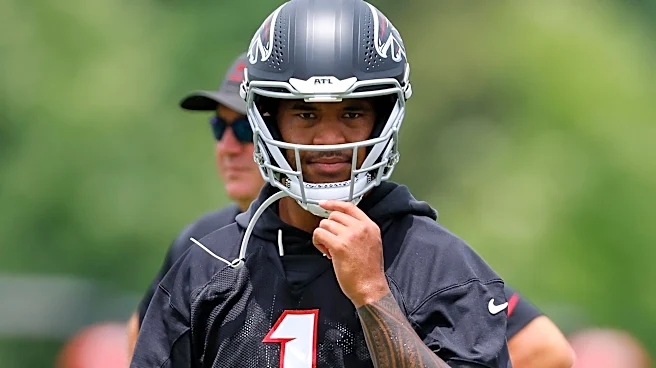
There isn’t a lot to say here. These two get bumped up into a tier of their own in part because of the departures of David Montgomery and Tyler Allgeier, who scored a combined 31 rushing TDs the past two seasons. Gibbs is averaging a TD per game across his three years in the league – with Montgomery regularly vulturing him. Both players catch a lot of passes and if Tua Tagovailoa is the starter in Atlanta, the sky is the limit for Robinson as a receiver. De’Von Achane led all backs in receptions over the past two seasons, with Tua finding him early and often.

TIER II – RB1s
- J. Taylor
- C. McCaffrey
- J. Cook
- D. Achane
- D. Henry
- C. Brown
- S. Barkley
- J. Jacobs
- K. Walker III
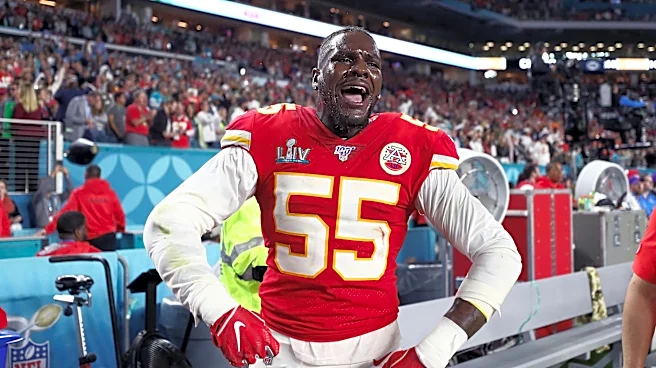
There are some question marks in this tier (cue the Josh Jacobs dynasty managers nodding their heads), but generally speaking, these are highly productive workhorses on good offenses (aside from Miami). Cook might be the most underrated back in the league, and Henry just keeps rolling, with Father Time having no say in the matter. Barkley is looking to bounce back from a down year and McCaffrey is, as always, the biggest risk/reward commodity in the fantasy world. Super Bowl MVP Walker has little competition in Kansas City, and is a popular pick for a career year.

TIER III – Borderline RB1s
- A. Jeanty
- O. Hampton
- T. Etienne, Jr.
- J. Love (R)
- K. Williams
- J. Williams
- B. Hall
All of the backs in this group have the potential for a Top-10 or even Top-5 finish if things break right, but in most cases, there’s still something to prove, or a concern over workload. Hampton should benefit from Mike McDaniel’s scheme and is a very popular breakout candidate, so you’ll have to pay up. Jeanty too, with Klint Kubiak’s arrival and improvements to the line. Love’s talent is immense but the rookie joins a crowded backfield and there’s no reason for Arizona to overload him in his rookie season, on a team that’s looking to the future. I’m lower on him than most. Can Kyren WIlliams hold off Blake Corum for one more season? I’ve doubted him before and been wrong every time. Javonte Williams is my favorite value in this tier, for now. It’s a high scoring offense and Brian Schottenheimer showed last year that he isn’t afraid to give him a ton of work.
TIER IV – Solid RB2s
- Q. Judkins
- D. Montgomery
- C. Skattebo
- D. Swift
- B. Irving
- T. Henderson
- B. Tuten
- J. Price (R)
I’m OK with any of these guys as my RB2, if for some reason I don’t walk away with two backs from the first three tiers. Each of these players could see a pretty dominant workload, or at least with respect to higher-value touches, but each could also be in a major timeshare. I’m a believer in Montgomery this season, on a team with a great defense and mediocre weapons after Nico Collins. I look at Joe Mixon’s numbers from two years ago and ask, why not? The rookie Price has pretty high volatility, given the uncertainty of Seattle’s backfield.
TIER V – The share guys (RB2/3)
- J. Warren
- C. Hubbard
- R.J. Harvey
- T. Pollard
- K. Gainwell
- J.K. Dobbins
- B. Corum
- R. Dowdle
- K. Monangai
- R. White
- J. Croskey-Merritt
- A. Jones, Sr.
- J. Mason
- T. Tracy, Jr.
- C. Rodriguez, Jr.
There players in this tier who could have real value as weekly starters this season, either due to an injury to someone else or just by earning more touches. A few of these guys are passing game specialists (Gainwell and White) who have a nice floor and a capped upside, while most of the others are in some kind of backfield share that will reveal its roles and percentages as the season goes along. These players will have similar draft cost as a lot of very good players at other positions, so decisions must be made.
TIER VI – Depth and handcuffs
- T. Allgeier
- J. Brooks
- Z. Charbonnet
- W. Marks
- I. Pacheco
- T. Spears
- D. Sampson
- K. Mitchell
- T. Bigsby
- A. Kamara
- Bri. Robinson
- B. Allen
- E. Wilson
- E. Johnson (R)
- M. Washington, Jr. (R)
- N. Singleton (R)
- R. Davis
- J. Coleman (R)
- M. Lloyd
- K. Allen (R)
- J. Wright
- J. Hill
- J. Conner
- S. Tucker
I generally like to hammer this tier late in drafts, as the cost is low and the upside of backup running backs can be significant. Almost every player in this tier would need an injury or other calamity to see a worthwhile number of touches, but when that does happen, there’s usually a waiver wire stampede, unless, of course, the beneficiary is already rostered. There are multiple rookies in this tier who were taken in the fourth-sixth rounds of the 2026 NFL Draft, plus two others (sixth-rounder Kaytron Allen and third-rounder Kaelon Black) who barely missed the 65-player cutoff, who are worth watching. My guess is that at least one of them will give us the kind of surprise that fourth-rounder Bucky Irving did two years ago. Some of those rookies, and other player in this tier, won’t get drafted in smaller leagues.
That’s a wrap. Coming next – wide receiver rankings and tiers, so keep it here for preseason fantasy content.