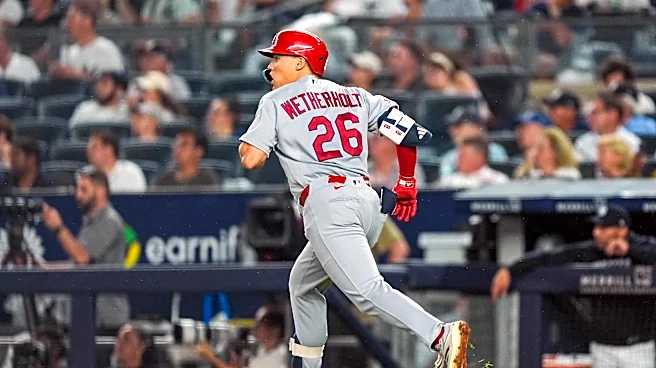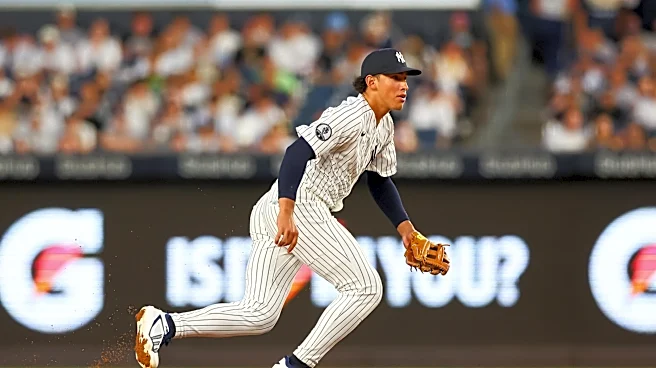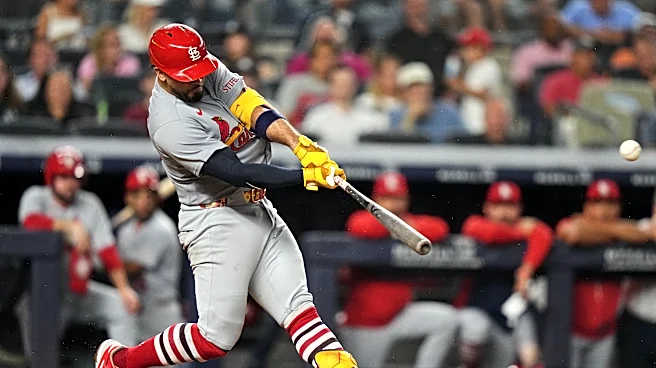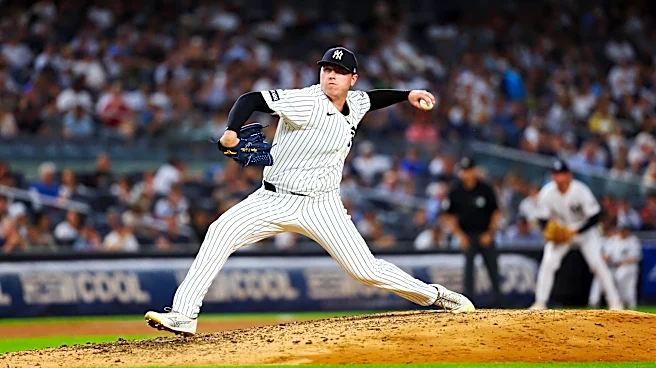

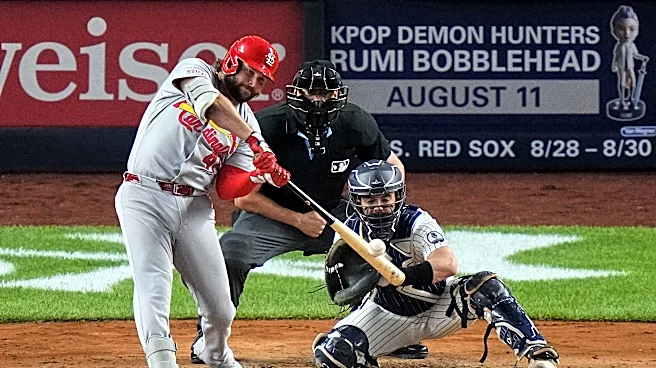
Up until July 20th, Yankees trade acquisition Ryan Weathers was sporting a disappointing 4.40 ERA in 102.1 innings. His four-seam fastball was getting battered, and he was allowing too many home runs to have a chance at sustained success. Baseball, however, is a game of adjustments. The talented left-hander has allowed just one earned run in his last three starts and 18.2 frames, with 13 hits, no homers, five walks, and 17 punchouts. He seems like a completely different pitcher, much less vulnerable,
and has dropped his season ERA to 3.79 over that span.
What changed? Well, if you have a fastball that has surrendered a .628 xSLG (expected slugging percentage) and a .408 xwOBA, you just don’t throw it very often, as our own Peter Brody suggested a few weeks ago. The writer prescribed more sinkers and fewer four-seamers as the recipe for success. Let’s see Weathers’ pitch mix in his last start on Tuesday, when he held the St. Louis Cardinals scoreless for six frames, conceding just four hits and a walk while fanning six:
Changeup: 30 percent
Sinker: 25 percent
Sweeper: 24 percent
Slider: 14 percent
Four-seam fastball: 8 percent
That’s right, Weathers went from throwing 45.3 percent four-seamers last year (his most frequently used offering in his last season with the Marlins) to just eight percent in his most recent outing with the Yankees. For reference, he threw nine percent heaters on July 30th and 10 percent on the 25th. You can easily see the trend.
New York Daily News reporter Gary Phillips asked Weathers why he is throwing fewer four-seamers, and his response left us with an all-time quote: “The other pitches stay in the ballpark.” Sometimes, the best way to grow is not necessarily trying to improve a pitch, but instead, getting to know one’s limitations and being open to embracing change. And that’s precisely what Weathers is doing.
Yes, he can throw the ball very hard on his day, but sheer velocity is far from the only factor behind a solid fastball these days. Deception, ride, command… There are just so many variables, and it’s clear that the pitch wasn’t cutting it for Weathers.
The red line in this graphic indicates Weathers’ four-seamer usage through the years, including the 2026 campaign. It’s easy to see how it tumbles this season:

You can expect the trend to continue, especially because the secondary pitches are working. Sometimes, you will see Weathers featuring more changeups, and other times, it will be his sinker or his sweeper. It will depend on his feel for his repertoire that day, and especially on the foe: certain teams are more susceptible to changeups, others suffer more with sweepers.
It needs to be pointed out, however, that Weathers’ changeup is looking better than ever, and so is his slider. Both pitches had a 40 percent whiff rate in his last start, and with this combo working, he can attack lefties and righties with confidence, as he did on Tuesday:
It will be very interesting to see if this extreme no-fastball approach (well, no four-seamers, at least) can be sustainable over time and if it can lead to a full-fledged breakout in the second half. It’s important to note, however, that a few heaters per start can effectively help him keep hitters honest. On Tuesday, Weathers threw seven of them, earning a whiff (on two swings) and two called strikes for a solid 43 percent CSW%.
Weathers is clearly a candidate to be moved to the relief duties when everybody is healthy in the Yankees’ staff. He would be open to such a move, saying that his job is “when Boonie hands me the ball, that’s when I’m supposed to go pitch. When he takes it out of my hand, that’s when I’m done pitching.” However, if he keeps giving the Bombers six or seven scoreless frames every five days, perhaps they will have to reconsider.