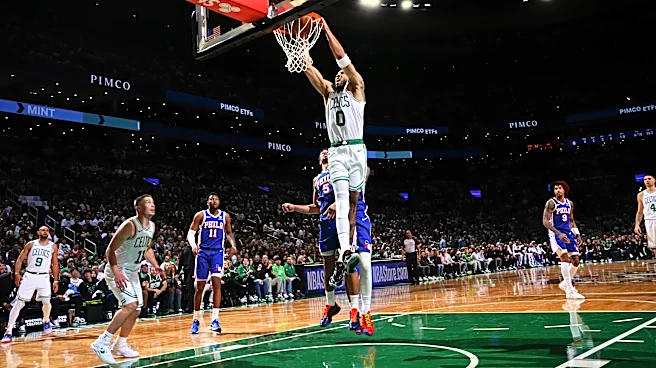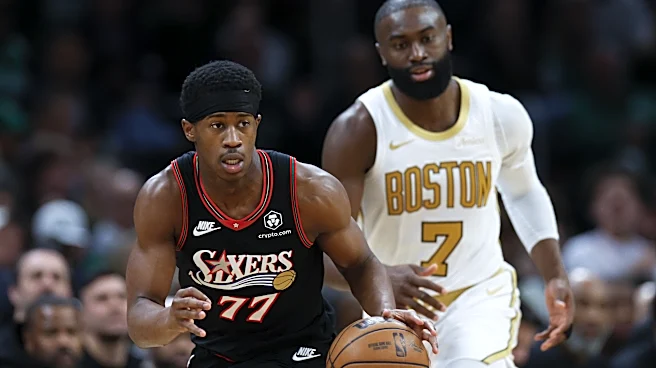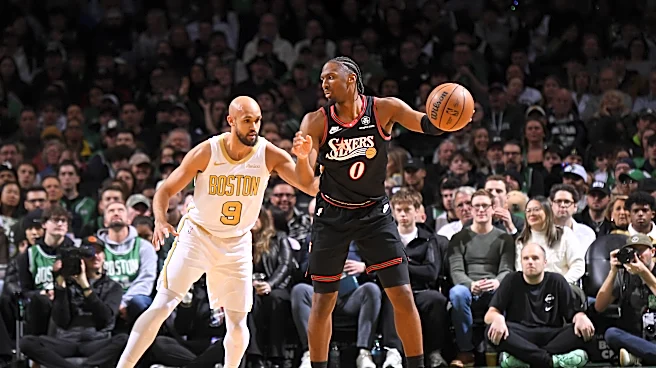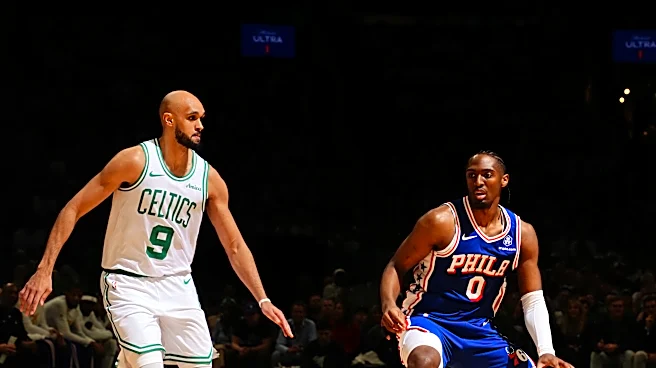





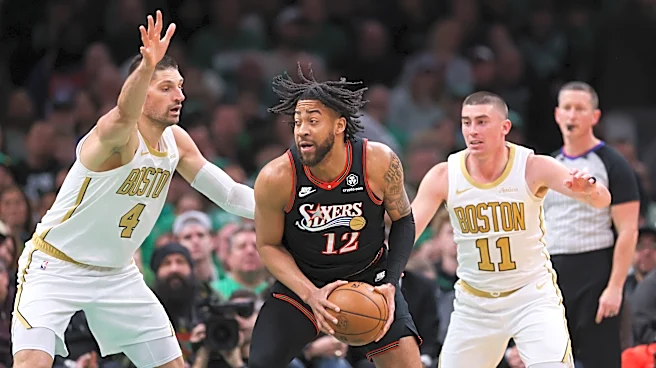
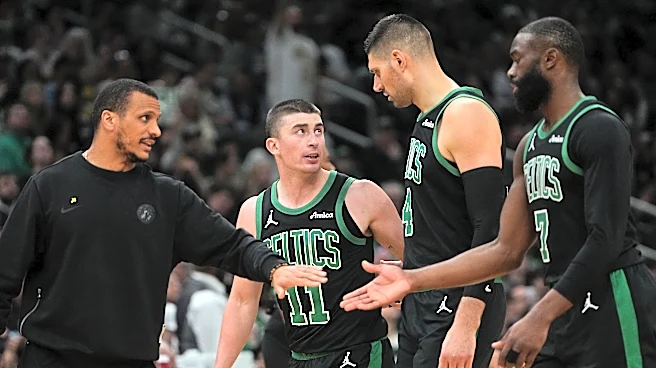
Tyrese Maxey is like the wind. He gets up to dangerous speeds, and can make you feel uncomfortable. Fortunately, Boston brought their windbreaker, and inside TD Garden there wasn’t even a breeze.
Without Joel Embiid, Game 1 was all about Maxey. We knew that, he knew that, and most importantly, so did the Celtics.
Maxey played the entirety of the first quarter, and finished with a 34.5% usage percentage. In that frame he shot 3-9, outpacing everyone in field goal attempts on either side. It felt like
a predetermined mindset that the best way to counter Boston’s plans to smother him was to be ultra aggressive.
He started the game with a lightly contested step back 3-pointer over Sam Hauser, then hit just 2 of his next 10. A substantial reason for this is that in preparation for an assertive Maxey, Boston focused on how they could still dictate the terms.
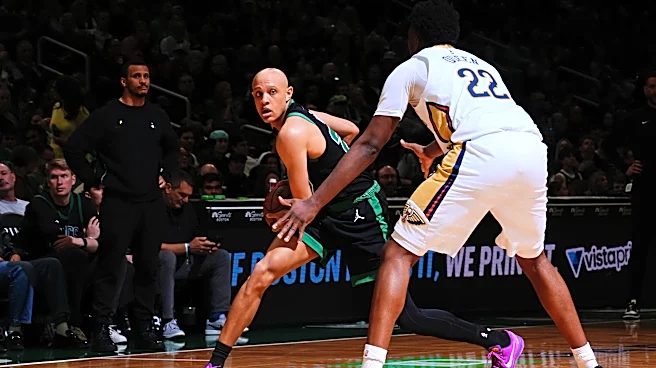
Jordan Walsh spoke before the series about the challenge and goals of covering a player like Maxey, and his analysis hit on the what the Celtics honed in on in Game 1.
“Taking away tendencies, and knowing the small things.” Walsh said. “Make them go to their second option, their third option… if he wants to go right and do a step back, just don’t let him do that and make him do something else and usually we’ll live with the end result.”

Walsh revealed one observable key to the matchup, limiting Maxey’s step backs going right. As the chart shows, Maxey is significantly more effective from distance when he’s shooting toward his right. On the night, just one of his four three point attempts came from that right wing.
His second shot of the game came after getting Jayson Tatum switched onto him.
The most important aspect of this possession is the positioning of Sam Hauser. The moment Maxey begins his drive, Hauser stunts at him. This is often an incredibly forcing idea. It can lead to live ball turnovers, kick outs, or early dribble pick ups. For a crafty downhill driver like Maxey, that lowers his threat levels if he can’t get to his floater or deep into the paint. He identifies the stunt — and an awaiting Queta — and opts for the left wing step back instead.
If there’s a true blind spot on the floor for Maxey, it is the left short midrange area. He has 28 attempts there on the season, and converted just 25% of those looks. It’s not a zone that he looks for, but on multiple occasions it’s exactly where the Celtics guided him to.
In this case, it was Maxey pushing the ball up quick, enjoying the space he found 1-on-1 with Derrick White. But again, it’s the positioning from Boston with Tatum and Hauser overextending that shrinks the middle of floor. This narrows his options, and Maxey settles for a contested turnaround jumper in unfamiliar territory.
A possession like that feels like the balance of Maxey trying to show he won’t be limited, versus Boston pushing him out of his comfort zones and living with the results, as Walsh explained.
This is arguably the best example of the Celtics’ guiding hand at work.
With Boston prepared to switch, Oubre sets a brush screen to try to create an opening for Maxey to get to his right. White had no interest in the screen, and beats Maxey to the spot. This forces the Sixers to reset, and Oubre comes back to ghost the screen this time.
Maxey gets downhill to his left but Vucevic is waiting in the paint, Hauser is cheating over, and White is still on his hip. His shot fake gets White out of the picture, but he is instantly replaced by Hauser and Tatum rushing to contest. He’s forced to kick it out to Paul George, who sees his own driving lane disappear with a similar hoard of Celtics in his path. His pass is picked off, and Tatum finishes in transition.
You can’t win every possession, but the goal was to keep Maxey driving left and staying left as much as possible. When he begins a play on the left wing — whether it’s isolation or pick & roll — he prefers to spin, crossover or euro his way toward the middle and his right hand.
Notice how White positions himself against this screen. He stays above it, but waits for any sign of a drive to the right. Maxey concedes, using the Drummond screen to go left. White spins under it to meet him on the other side, while Vucevic and Brown join him to suffocate what just looked like open space. Maxey picks up his dribble, and attempts his second contested short midrange jumper from the left side.
The attention to detail stands out from every player on the floor. In each clip it’s not necessarily the individual defense of one player, but the collective understanding of what they’re trying to accomplish. As three players converge on one drive, the other two are rotating or zoning up on the weak side.
In the moments where it is about on-ball isolation defense, the rest of the team is still moving on a string to prevent breakdowns or openings elsewhere.
Here Maxey draws the Tatum matchup again. He has room to operate, and tries to get separation for his trusty step back. Tatum probably still doesn’t get enough credit for his defensive ability, but it’s his intuition here that allows him to throw Maxey off. He stays close enough to dissuade the three without giving up a step on the drive. He sends Maxey toward the baseline — where Vucevic is headed — and forces him to cross back toward the left hand, before trying an awkward floating shot facing away from the hoop.
While Tatum’s defense is under the spotlight here, it’s important to note the tandem effort from Vucevic and Walsh the allows them to send help to the rim without leaving the corner or the big available as outlets.
That connected effort was the theme of the night. Maxey finished with 21 points on 8/20 shooting, and his aggressiveness visibly diminished after the first quarter. Each defender had their job in slowing him down, regardless of who drew the initial matchup.
This was only Game 1, and Philly will adjust. They’ll look to free Maxey off the ball, flip the angle of his screens, and find ways to get him moving before the defense is set.
The larger problem remains if his supporting cast can’t command enough defensive attention to force Boston into tougher choices. As long as the Celtics can sag off the shooters and load up in the driving lanes, they’ll continue to dictate the terms.
Maxey is still the wind. Boston just knows which way it blows.