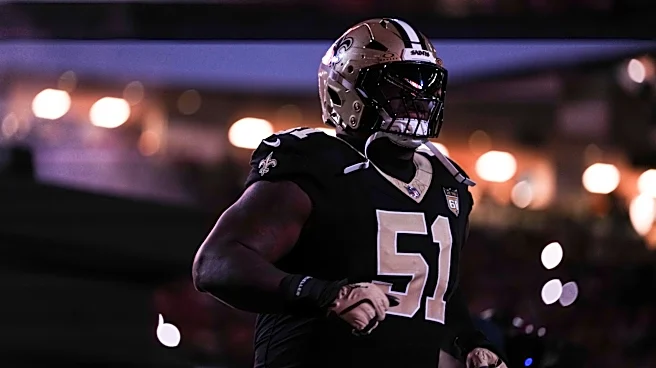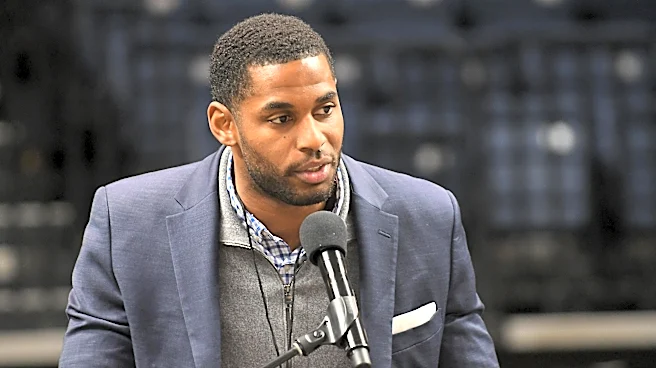





On Tuesday, I had the opportunity to speak with former New Orleans Saints wide receiver Marques Colston, who has successfully transitioned from the football field to the business world. Following a remarkable 10-year NFL career that included a Super Bowl championship, Colston has established himself as an entrepreneur, investor and business leader, with ventures spanning professional sports ownership, technology, education and investment management.
Today, as the co-founder of The Champion Fund, Colston
is helping create new opportunities for athletes and everyday investors to gain ownership stakes in the growing sports industry. During our conversation, we discussed these exciting opportunities, his journey from professional football to entrepreneurship, and his advice for athletes looking to invest in their futures.
TH: After a highly successful NFL career with the Saints, what motivated you to get involved in the business side of sports, and what was the thought process behind co-founding The Champion Fund?
MC: So for me, the Champion Fund is kind of a culmination of the last 15 years of kind of making my way around the sports ecosystem and the sports business world in a bunch of different seats. As a former athlete, I got one perspective of the investment world. Once I got enough experience and was able to see the other side investment world, it allowed me to see a lot of gaps in the market, just a lot of gaps around how deals are accessed, how you actually get the ability to invest in some of these opportunities.
TH: What advice would you give to a young athlete who is thinking about his future and looking to set himself up for success after his football career comes to an end?
MC: I would tell them very succinctly to start way before you think you need it. Because what happens is, as you are building your career as an athlete, it’s very easy to kind of get typecast into all of the things that people just assume and presume that athletes are going to do. So, the more that you can figure out what you’re interested in, what you’re curious in, and while you have that sports platform, be curious and continue to explore those things to where once you do transition, whether it’s from high school to college or college to the pros or pros to, I guess you can call it civilian life, you’ve already kind of gotten some reps. You’ve already figured out some of the things that you’re interested in. You’ve crossed some things off the list that you thought you might have been interested in that you’re not. And it just gives you a much smaller universe that you got to navigate. You don’t feel like you got to take on the entire world.
TH: What is the biggest lesson you’ve learned from transitioning from being a professional athlete to working on the business side of sports?
MC: I would say for me, particularly as a former athlete, that not all access is great access. I think people kind of come into every business opportunity and business dealing with their assumptions of who you are and what you want to get out of a deal. Walking in as a former athlete, a lot of those assumptions are marketing and visibility based. So, for me, the hardest thing has been to really get in the rooms in one way and then kind of maneuver within the room and pivot within the room to get to the place that I ultimately want to get to and not get painted into a corner.
TH: Was that something you learned during your playing career, or was it something you discovered after retiring and becoming involved in the sports industry through ownership and entrepreneurship?
MC: It’s something that honestly, I continue to learn because, I’ve been out of the game for 11 years now and I still have to navigate some of that. So it’s something that you kind of figure out early on. You’re just excited to be in the rooms. And then as you get more reps and as you get more access, you start to figure out like, yes, I’m in the room, but I’m kind of painted in this corner, signing autographs and taking pictures where I really want to be talking about business. So it’s something that you just continue to learn over time and you just try to figure out how to navigate some of those more misaligned situations, I guess is the easiest way to call them.
TH: What would be your biggest piece of advice for someone looking to build an investment portfolio and create long-term security for themselves and their family?
MC: I always start with industries and start with things that you have a baseline understanding of how the business works. Because look, investing is hard and it’s the diligence pieces of it, the monitoring of your portfolio, all of those things are difficult. So, you start with industries that you have an understanding of how the business works and you shorten the learning curve there. That’s always been a good approach for me and it’s one of the reasons I ended up back in sports after all these years. I intimately understand sports as a product, intimately understand it from the business side, from running it. So, it shortens the learning curve. And then all of the new iterations of investment kind of becomes the new learning doesn’t feel as it doesn’t feel like, again, like you’re drinking from a fire hose all the time. So, like I always tell people, start in areas that you have a comfort zone, start in areas that you’re curious and let that curiosity kind of take on some of the challenges of learning the different nuances of the industry.
TH: You had an incredible 10-year career here in New Orleans, filled with so many memorable moments. Aside from winning Super Bowl XLIV, what stands out as one of your proudest accomplishments or most memorable moments during your time with the Saints?
MC: Man, that’s a loaded question. I don’t really tend to think about my career in that way. I think for me, the biggest accomplishment is being a part of the revitalization of New Orleans. Just being down there for the decade that I was there, specifically that first five years, it was, you felt like you were a part of something more than just a football organization. Like you really felt like you were an embedded piece of the community. And to me, that’s the biggest accomplishment. To be able to have a career that had enough staying power, that had enough longevity to really play a role in the organization at that point in time, that to me was the biggest accomplishment. Like the stats are great, the wins are great, the Super Bowl obviously is great, but to be a part of something that was much more than just a result on the field and be a part of revitalization and be a part of kind of re-instilling hope down there and progress down there, that’s the thing that I will always hang my hat on as a part of the Saints.
Thank you again to Marques Colston for taking the time to speak with me. Whether he is creating opportunities for athletes, sharing valuable lessons from his own experiences, or helping others build a stronger financial future, Colston continues to make a meaningful difference long after his playing days have ended.