





You won’t find Arizona men’s basketball listed in the top 10 or 15 or even 25 of the 2026 transfer portal class rankings, where the program currently sits at No. 57.
The same could be said for the 2025 list, where Arizona was tied for 138th. The 2024 transfer class was 36th, while in 2023 Arizona brought in the 17th-ranked class. The year before was 72nd.
This time of year it can be frustrating seeing program after program and rival after rival announce the signings of some of the sport’s best players,
guys who will surely make a big-time impact at their new school.
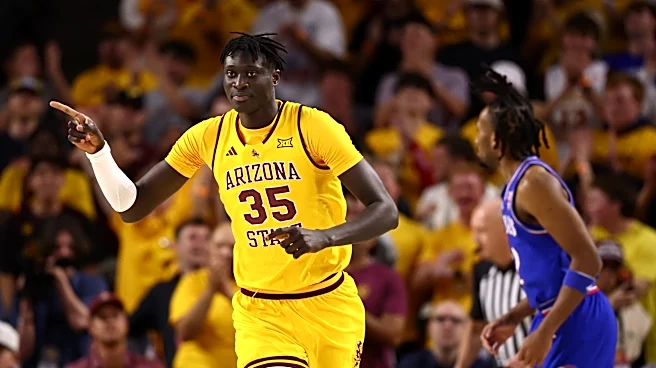
But for argument’s sake, looking at the rosters as they stand today would you rather have Arizona’s, even with the middling transfer haul, or Arizona State’s, which has brought in the 10th-best transfer class nationally and top-ranked group in the Big 12?
Exactly.
This is not to say that great teams cannot be built through the portal. The Michigan squad that demolished Arizona in the Final Four a few weeks ago was primarily constructed through NCAA free agency, and it would be silly to say Dusty May and the entire staff in Ann Arbor did anything but a great job.
But if every season you are forced to build the top end or bulk of your roster with players who won’t be around long or who are joining your program because it offers the best payday, chances are you are going to struggle to be a contender. In those cases you are not building a program or team, but instead rebuilding year after year.
Being in the upper echelon of programs, Arizona will consistently attract high-end talent that is very capable of — and even likely to — not being in Tucson very long. That’s part of the deal.
But where Arizona under Tommy Lloyd seems to differ from many programs, at least when it comes to the portal, is that he doesn’t appear to ever want to need it in order to build a team. He doesn’t go hunting for stars and isn’t looking to enter bidding wars.
Instead Lloyd seems to prefer using the portal to supplement a roster that is otherwise built with players who joined Arizona as freshmen or as early-career transfers who were not even close to finished products when they arrived in Tucson.
There’s nothing wrong with trying to “buy low” on talented players who only need coaching, growth, maturity or an opportunity to excel. Such was the case for guys like Jaden Bradley and Tobe Awaka, recently, as well as Oumar Ballo and Pelle Larsson and and it appears to be the plan for players like Derek Dixon and JJ Mandaquit.
One-year rental role players? Sure. But if you’re going to be a star, you’re either beginning your career at Arizona or planning on being around for at least a couple of years.
It’s a good plan.
Get them into the program early and there’s a better chance they’ll decide to stick around for a bit, money be damned. In the meantime, adding them to a roster that includes key returners and talented freshmen means you could have yourself quite a team.
Which is why anyone who feels a bit underwhelmed about what Arizona has done in the portal needs to look at the incomplete roster that has already been assembled. The return of both Motiejus Krivas and Ivan Kharchenkov, along with the arrival of Caleb Holt and Cameron Holmes is an incredible start. Rumors of a Koa Peat return seem to be picking up steam and should the rumors prove true, Arizona will likely find itself ranked preseason top 3.
Should Peat not come back (and even if he does), knowing Lloyd there is probably a player or two who we have never really heard of getting ready to join the program.
Is it as flashy an offseason as, say, Texas or Louisville, each of whom have done some serious work in the portal? Certainly not. And yet in sports it’s less about the process than it is the result, and when the dust settles there’s a very good chance Arizona will be better than them and many other teams, even without a massive portal class.
The way this next team is being constructed means there is a good chance that while a good chunk of the roster will depart for the pros, at least a couple key contributors will stick around. This means that while, every season is its own entity, Lloyd does not have to essentially start from scratch when trying to build a champion.
That’s the idea, anyway.
The byproduct of that strategy, besides consistently building top-seeded teams, is what can appear to be a quiet, underwhelming or disappointing offseason. Where other teams have made splashy additions through the portal, Arizona has built its roster with traditional recruiting and the retainment of elite talent. This is not to say the portal can’t be helpful and Arizona should never look to add high level players, because there’s no wrong way to get good.
But even better than acquiring someone else’s great player is developing your own, and fortunately Lloyd has been able to do a lot of that in Tucson. So while you may be wondering why Arizona hasn’t gone out and brought in certain players, it’s better to look at who Arizona already had — and who it brought back — because that team is set to once again be one of the best in the country.