



For most of the past two decades, the Washington Wizards have been bad. During that 20-year span, they’ve managed an above .500 record just six times. Their cumulative regular season winning percentage was 40.2% — second worst in the league. Only the Sacramento Kings (39.6%) were worse.
And the Kings had to play in the tougher Western Conference.
To be that bad for that long is difficult. The draft was designed to help losing teams obtain the best new players. Unfortunately, the worst teams are typically
bad because the people in charge of choosing the players do a poor job of evaluating the relative merits of available players.
Which is a kinda convoluted way of saying bad teams stay bad because they keep picking the wrong guy. A look back through the past 20 years of Wizards’ draft history underscores the point. No every draft year, of course. There were some years and selections where Washington either got the best guy, or the guy they picked turned out no worse than anyone chosen later.
And there were some gobstopping, future-ruining, scream-into-the-void blunders. The kind of mistakes that inspired the #SoWizards hashtag and locked in a small but devoted band of weirdo fans wh0 knew to expect the worst and revel in it.

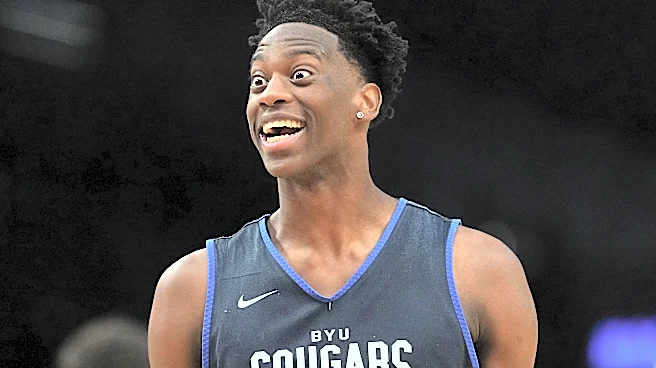
The newest executive team led by Michael Winger, Travis Schlenck, and Will Dawkins are trying to change all that. The tear-down portion is over. With five youngsters added to the draft over the past three years, the rebuild is underway. FanDuel odds suggest they’ll kick things into high gear by picking high-scoring BYU forward AJ Dybantsa with the number one overall pick.
Here at Bullets Forever, we’ve published some work looking at this year’s talent-loaded draft pool, and more is on the way. Today, let’s take a look back at bests and worsts of the past 20 years of Wizards drafts.
2006
At 18, Ernie Grunfeld selected Ukrainian forward/center Oleksiy Pecherov. The theory wasn’t bad — sweet-shooting 7-footer. In reality, he wasn’t really an NBA player. What made this a bad pick: Washington could have had Rajon Rondo (21st) or Kyle Lowry (24th). In the second round, the Wizards chose Vladimir Veremeenko, who never played in the NBA. They could have taken Leon Powe (bad knees and all), who went with the next pick, or Ryan Hollins (the pick after Powe).
Grade: D
2007
The pick was Nick Young, who a) was kinda almost not bad some of the time, and b) could not reasonably be considered a miss, even though he went 16th overall. It’s pretty stunning that no one picked in his vicinity performed any better. The closest “shoulda picked that guy” I could see was Tiago Splitter, who went 12 picks later. In this draft, Grunfeld saved his whiff for the second round. He picked Dominic McGuire 47th. Marc Gasol went 48th.
Grade: C-
2008

The pick was JaVale McGee 18th overall. McGee was a unique pairing of immense talent and cartoonish personality. He was absolutely robbed of a dunk contest win when judges chose Blake Griffin despite McGee pulling off three dunks that maybe five people on the planet could have done. Guys taken a little later who would have been better picks: Ryan Anderson (21), Nicolas Batum (25), George Hill (26). They sold the 47th overall pick, which annoyed me in 2008 but in retrospect was inconsequential. They missed on no one.
Grade: C+
2009
When I mentioned gobstopping, franchise changing blunders, I had 2009 in mind. With an alleged goal of assembling a championship contender, Grunfeld traded the fifth overall pick for Mike Miller and Randy Foye. Each departed the team after one season. By trading the pick, they missed the chance to select Ricky Rubio (Minnesota took him fifth), or Stephen Curry (7th), or even DeMar DeRozan (9th). Ouch. The blundering continued in the second round. They sold the 32nd overall pick for cash when they could have picked DeJuan Blair (37th), Pat Beverly (42), Danny Green (46), or Patty Mills (55).
Grade: F-
2010

Washington won the draft lottery and made John Wall the number one pick. Wall turned into a mutli-time All-Star and one of the better players in franchise history. I could kinda-sorta see arguments that the Wizards should have chosen Demarcus Cousins (5th) or Paul George (10th) instead of Wall, but I wouldn’t make those arguments myself.
Due to some trades, the Wizards also had picks 17 and 23. They chose French big Kevin Seraphin 17th and Trevor Booker 23rd. Booker was pretty good — no one picked later was any better. Seraphin was terrible (except for those hook shots), but the theory was pretty good, and he wasn’t much of a miss. The only guys who were good who went after him were Eric Bledsoe (18) and Booker. Bledsoe should have been the pick, and a Wall-Bledsoe backcourt could have been interesting.
Grade: A-
2011
This was a disastrous draft. With the sixth overall pick, Washington took Jan Vesely when they could have had Kemba Walker (9th), Klay Thompson (11th), Kawhi Leonard (15th), or Nikola Vucevic (16). With the 18th pick, they took Chris Singleton (who had a don’t draft grade in YODA) when they could have selected Tobias Harris (19th), Kenneth Faried (22nd), Reggie Jackson (24th), or Jimmy Butler (30th).
In the second round, they chose Shelvin Mack, who was the team’s most productive selection from this draft…and who they kept cutting to keep less productive players. Instead of selecting someone they kept deciding they didn’t want, they could have picked Chandler Parsons (38), Jon Leuer (40), Davis Bertans (42), or Isaiah Thomas (60). Thomas, by the way, had a first round grade in YODA.
Grade: F-
2012
With the third pick, the Wizards took Bradley Beal, who started as a standard-issue shooting guard and developed into a high-level offensive weapon. I’d accept arguments that they maybe should have taken Damian Lillard in that spot, though I would not have made that pick myself. In the second round, they picked Tomas Satoransky 32nd, who wasn’t bad…but they could have had Jae Crowder (34th), Draymond Green (35th), Khris Middleton (39th), or Will Barton (40th). Not an egregious miss, but still a miss.
Grade: B+
2013

For a second straight year, the Wizards had the third overall selection. This time, they picked Georgetown forward Otto Porter. While there were some (including Wall) who seemed more interested in chronicling things Porter could have theoretically done better, what he did was actually pretty damn good. The big miss: Giannis Antetokounmpo, who went 15th and became an all-time great. Ouch.
They traded their second round pick for Glen Rice Jr., who had a nice summer league. They didn’t miss a whole lot — Nate Wolters was chosen in that spot and didn’t do much in the NBA. They could have taken Mike Muscala, who was a decent backup big, or Raul Neto, who came to Washington later and had his best season.
Grade: C
2014
This draft rankled me. First, just before the 2013-14 season, they traded their first rounder plus an injured Emeka Okafor for Marcin Gortat. As a pure trade, it was fine. That they needed to make it was galling because they’d used every player acquisition resource available to them that summer to not address the glaring need for another big man — absurd because Okafor was 30-years-old. That’s an age when most players can be relied upon to get injured and get worse. Had they kept the pick, they could have had T.J. Warren, Jusuf Nurkic, Clint Capela, or a chubby, ground-bound Serbian kid who’d go on to be a three-time league MVP (Nikola Jokic, who went 40th!).
They had the 46th pick, which they sold to the Lakers for cash. They picked Jordan Clarkson. Something of a miss for Washington, though not a bad one.
Grade: C-
2015
In this draft, Grunfeld traded up to 15 so he could select Kelly Oubre Jr. I supported the move at the time — Oubre was long, athletic, and played hard. Some players picked later arguably had better careers, like Terry Rozier (16), Delon Wright (20), Bobby Portis (22), and Tyus Jones (24). I wouldn’t consider Oubre a miss, though. He was about as good as any of those guys and no one was significantly better. In round two, they chose Aaron White, who never played in the NBA, and still was no worse a pick than anyone who went later.
Grade: B+
2016
Once again, Grunfeld traded the team’s first round selection for a veteran — this time acquiring Markieff Morris. While Morris never was any better than average, he still proved to be a good value for the pick. First, because a “typical” 13th overall pick is going to produce over time at about the level Morris did, and second because they didn’t really miss out on anyone. The draft in that 13-17 range was blah. The “misses” came later — Malik Beasley (19), Caris LeVert (20), Pascal Siakam (27), or DeJounte Murray (29).
Grade: C
2017

For two seasons, Washington had been avoiding adding payroll in this offseason so they could have lots of cap room to chase free agent prizes like Kevin Durant or Al Horford. For some reason, no one in the front office — including the team’s owner, who was on the league’s ownership committee negotiating a new national TV deal — seemed to consider how that new TV deal would change the league’s financial landscape. That offseason, half the league had max cap room. The Wizards couldn’t get a meeting with Durant, and Horford chose Boston. They turned to a Plan C, which involved heaping large contracts on…lesser…players — Ian Mahinmi, Andrew Nicholson, and Jason Smith.
Nicholson was so bad, the Wizards paid the Nets their first round pick to absorb Nicholson’s contract and rent Bojan Bogdanovic for a few lackluster months. That pick became Jarrett Allen. It could have been OG Anunoby (23), Kyle Kuzma (27), Derrick White (29), or Josh Hart (30).
In round two, they traded the 52nd overall pick for backup guard Tim Frazier, which was fine. They didn’t miss anyone by trading the pick.
Grade: F
2018
With the 15th pick, the Wizards chose Troy Brown Jr., who seemed pretty interesting for a couple seasons. Then he lost confidence and retreated and ended up out of the league in short order. They could have taken Donte DiVincenzo (17), Kevin Huerter (19), Grayson Allen (21), or Anfernee Simons (24).
In round two, they inexplicably chose Issuf Sanon with the 44th pick. It’s not so much that better players went later (though they could have drafted De’Anthony Melton or Shake Milton), it’s that Sanon had shown nothing in his professional career overseas to suggest he would ever be an NBA player.
Grade: D-
2019
With the 9th pick, Tommy Sheppard and the Wizards chose Rui Hachimura, who had some good moments in Washington but got less productive the longer he stayed. Sheppard finally traded him to the Lakers for a bushel of second round picks, where Hachimura has been better playing in the space created by LeBron James, Luka Doncic, and Austin Reaves. The Wizards dodged a bullet by not picking Cam Reddish (10). They could have selected Cameron Johnson (11), PJ Washington (13), Tyler Herro (13), or Brandon Clarke (21).
With the benefit of hindsight, Herro should have been the pick. At the time, everyone was looking at the short arms and average height and wondering how successful he could be. Johnson or Washington could have been better choices, especially Johnson. While I had Clarke rated high in YODA, I fully understand not picking him that early in the draft — he was a weird combination of wing size, elite athleticism, and a big’s game. And he was older for a prospect. Overall, Hachimura was an okay pick.
In round two, they chose Admiral Schofield 42nd overall. Schofield had wing height and a football player’s build. The theory was he could become a three-and-D type. The reality was that he was too stiff and lacking in lateral agility or vertical pop to be strong at the D part, and his shot wasn’t good enough for the threes part. They could have taken Talen Horton-Tucker or Terance Mann, but I wouldn’t call the Schofield selection a whiff even though he failed.
Grade: C+
2020
Reportedly, the Wizards promised Tyrese Haliburton they would pick him 8th overall. On draft night, Deni Avdija, who they thought would go earlier, was still available, so they broke the promise and chose Avdija. While Avdija has grown into a very good player, the Wizards would have been better off keeping the promise and picking Haliburton — who in five seasons was All-NBA twice, All-Star twice, and was the best player on team that reached game seven of the NBA Finals.
In the second round, Washington for some reason traded the 37th overall pick in a deal that netted them Cassius Winston, who’d been a good college player but was not a serious NBA prospect. It’s tough to be good in the NBA when you’re small and slow and don’t jump well. The Wizards could have taken Tre Jones (41), Nick Richards (42), Isaiah Joe (49), or Sam Merrill (60).
Grade: D
2021
Once again, the Wizards picked a decent player. Once again, they left better players on the board. In this draft, they chose Corey Kispert 15th overall. Alperen Sengun went next. Sengun was followed by Trey Murphy III. Jalen Johnson went 20th. Ugh.
The Wizards had another first round pick, which for some reason they traded to get Isaiah Todd and Aaron Holiday (a replacement level guard). Todd never came close to being an NBA player. The pick they dealt became Isaiah Jackson. They could have drafted Quentin Grimes, Cam Thomas, Santi Aldama, Herb Jones, or Miles McBride.
Grade: D-
2022
This one might have been the worst draft in franchise history other than Kenny Green (who didn’t even make the team) over Karl Malone. With pick No. 10, the Wizards chose Johnny Davis. They bypassed Jalen Williams (the terrific one who played great in the NBA Finals for OKC), Jalen Duren, Mark Williams, Tari Eason, Christian Braun, and Walker Kessler. Wow. Many — MANY armchair draft analysts were screaming for Jalen Williams at that spot. The professionals picked a guy who could not compete at the NBA level.
In round two, they chose Yannick Nzosa 54th, and though Nzosa never played in the NBA, they missed on no one.
Grade: F-
2023

In his first draft with the team, general manager Will Dawkins traded up a spot to select French wing Bilal Coulibaly. While Coulibaly has had his ups and downs, as well as injuries and “injuries,” it’s difficult to argue anyone selected after him has been significantly better.
In round two, the team shuffled some picks and ultimately chose Tristan Vukcevic, a decent shooting big man with leaden feet and inattentive defensive presence. They could have taken GG Jackson (eh), Toumani Camara, or Trayce Jackson-Davis. Fun fact: I was pleased when I thought the Wizards had picked Jackson-Davis 57th overall. Alas, they’d traded the selection to the Golden State Warriors.
Grade: B+
2024
The Wizards used three first rounders:
- 2nd overall: Alex Sarr — potential franchise player and likely to be the best player from this draft
- 14th overall: Bub Carrington — competitive gamer, though not very effective overall. They could have picked Kel’el Ware, Jared McCain, or Yves Missi instead.
- 23rd overall: Kyshawn George — competitive gamer who mixes commendable effort and positive plays with ambitious mistakes and ill-tempered fouls. No one picked later is any better.
The Wizards traded out of the second round. They had sufficient resources to have landed Ajay Mitchell or Jaylen Wells.
Grade: A
2025
Two first rounders in this one:
- 6th overall: Tre Johnson — good shooter who lacks dimension to his game. It’s too soon to say for sure, but it’s arguable that Jeremiah Fears or Cedric Coward would have been better choices.
- 21st overall: Will Riley — My assessment of Riley’s rookie year wasn’t as positive as others thought, but he has promise. While it’s too soon to say for sure, I didn’t see anyone picked after him who was better.
In round two, Washington traded out of the 32nd pick where they could have drafted Noah Penda or Micah Peavy, and they chose Jamir Watkins at 43. Watkins was an older prospect, who plays hard, works on defense, and needs to improve his shooting to earn a role. Still, no one picked later has been any better.
Grade: C+
A few observations:
- The impact of major blunders is profound. It would have been one thing to say pick Rubio at five instead of Curry. It was something else entirely to spend the fifth pick and gain no long-term value. Getting nothing from Vesely at six was crippling.
- The quality of Washington’s drafting dropped when the team replaced Grunfeld with Sheppard and improved markedly when Ted Leonsis hired Winger, Dawkins, and Schlenck.
- This year’s draft is LOADED at the top. In Ye Olde Draft Analyzer (YODA for short), my stat-based draft prospect evaluation tool, I have four players with scores consistent with being the number one pick in most drafts, and 12 players with scores that would put them in the top five in most drafts. For context, Sarr, who went second overall in 2024 and had the top score in YODA that year, would rank fifth in this year’s draft. Tre Johnson would rank 17th. Coulibaly: 12th. And so on.