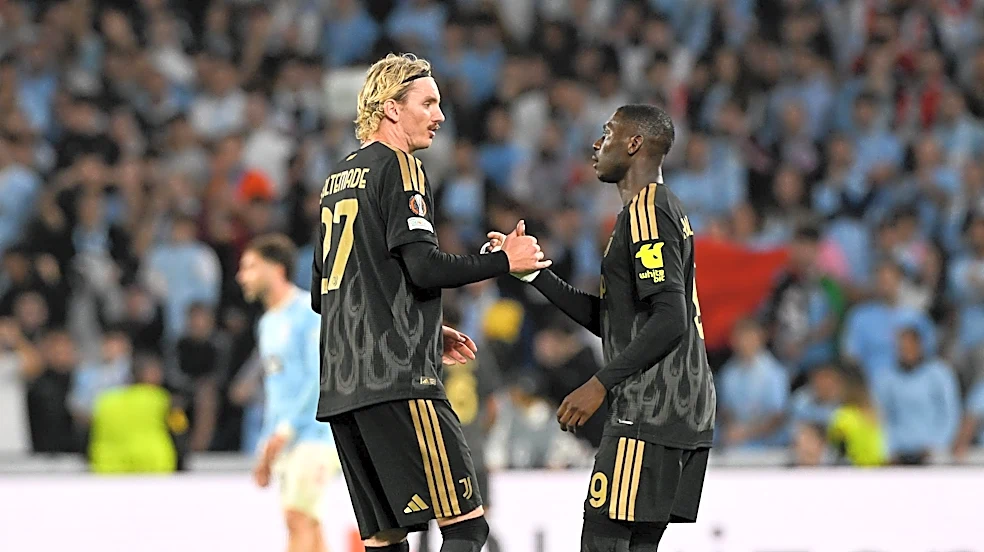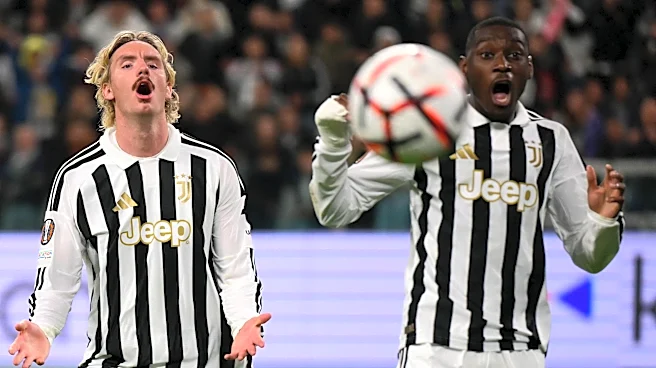





For many of us Juventus supporters — reasonable and right-thinking folk that we are — the 3-0 home defeat to Lazio felt like more than just another bad result. It felt like a hard stop, a reality check, the end of any fun on this rollercoaster. Let’s be honest, it’s getting hard out there.
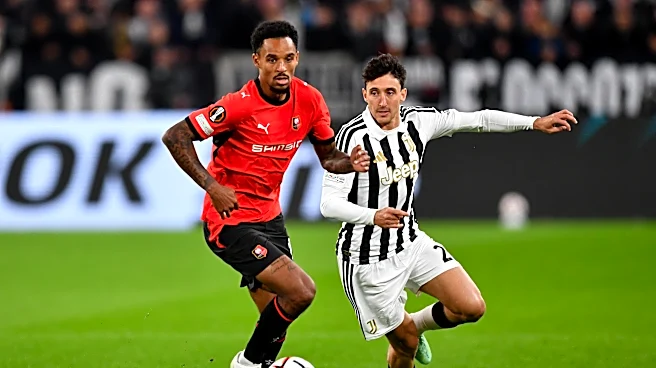
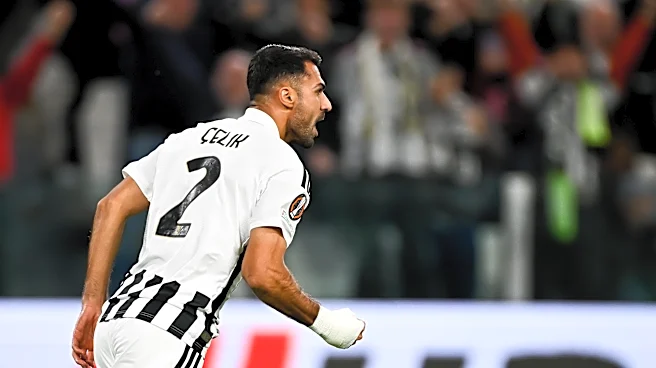
Four days later, came another city, another club and a 2-2 draw against Rennes. This was not a great result. It was not a statement performance. It certainly does not erase the memory of Lazio from just a few days earlier.
What’s the best I can make of this? Perspective.
Taken individually, neither result tells us everything about this Juventus side. Viewed together, they may tell us something we’d actually like to know.
One match exposed problems, the other hinted at possibilities. Fair enough. Let’s see. How can we tell the difference between a project rebuilding and a failed promise?
Here are my six takeaways — and two other thoughts — from two different Juventus performances over the past week, and why they may shape the club’s European and domestic future.
1. Juventus are further from the top than we thought
The most obvious conclusion is also the most difficult for us very reasonable and sophisticated Juventus supporters to accept.
For years, the language of “rebuilding” has acted as a cushion, a comfort, and a justification. That language has kept us less warm as summers have passed but, in theory, we wrap ourselves nonetheless in the promise that better days sit just, just, around the corner.
I think we have to accept that this is the season that will tell us whether Juventus are approaching that point or remain some unfulfilled promise’s distance away.
That Lazio defeat was not defined by bad luck, controversial decisions or a cruel bounce of the ball. Lazio were simply better. Better organized. Better drilled. More confident. More dangerous.
Juventus enjoyed possession, but possession without purpose is just performance art — which we can all agree is something we would prefer to leave to the Milans. Lazio looked like a team that knew exactly who they were. We looked like a team still trying to work out where they are.
That contrast was impossible to ignore. One side entered the match believing it belonged among Serie A’s leading contenders. The other was hoping to prove it belonged there too.
By full time, Juve had lost the match, the crowd, and the argument.
2. The attack remains the biggest problem
Juventus’ attacking struggles have slipped from temporary concern to a question of identity.
Too often the side appears caught between ideas. Players search for passes that never arrive. Runners make movements that teammates fail to recognize. Possession circulates, but danger has not been invited to this party.
The issue is not simply finishing.
Juventus struggle to create consistent advantages between opposition lines. Wide players frequently receive the ball in static positions rather than dangerous ones. Too many attacks conclude before anyone in the opposition defense has genuinely felt uncomfortable. There are isolated moments of quality, but isolated moments are not a game plan.
At present, Juventus appear to have spent a lot, a lot, a whole lot of money while still trying to decide exactly what kind of football they want to play.
Run. Pass. Cross. Repeat. That is effort. Congratulations. Participation certificates all round.
It is not an attacking blueprint.
3. Missing players matters, but structure matters more
Juventus entered the Lazio match without several important players.
Those absences undoubtedly hurt. What is harder to accept is the suggestion that they explain everything. Missing players explain a drop in quality. They do not explain losing shape, losing clarity and losing confidence.
The starting lineup still contained experienced internationals and expensive talent. There was enough quality on the pitch to produce far more than Juventus ultimately showed against both Lazio and Rennes.
That is why the concerns increasingly feel structural rather than personnel-based. Returning players will help. Additional signings may help, too. Neither, on their own, can solve organizational problems. A team can survive injuries. It cannot survive uncertainty — especially when that uncertainty goes to character, goes to recruitment choices, goes to playing style.
4. Defensive stability is more fragile than it looks
A 3-0 home defeat. A 3-0 home defeat. Not our best work.
That is not a narrow loss decided by a single error or a moment of brilliance. It is comprehensive defeat. What made the performance particularly concerning was how vulnerable Juventus looked whenever Lazio accelerated the game.
For years, Juventus built their reputation on defensive certainty. Even during weaker periods, opponents knew scoring against them would require patience and precision. I think we can all agree that that is the case no longer.
There are capable defenders throughout the squad. There is enough talent to try and build a strong defensive unit. What no longer exists is the automatic assumption that Juventus will remain organized when pressure rises. Elite teams absorb setbacks without losing their shape or their composure.
Juventus currently look vulnerable to losing theirs.
5. Rennes showed a more practical Juventus
The draw against Rennes will not be remembered as a great European performance.
Juventus conceded twice. They left with only a point. Significant flaws remained visible throughout the evening.
Yet tactically, it may have been one of the more interesting performances of the season.
Against Lazio, Juventus often looked trapped in their own mind. They sought control through possession but rarely turned that possession into territorial dominance or genuine attacking pressure. Large parts of the game were played at Lazio’s preferred tempo.
Against Rennes, the approach felt different. Rather than attempting to monopolize every phase of the match, Juventus were selective — almost mindful. There was a greater willingness to defend in a compact shape, concede harmless possession and attack quickly once opportunities emerged.
The result was a side that looked considerably more comfortable without the ball. Possession remains a valuable tool. What Rennes demonstrated, however, is that possession is a means rather than an objective in itself.
For perhaps the first time this season, Juventus appeared willing to accept the realities of the squad currently available. The midfield sat deeper for longer periods. Defensive distances were generally shorter. The team looked less vulnerable when possession was lost because fewer players were committed ahead of the ball. When attacking opportunities emerged, Juventus were often more direct and more purposeful than they had been against Lazio.
Most importantly, the match contained several periods where Rennes were controlling possession without genuinely controlling the game.
Elite European sides have long understood that controlling a football match does not necessarily mean having the football. It means controlling space. Controlling transitions. Controlling risk. Juventus were not perfect in any of those areas. Rennes still found opportunities and Juve’s defensive weaknesses were still exposed at times.
But unlike the Lazio performance, there were signs of a tactical framework that suited the players currently available. The draw was not evidence that Juventus have solved their problems. It may, however, have been evidence that they are beginning to identify which problems are actually worth solving.
6. The mentality question refuses to go away
Perhaps the biggest issue remains, as we say, the “top two inches.”
When Lazio scored, Juventus looked uncertain. When Lazio scored again, they looked defeated.
Supporters can accept losing. Well, perhaps “accept” is doing some heavy lifting there. But supporters are generally more forgiving of defeat than they are of confusion.
They can tolerate a clear idea that fails. They struggle to tolerate a team that appears unsure what its idea is.
Against Lazio, uncertainty spread from the pitch into the stands. The atmosphere shifted from frustration to resignation long before the final whistle.
Against Rennes, by contrast, there was at least evidence of resistance. That does not solve the mentality question. It does suggest there might be an answer somewhere within the group.
The European question
Viewed together, these two matches reveal two competing visions of this team.
Against Lazio, Juventus pursued control but achieved little of substance. Against Rennes, they sacrificed some control and arguably became dangerous.
That is not a coincidence. It may be the beginning of an identity. Peak Spalletti, most famously seen at Napoli, was built upon domination. Possession. Pressing. Overloads. Technical skill. Collective will.
The current Juventus side is not that Napoli team. The best European coaches understand a simple truth: domestic football and European football reward different virtues.
League football is about controlling seasons. European football is about controlling moments.
A league campaign rewards consistency. Over 38 matches quality usually prevails. There is time to recover from setbacks. MacDonalds can win a season.
Europe offers no such luxury. One lapse can end a campaign. The Rennes match hinted at that kind of football. Juventus were not flawless. But they remained alive, organized and competitive. For this squad, that may be a realistic foundation.
A different Juventus
The truth (after Lazio) is that Juventus cannot play at the level of the best teams in Europe.
The encouraging truth after Rennes is that this may not be a problem we have to solve now — and that we can solve the problem in front of us.
Lazio Juventus looked stretched, uncertain and vulnerable. Rennes Juventus was less ambitious — sure — but arguably more effective. It defended compactly, tried to manage risk better and didn’t need the ball.
Right now, if you have to take Juve to the bank you will get a return on physicality, experience, and defensive talent. That can be more than a ceiling, a limitation. It can be a starting point that ends in the top 4 of Serie A.
Let’s solve the problem in front of us, let’s use what we have, let’s play the game we can.