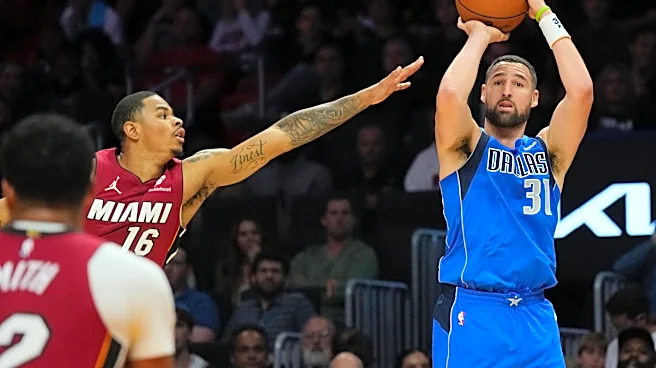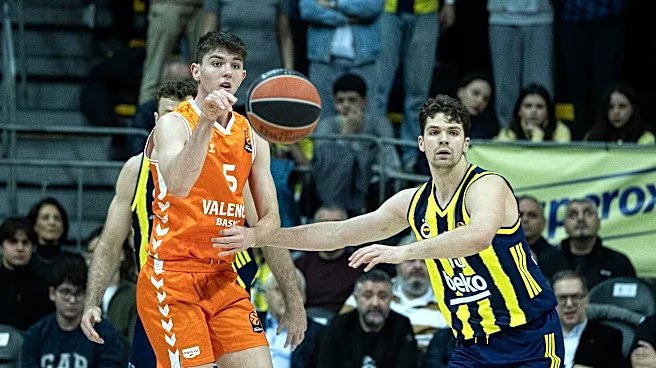

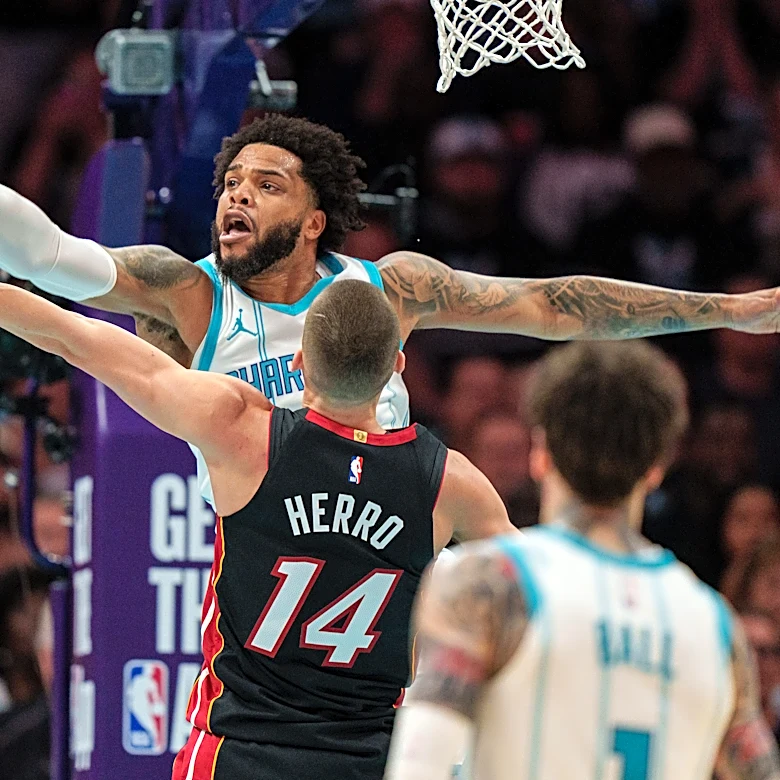


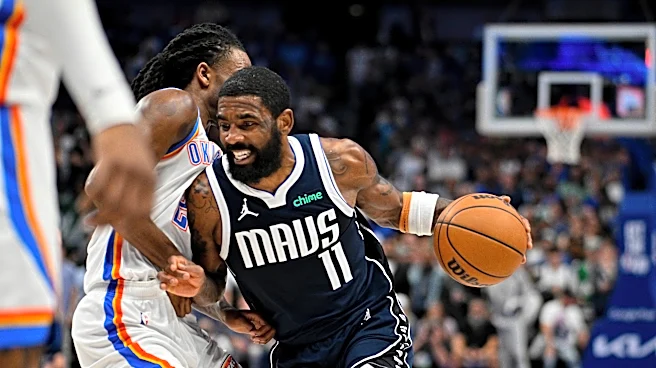
The Dallas Mavericks have five Europeans on their roster at this point (including two-way player, British Tobi Lawal), two of which are completely new to the US and the NBA.
But why do we keep talking about this? What is really the difference between a European player and an American? And does it matter when it comes to basketball?
The Mavs have a long history of embracing international players and looking in new places for hidden treasure. Dirk Nowitzki and Luka Doncic are of course the biggest examples
of the tradition in Dallas to look outward. Both players have talked about the differences between the styles of basketball and the vastly different approach in the US.
Through the years, Doncic has talked about how it’s easier to score in the NBA than in Europe, and has mentioned the atmosphere in European games as being much more impressive and intimidating than he has experienced in the US. This goes for three times NBA MVP Nikola Jokic of the Denver Nuggets, as well, who famously said: “I played in Serbia, brother”, to a question about getting booed.
Dirk Nowitzki has talked a lot about how Europeans were perceived in the 1990’s when he entered the league, recently stating: “We weren’t soft, we were skilled” in a piece called NBA’s European revolution.
Back then, the differences between Europeans and Americans were eye catching. But that’s not really the case anymore, says Miroslav Ćuk, host of the DNVR Nuggets AND ONE podcast and Serbian NBA analyst.
“The big difference used to be that European kids had access to professional coaches way earlier than the American kids, who could only work with gym teachers until the end of high school. Nowadays, of course, there are so many kids who have access to various coaches and trainers, because they have the money needed for it, like kids of former professional basketball players, and it creates a big competitive advantage.”
Emmet Ryan, editor of BallinEurope, agrees. He places Europe on top, player development-wise, as it doesn’t have the same disparity issues.
“The focus with kids [in Europe] is probably more effective, as it tends to not have the same pay to play disadvantages of the US.”
In Europe, the upside is still that young players have easier access to club systems that develop them, usually to be able to play all positions and with a firm grasp of the fundamentals. But a lot of talent moves to the US earlier than ever these days.
“Because of the NIL, most of the super talented Europeans move to the States and get paid handsomely. But we still need to get feedback on whether that is actually better or worse for their development, compared to staying in Europe,” Miroslav Ćuk adds.
The jury is still out on that one, as the case for developing talent in Europe is strong. Players who didn’t go to college in the US, but instead stayed at a major European club or a great developmental system until declaring for the draft, usually playing a few seasons at the highest European level, are right now performing the best in the NBA.
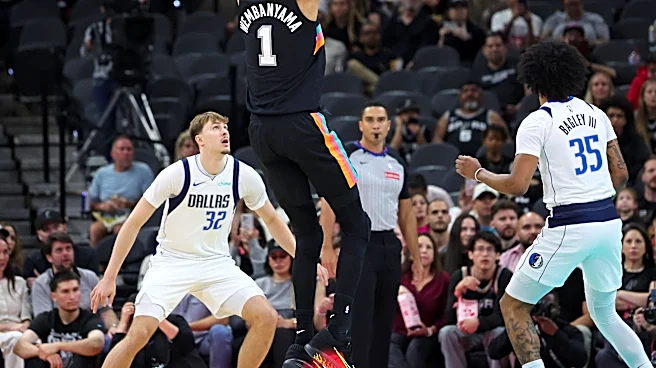
Take Luka Doncic and Victor Wembanyama, of course, and Nikola Jokic. All developed in Europe and arrived to the NBA almost fully formed. But then there’s Giannis Antetokounmpo. He didn’t move to a US college, but he was brought to Milwaukee to develop early on as a 19-year-old, not quite NBA ready – yet.
It seems for now, though, that European players who take the US college route to get to the NBA, have a better chance of becoming a mid-level player in the best league in the world. But the chance of them becoming a superstar seems to decrease, as opposed to the remarkable cases of both Luka Doncic, Dirk Nowitzki, Nikola Jokic and Victor Wembanyama. For now, at least.
“If Nikola Jokić had been an American center rather than a Serbian one, his fundamentals would probably never have received the level of investment they did. He would most likely have been developed according to the conventional model of a standard center, with his training built primarily around his size and physicality. And today, he would probably be an average center in the basketball world — perhaps even below average,” Turkish basketball executive Ahmet Melik Subaşı says in his piece, titled “The Euro Mavs II: Two things had to happen simultaneously for Europe to be able to compete with the US”, out next week.
And to further this case, there’s an argument to be made that European club culture may be of more importance in this player development trajectory than most realize. To many, the main difference between the US and European basketball traditions is exactly that: club culture. And that’s something that looks to affect European talent directly.
“In my opinion, the main difference is the development part,” Slovenian sports writer and podcaster Matej Petek says.
“The AAU versus the club/academy system in Europe. Everything’s much more individualized in the US, they’re playing games constantly, much less practice time, while in Europe, it’s the opposite. Kids play one game a week and practice the rest of the time.”
That’s another key difference between European and US culture: the focus on individualism in the States. This is reflected in sports, and especially in basketball culture.
Matej Petek, who has been following Luka Doncic since his early days in Slovenia, like Miroslav Ćuk has with Nikola Jokic in Serbia, points out that this process leads to developing a very different player profile.
“These players look at the game differently and play it differently, too,” Matej Petek says.
To Miroslav Ćuk, club culture equals tradition, and that adds a layer of meaning to player development and fans.
“I’m a Partizan fan because my dad and my grandpa were Partizan fans. You can’t buy my loyalty by bringing, say, Kevin Durant to another team. There are no player fans in Europe, just club fans.”
And you’d have to look far and wide to find a European basketball fan, or sports fan, who would disagree.
“There’s definitely more of a feeling of cultural ownership with the teams, for sure,” Emmet Ryan says.
“While you can move the professional franchises cross country in the States and find new fans almost instantaneously,” Miroslav Ćuk points out, “that has been almost impossible in Europe. There are clubs who are considered “artificial” and have literally no fans, like MEGA in Belgrade [where Nikola Jokic spent his last years in Europe], even though it is a very successful business model.”
But with the change happening these days in the basketball world, like the NBA, which is becoming more international each year, as well as with the plans for NBA Europe, perhaps making European basketball more American than ever, there might be a case to be made that everything is merging into one, more homogenous type of basketball culture.
But is it really that simple?
“The European club culture is why I am sceptical about NBA Europe, or at least the first couple of seasons of it,” Miroslav Ćuk says. “You can’t just put a couple of franchises in Manchester and expect it to just become a basketball city.”
“But, as I said,” Miroslav Ćuk adds, “I’m not confident in saying that, since the world is changing at a high pace.”
Back to Europeans competing with Americans for NBA roster spots. How does a much smaller talent pool in Europe manage to keep competing with the American basketball superpower?
“To compete with a monster like that,” Ahmet Melik Subaşı says, “you have to do something extraordinary.”
“You can challenge its fundamental standards to some extent, but you can only truly compete with it by producing something it does not have — something unusual, different, exceptional.”
Ahmet Melik Subaşı makes the point that a couple of things had to happen at the same time for Europe to even be able to compete with the US. And it all happened to coincide.
“In tactical terms, they either had to develop superior systems that would allow them to play the game more efficiently with less effort and despite having lower physical standards, or they had to develop players whose fundamental skills were so exceptional that they could compensate for the physical gap – players capable of creating magic with the ball,” he says.
Magic doesn’t come from a formula. We can’t make a recipe and then just follow it to create spectacular players who are able to provide the magic that is creative and innovative basketball.
Mid-level, albeit fantastic basketball players are made by the dozens in American colleges. But what does it take to make the spectacular?
Magic usually emerges somewhere outside the box, in the details and between the lines – after hardship and struggles. And maybe that’s why Europe, systematic but unconventional as it is – is the place developing most of that right now.
Stay tuned for part II and III.
Find more Beyond Basketball pieces here.