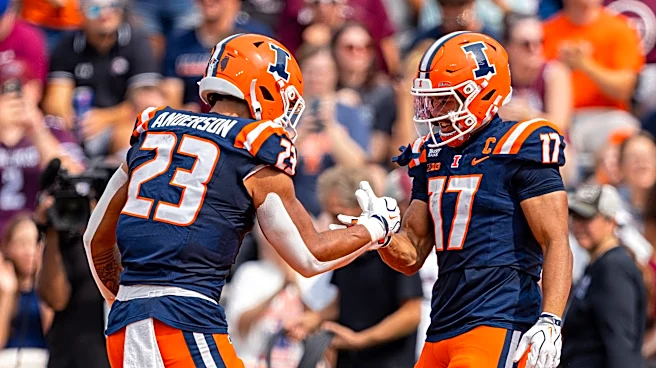




Illinois’ passing offense has been defined by one name: Collin Dixon.
Off to a scorching start, Dixon has already racked up seven touchdowns and 367 yards, while also setting the single-season record for receiving touchdowns at Gies Memorial Stadium.
While his production has been incredible, other options will need to become more prevalent
if Illinois wants to remain competitive throughout Big Ten play.
Quarterback Katin Houser has thrown two interceptions this season, with a commonality between both of them. In each situation, the ball was forced Dixon’s way.
In a way, this overreliance on Dixon can be incredibly detrimental to Illinois. Solely relying on one player, as Illinois is doing with Dixon, makes the offense incredibly one-dimensional.
Diversifying the options throughout the wide receiver corps will help open up the offense and could be key to limiting turnovers throughout the year.
Against the strong defenses Illinois will face this season, that will be necessary.
Ohio State and Iowa tout top-10 defenses in the country, and Oregon’s slow start should not diminish the amount of star power it has on the defensive side of the ball.
Illinois will face tough challenges against those teams, but spreading the wealth among its receivers could help alleviate some of those struggles.
Likewise, given the shaky start to Illinois’ defense, its offense will likely have to score consistently to keep the Illini in games.
By making multiple receivers legitimate threats, the Illini’s chances of consistently producing productive drives greatly increase.
Dixon’s play this season has been incredible, but it may not be sustainable throughout the season or conducive to the type of season Illinois is striving toward.