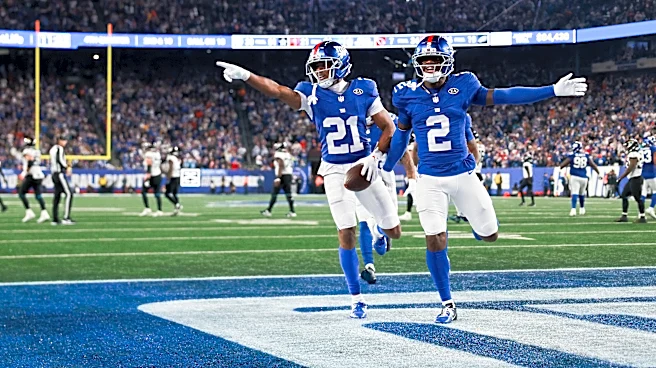


This Sunday felt like a turning point for the New York Giants’ season and for the franchise in general. They’d gotten off to a good start, but against bad to mediocre teams. The best team they had played had beaten them soundly, and they’d lost two games and tied one against teams they should have or at least could have beaten. Against the 7-2 Jacksonville Jaguars, though, the Giants showed that they have to be taken seriously – not as a Super Bowl contender, but as a team that has a plausible path
to the playoffs and could be a tough opponent for whoever they would meet in the first round.
Let’s take a look at Pro Football Focus grades and advanced stats for the game to see which players helped them get to that point.
PFF grades: Coaching
OK, PFF does not grade NFL coaches, so that title is misleading. Maybe, though, we can get an indirect clue about which teams are well-coached and which aren’t by looking at the overall PFF team grades:

At the top of the PFF overall rankings we see many of the teams that most people would consider the cream of the crop in the NFL this year, most of them with records that support that ranking, e.g., CIN, DET, SF, LAR, JAX, KC. At the bottom we see most of the teams we’d consider the NFL’s worst: MIA, LAC, TEN, IND, ARI. In other words, good/bad players generally make for good/bad teams.
There are outliers, though, and there can be a couple of reasons for that (in my mind):
- Teams with a few transcendent players and otherwise mediocre talent. The quintessential example is Buffalo, 9-1 but only 11th in overall PFF grade. My interpretation: Josh Allen hides an otherwise middling group with his great play.
- Teams with considerable talent but poor coaching or game management: I might put the Jets (No. 12 but only 3-8) in that category.
- On the flip side, teams that aren’t that talented overall but are very well coached: Here we have the Vikings, 19th in overall player grades but 7-3. Last night’s loss to SF notwithstanding, most people acknowledge that the Vikings are where they are mostly due to the tremendous defensive scheme that Brian Flores has created.
Then we have the Giants. They’re even lower than Minnesota in overall player grade (21st in the NFL), yet they sit today at 6-3-1. The conventional wisdom is that the mismatch is explained by their easy schedule to date. Undoubtedly there is some truth in that. However after their victory Sunday, the Giants have now beaten PFF’s No. 5 (HOU), No. 6 (JAX), and No. 8 (DAL) teams as far as individual player performance is concerned. That has to say something about John Harbaugh and the rest of the Giants’ coaching staff.
PFF grades: Offense

You know it wasn’t a great day for the offense when Chris Manhertz is your highest graded offensive player – by a lot (mainly for his 14-yard pass reception on his only target).
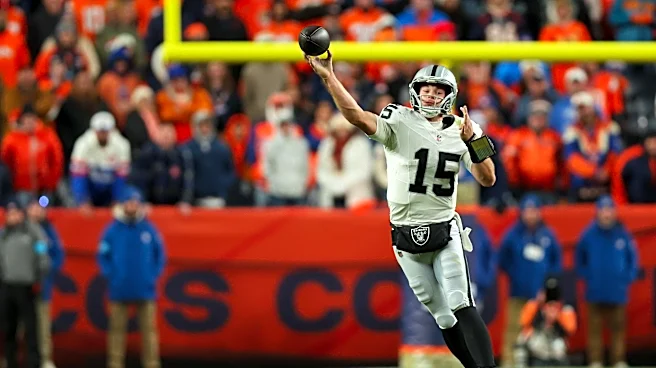
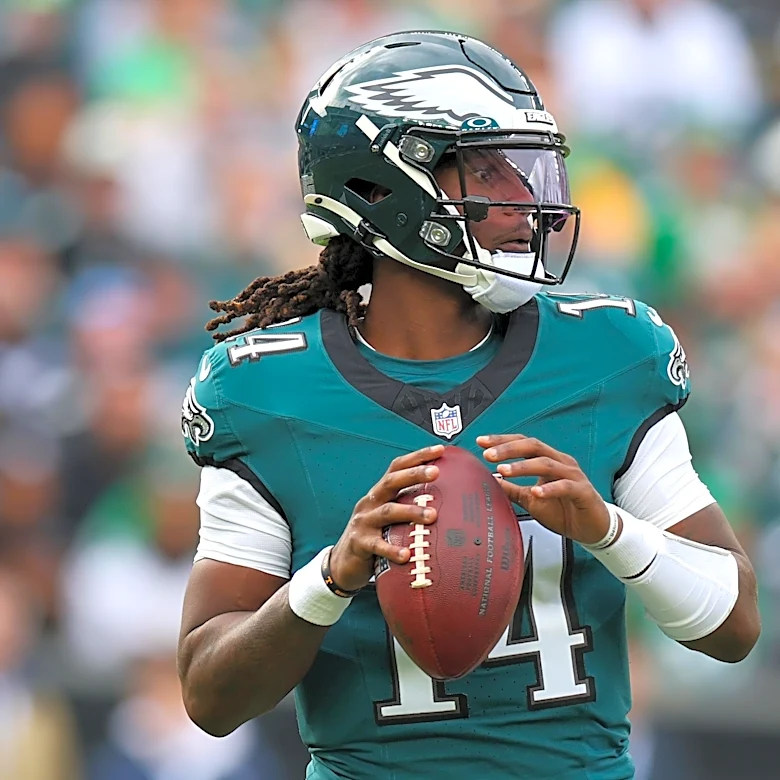
As for the passing, it wasn’t J.J. McCarthy’s greatest day. He couldn’t hit the broad side of the barn on his deep passes (0 for 5 beyond 20 yards):

Most of those incompletions, moreover, were way overthrown, especially a couple to poor Darnell Mooney, who was getting open and had little to show for it. McCarthy’s -16.9% completion percent over expected was…awful. As a Viking, McCarthy’s deep passing wasn’t elite, but it wasn’t this bad either, so let’s just call it a bad day at the office. Take away the deep passes and he was at least above 50%. He had one “big-time throw” (BTT) and no turnover-worthy plays (TWP), and in fact he has 11 BTTs and only four TWPs as a Giant. That’s a great ratio. PFF’s leading passer, Joe Burrow (and who would argue this season?), has 21 BTTs and seven TWPs, a pretty similar ratio, in more than twice as many dropbacks as J.J. has. Anyway, how can we criticize McCarthy after he ran down – and successfully tackled – safety Antonio Johnson after Johnson had scooped up Cam Skattebo’s fumble and looked like he was taking it to the house?
With one exception, the pass protection was pretty good Sunday – McCarthy was not sacked at all. Andrew Thomas, Jon Runyan Jr., and Sisi Mauigoa had clean stat sheets, while Jermaine Eluemunor gave up only a hit and a hurry. Bryan Hudson, however, had by far his worst game as a Giant, surrendering a QB hit and five hurries.
That said, Hudson graded well in run blocking, while Runyan and Thomas were near-average and Eluemunor and Mauigoa were below-average. Among players who carried the ball, the only notable number is Skattebo’s poor rushing grade, mostly due to his fumble that could have cost the Giants the game.
Malik Nabers was McCarthy’s primary receiving target Sunday, with 7 receptions in 10 targets for 55 yards and a TD and an above-average grade. Isaiah Likely had his quietest game of season with only one catch in 3 targets, but it was for 35 yards, more than half of them after the catch. Malachi Fields had what looks like a mostly nondescript day stat-wise with only two catches in five targets, but his impact on the game was much bigger:
(1) One of them was the 19-yarder between defenders on an absolutely beautiful throw by McCarthy that kept the ball in the Giants hands late in the fourth quarter:
(2) Another was a beautiful 39-yard pass down the left sideline by McCarthy on which Fields drew pass interference near the goal line, leading to a TD finally on a Jameis Winston keeper a few plays later:
This is why you have to take stats of any kind for what they are – one window on performance but not the only one. Those were two great McCarthy throws and two great Fields plays on them, each of them important to the outcome of the game. PFF and other stats venues try to exclude “garbage-time” stats, and PFF does give credit for a well-thrown pass that is broken up due to pass interference, but I’m not sure anyone adequately quantitatively accounts for well-executed offensive plays that draw penalties and that contribute to sealing a victory late in a game.
PFF grades: Defense

The defense was a different story. There were many Giants players who had great games, which makes sense when you hold one the NFL’s best offenses to 18 points.
Abdul Carter had an absolutely spectacular day. PFF gave him a 91.1 overall grade, mostly due to his disruptive pass rush. PFF credited him with two sacks, three QB hits, and four hurries. Next Gen Stats credited him with 12 pressures, leading the league Sunday, with six of those being quick (under 2.5 s) pressures:

Staying on the defensive line, Kayvon Thibodeaux was credited by PFF with 4 pressures, while D.J. Reader continued his excellent season with 5 pressures, including a sack and a QB hit. C.J. Okoye had a QB hit, and Shelby Harris, though grading low overall because of poor run defense, had a QB hit and hurry. Dawuane Smoot contributed 2 hurries. Bobby Jamison-Travis played more poorly than in his last few outings and did not make the stat sheet at all in his 22 snaps.
The Giants’ secondary had an excellent game overall. At the top of the list was Deonte Banks, who received an outstanding grade for good reason – six tackles and an assist with no missed tackles, and only two receptions in 10 targets for 21 yards with an interception and two pass breakups. Paulson Adebo was almost as good, with only two receptions in eight targets, an interception, and a pass breakup. Adebo and Banks were among the best in the NFL Sunday:
Jevon Holland graded highly as well, with one pass breakup. Dru Phillips graded below average overall, because he surrendered seven receptions in 10 targets, but he also broke up two passes, was generally tight in his coverage, even on the Parker Washington non-TD play, and was sticking with receivers better than we’ve seen in recent games. Ar’Darius Washington graded low because one of his two receptions given up in four targets was a TD.
The linebackers had a mostly quiet game. Arvell Reese graded only average overall, but he did have two QB hits and two hurries, along with five tackles and two assists (but one missed tackle). At the other end of the spectrum, Micah McFadden was the lowest graded defensive player, mostly because he missed six tackles. He also gave up seven completions in eight targets for 70 yards.
Advanced stats
Here’s an indication of how much the Giants’ pass rush bothered Trevor Lawrence, and heroic measures he took to avoid it and keep plays alive Sunday:
Lawrence actually had six plays in which he held the ball for more than 5 seconds, once more than 10 seconds. A less athletic quarterback would have been sacked 10 times or more.
Sticking with the defense, here’s how well Abdul Carter and D.J. Reader have played this season, looking at both pass rush (y-axis) and run defense (x-axis) compared other defensive line players around the league:
Here’s a nice aggregated clip of Carter’s pass rushes Sunday:
And here’s a key to watch for the rest of the season. Dennard Wilson has been blitzing a lot in order to create pressure this season, but you’d really not rather do that if you can get pressure with four. Sunday, he was able to:
File this one under “the defense would like to call another witness, Your Honor”:
I mentioned J.J. McCarthy’s awful CPOE earlier, the worst in the NFL (barely) Sunday. His success rate (progress toward a first down or positive EPA) was bad too, and his NFL passer rating of 69.3 was the lowest in the league. Looking beyond these, though, we see that McCarthy’s QBR was actually the sixth-highest in the league Sunday. According to ESPN’s breakdown of the components of QBR, McCarthy led the NFL Sunday in “clutch-weighted” expected points added through rushing, so even though he overthrew all those deep passes (note the league-leading aDOT in the chart above), he also added significant value with his 33 net rushing yards.
On a different topic, speed is always a good thing in the NFL, and the Giants’ new returner, Xavier Gipson, has it:
Finally, with apologies to Jim Mora, it is indeed time to start talking about the playoffs. Unfortunately the Giants have one of the toughest roads to travel as judged by remaining strength of schedule:
Giants fans probably think more about Dallas than anyone else as a threat to a division title, but Washington (which holds the tiebreaker advantage over the Giants) actually has the easiest remaining schedule.