



Ahmet Melik Subaşı is the head of marketing, communications and business development for the Turkish club Beşiktaş JK’s Basketball, which just secured a spot in the best European league, the EuroLeague. He also covers sports industry related articles for a Turkish magazine named Sports & Company.
Question: Europe and other countries are at a direct disadvantage when it comes to basketball, compared to the US. How do you compete with a giant like that? And what makes the European basketball tradition
different from the American?
As a basic and classical approach, I think being a basketball player consists of three elements: technique, tactics, and conditioning.
If I had to rank these three, I suppose conditioning would be the most important. I should clarify that by conditioning, I mean athletic and physical attributes. In order to become a competitively successful athlete in any sport, I believe the most fundamental requirement is to possess the physical qualities necessary for that sport: agility, quickness, explosiveness, speed, strength, etc. And some kids can simply have an advantage in this respect.
Viewed from this perspective, it might be painful to frame the issue in socio-economic terms, but it is nonetheless equally real. We have to accept that, in terms of the basic standards of prosperity reflected at the societal level, the United States has huge advantages. Per capita income, gross national product, red meat consumption, access to protein.
Then there are the logistical implications of all this. If you are a country as wealthy as the US, and if you have such a rational and pragmatic approach to utilizing your resources, combined with such a strategic mindset and capacity for execution, you naturally end up with an extraordinary development system that you can orchestrate under institutional structures such as the AAU and the NCAA.
If you also reinforce these logistical conditions with an educational system in which sport and school mutually support one another, you become an almost unshakable superpower.
All of these factors, and others like them — this chain of advantages that we might call “conditions” — make the United States, not just in basketball but across many categories, by far the country with the greatest potential for producing children who are “ideally suited for professional sports.”
And if you also have a cosmopolitan population that includes people from virtually every ethnic background, then of course you are going to produce Michael Jordans, Larry Birds, LeBron Jameses, Michael Phelpses, Tom Bradys, and so on from within your own population.
I’m explaining all this for one reason: compared with the United States, Europe and other countries are at a direct disadvantage in virtually all of these categories. The US has virtually unlimited access to all the 5W1H elements (editor’s note: Who, What, Where, When, Why, and How, representing six fundamental questions used to gather facts, analyze problems, and structure clear communication) necessary for this entire ecosystem to function, while at the same time managing to maintain an unfair-advantage-level edge in terms of “potential” by applying enormous intelligence and effort to the “know-how” side of the equation. As if it had none of those advantages to begin with.
To compete with a monster like that, you have to do something extraordinary. You can challenge its fundamental standards to some extent, but you can only truly compete with it by producing something it does not have — something unusual, different, exceptional.
And this is where technique and tactics come into play. In order to close the gap and beat this heavyweight fighter, while standing there as a middleweight, Europe had to take the technical side of the game — or, in basketball terminology, its fundamentals — to an entirely different level.
In tactical terms, they either had to develop superior systems that would allow them to play the game more efficiently with less effort and despite having lower physical standards, or they had to develop players whose fundamental skills were so exceptional that they could compensate for the physical gap — players capable of creating magic with the ball.
I think the first major figure to embody both of these qualities and take on this challenge at the highest level was the late Dražen Petrović. Dražen played the game with an extremely high level of intelligence, understanding, and meticulously developed tactical brilliance; he possessed extraordinary fundamentals; and physically, he was good enough to survive in the NBA. May he rest in peace.

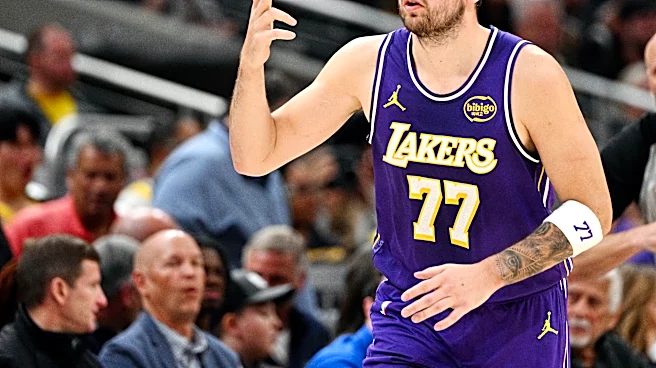
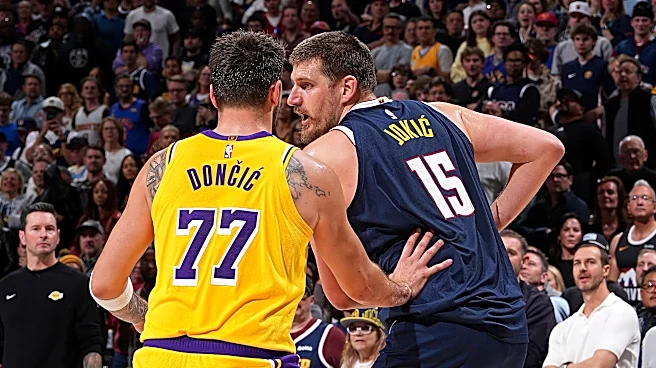
As modern representatives, I suppose we could point to Nikola Jokić and Luka Dončić. Both of them, despite being very big and strong, with those Balkan genes, were behind their American peers in terms of athleticism, speed, explosiveness, quickness, and so on. But through their understanding of the game, tactical superiority, and extraordinary fundamentals, they were able to create the “necessary” difference mentioned above.
It is the same for Alperen Sengun, who comes from the Turkish development system of my home country, so I know what challenges he’s been in.
In summary: while the American basketball player is being prepared for battle with the best nutrition, the best facilities, the best coaches and equipment, the most advanced technology, and the most sophisticated academic and educational structures, somewhere in Europe an athlete is training in a small city with limited facilities, difficult transportation and nutritional conditions, with extremely limited access to the technology and science of the profession, while the best human resources capable of developing them are often lost to free movement or Green Cards.
For this competition to reach anything resembling a level playing field, one side had to focus on tactics and technique to an extraordinary degree, while the other had to become complacent — whether through comfort or other factors — and gradually lose altitude.
Since both of those things happened simultaneously, today roughly one out of every four players in the NBA is a non-US player.