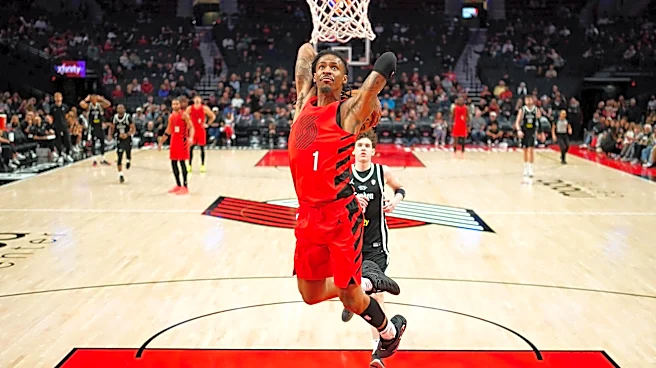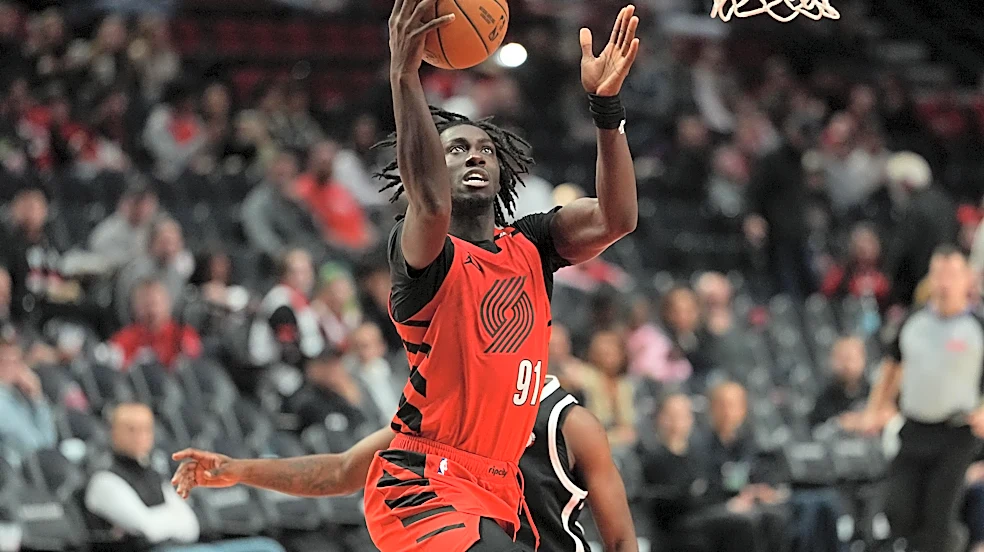




Sidy Cissoko joined the Portland Trail Blazers with very little fanfare in the aftermath of the 2025 NBA Trade Deadline. The Frenchman had failed to stick with the San Antonio Spurs after being taken by the Texas franchise, one pick behind fellow countryman Rayan Rupert at the 2023 Draft.
By February 2025, the second-round pick had been traded twice in three days, first to the Sacramento Kings and then to the Washington Wizards, before being waived by the DC franchise, allowing the Blazers to pounce.
Cissoko initially joined the Blazers and former G League Ignite teammate Scoot Henderson on a two-way contract but played a mere 60 minutes in five games through the remainder of the 2024-25 season. However, by the following campaign, Cissoko and fellow two-way contract Caleb Love had done enough to earn rotation minutes after injuries had taken hold of the Blazers roster.
By the time the calendar turned to 2026, Cissoko had established himself. In order for him to continue playing and avoid the 50-game limit mandated by two-way contract rules, the Blazers signed Cissoko to a two-year, $3.2 million regular roster deal. By season’s end, he had averaged 5.1 points on 39.8 percent from the field, 29.8 percent from three, 2.2 boards and 1.5 assists in 19.1 minutes.
Not great numbers, but Cissoko is clearly the type of player that contributes outside the box score. It was illustrated during the Blazers’ first round series against his first club. Cissoko was called on to play real rotation minutes as an energy player off the Blazers bench, playing enthusiastic defense and executing hustle plays to keep the Blazers competitive.
The Blazers eventually lost the series in five games but the postseason run had been a success for Cissoko who hadn’t wilted on the big stage. Fast forward to Micah Nori’s introductory press conference in June and the new head coach named Cissoko as one of a number of players he saw as central to the Blazers fortunes going forward. But why?
Positionless Tenacity
One area the Frenchman does not lack for, is intensity. Every night. The man throws his body around the court like his life depends on it. His fervor, combined with a meaty frame and a 6’10 wingspan, allows him to guard multiple positions. It’s an energy that has proved infectious, inspiring teammates to find that extra step to secure a bucket or make that extra rotation on defense.
Like we saw during the Spurs series, inserting Cissoko when the Blazers’ play gets stagnant can help change the flow of a game. It’s full speed every second he’s on the court and that can’t be taught.
With Shaedon Sharpe sidelined until 2027, Cissoko owns the mantle of ninth man in the rotation, largely serving as a defense-first option who can do smatterings of everything. While he fails to contribute consistent three-point shooting, an area this roster is severely deficient in, he serves as a chameleon on a roster in need of flexibility.
The playing group is weighted heavily toward guards and centers. Having a 6’6 utility guy like Cissoko allows Nori some lineup leeway on defense. He can play Cissoko as a wing in large lineups featuring the likes of Donovan Clingan, Deni Avdija and Toumani Camara. But his more common use will be at either forward position, playing with a combination of the Blazers’ stocked guard stores.
Last season, Cissoko also finished fifth in total offensive fouls drawn across the league with 50, a notable achievement for someone averaging fewer than 20 minutes a night. In fact, he was the only name who played fewer than 1,700 minutes in the top 10.
On offense, it’s a little trickier given Cissoko’s lack of shooting. But every roster needs a hustle guy, someone who dives for loose balls, finishes broken plays and sets screens. He’ll hit a three-pointer every now and then, but at 22, he also has time to work on the shot.
He’ll never be elite from long range, but he has the capacity to boost his career three-point percentage into a more respectable 34-to-35 percent range. That kind of rate is certainly passable if it means he gets to be the defensive presence he has been.
While I would never trust him to run the offense for extended stretches, Cissoko can also handle the ball and possesses deceptively decent passing ability thanks to noticeable court vision. Fortunately, this roster is overendowed with playmakers and decision makers, but you can never have too many guys who can make the right pass at the right time.
Conclusion
The current CBA demands that successful teams need rotation players on minimum or near-minimum deals in order to keep franchises away from the second apron and star players paid and content. In 18 months, Sidy Cissoko has gone from being waived by the Wizards, to Blazers two-way contract guy, to a rotation player, offering energy and versatility.
And it’s not just because he can play a position the Blazers are severely shallow at. Cissoko will contribute on opening night. It might not be scoring, particularly from beyond the three-point line, but he’ll be there in all other facets of the game, fighting for any advantage this team needs.
He does it from positions two-through-four. Though he’ll probably spend most of his time at forward, Cissoko can also play the two in ultra-big lineups if Nori decides he needs it. On a flawed roster such as this, you’d have to imagine Nori will relish any element of versatility he can capitalize on and right now Cissoko is an asset.
One thing is certain, we can be assured that every night Cissoko will dive for a play, draw an offensive foul, force a turnover, win a jump ball, create a second-chance opportunity and/or assist in a play that gets a crucial bucket. The Frenchman doesn’t play for personal glory or raising his points average, he plays to win games and that’s something this team needs in spades.