







Last week, the Pac-12 Conference made headlines with news of conference realignment. Rather than any announcement about the long-awaited ninth football-playing member, they added some affiliate teams to compete in men’s soccer and wrestling starting next season. While the additions and sports themselves may not be as attention-grabbing as football news, they do raise an interesting discussion about the potential rise of affiliate members in the next chapter of conference realignment.
Two weeks ago,
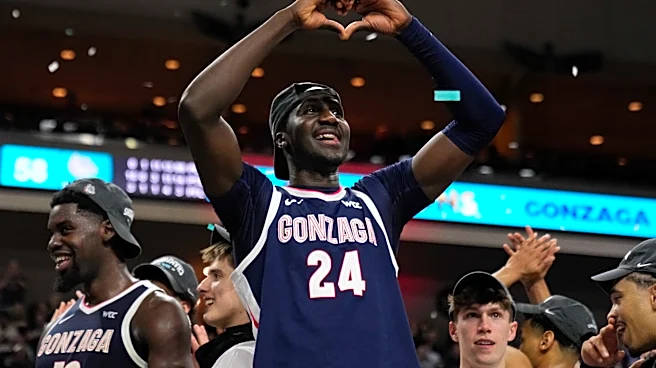
news broke that four Big West teams (California Baptist, Cal Poly, UC Riverside, and UC San Diego) would combine with Oregon State, Gonzaga, and San Diego State would join forces to create a group that would compete in men’s soccer. The announcement is interesting because it says the four Big West schools would be affiliate members of teh Pac-12, but later it states, “the Pac-12 and Big West will implement a scheduling collaboration featuring crossover matches between member institutions of both conferences.” Semantics aside, seven schools in the West will play one another because neither conference could muster enough teams on its own.
A day later, there was a similar announcement that was no April Fool’s joke. The Pac-12 is also adding four teams to its wrestling lineup, with Air Force, Northern Colorado, North Dakota State, and South Dakota State joining. With those new affiliate members, the conference will actually have nine wrestling schools, with Oregon State the only full-conference member among them. This agreement also shows that the PAC and MW schools can work together, as Air Force, NDSU, and previously announced Northern Illinois already have Mountain West ties.
This all continues the trend of affiliate members rounding out sports for full members in both the Mountain West and the Pac-12 conferences. The MW has added North Dakota State and Northern Illinois as football-only members in their realignment era to fill out their schedule. Likewise, the PAC has Dallas Baptist University as a baseball-only member and is actively seeking a football-only team to reach nine football teams for the 2027 season and beyond. Whether it’s stemming from a strategy or out of necessity, affiliate members appear to be part of the growing trend in the Western conferences.
We actually asked the former Hawaii Athletic Director a question related to this topic back in 2024. After all, the Rainbow Warriors have been an affiliate member of the Mountain West for over a decade, and they will gain full membership in a few months.
MWCConnection: Hawaii athletics play in two different conferences. Can you explain a bit about what it’s like to navigate that dynamic?
Angelos: It allows us to learn best practices from each league and collaborate with great leaders like Dan and Gloria, who are also excellent teammates in our efforts to build stronger institutional and conference brands. I really enjoy working with the Presidents and athletic directors in both leagues. I take a lot of notes because of the insights each of them provides.
The dual-conference setup means a busier calendar, as we have double the conference meetings to attend. Despite the packed schedule, we value our relationships with both conferences and are committed to contributing to and benefiting from their continued growth.
While being part of two conferences is likely a bigger headache than “a busier calendar”, Hawaii has shown that this is sustainable in the long term. If Hawaii can do it with their long-distance travel, the new California schools have different sports play in-state more often than not.
Speaking of California schools, UC San Diego’s coach Jon Pascale welcomes the chance to play the bigger school in town on a regular basis.
“We are very excited about this partnership and the opportunity to be a part of the Pac-12,” said UC San Diego men’s soccer head coach Jon Pascale. “It allows us the opportunity to play a few new quality opponents and establish a cross-town rivalry with San Diego State.”
Although the school representative was quick to point out that UC San Diego will join the West Coast Conference in 2027, so that cross-town soccer rivalry may be short-lived. Regardless, it’s a chance for the Tritons to take advantage of, even if just for one season.
Adding schools as affiliates rather than full members is also beneficial for a conference, with a few reasons listed below:
Take school’s best, leave the rest
It’s hard for schools to be good at every sport. It’s next to impossible for mid-major programs to accomplish it. When (re-)building a mid-major conference, there’s a benefit to taking the best a school has to offer without committing to their subpar sports. These moves accomplish exactly that. There’s no need for the PAC to add all of these FCS schools as affiliate members, but they can still put together a competitive list of men’s soccer and wrestling teams with these moves. If the goal is a “best of the rest” conference, the “best” will look different across sports, and affiliate members allow that.
More sports with less burden on the schools
Conferences may not mind fielding as many sports as possible, but it’s not that easy for individual schools. Schools have to weigh factors like budget allocations, costs, and Title IX obligations, making it challenging for every school to offer every sport.
Trying to get every member school on the same page with their sports catalogs seems like a fruitless venture, but adding affiliate members can cover the gaps well. The Pac-12 can meet the minimum requirements for men’s and women’s basketball, among other sports, but wasn’t able to for men’s soccer and wrestling. Until they added single-sport affiliate members. This allows the conference to sponsor the sport without requiring schools to start up new sports that may take years to become competitive.
Another benefit is in sports that meet the minimum requirements, such as football, but it doesn’t mean that the number of teams makes sense. Football is a great example of this. Eight teams are the minimum requirement, but that produces only seven conference games, one short of the ideal. Thus, adding a football-only member makes sense. The PAC has already done this with baseball, using Dallas Baptist to beef up the conference schedule.
It takes the pressure off their core schools while allowing more sports to blossom.
Keeping the revenue split small
Most importantly, the total money a conference receives won’t be spread too thin with inflated membership. Instead of receiving a full share, affiliate members get a smaller, pre-negotiated share of the money compared to their full-member counterparts. In the mid-major world, where every dollar counts, schools must pocket as much as possible, and keeping the revenue split small is essential to maximizing revenue.
It’s clear that affiliate membership has benefits, but could this be the start of a new trend for schools and conferences? The Pac-12, and to a lesser extent, the Mountain West, may end up as the guinea pigs for this experiment. If they succeed in football and other sports because of this, the idea of affiliate members could catch on, maximizing success across different sports for schools and conferences alike.