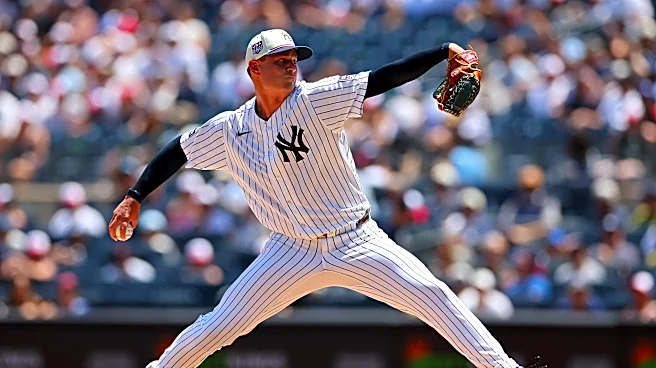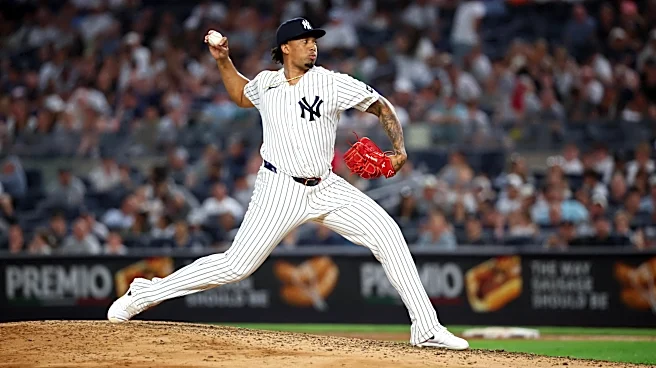



There’s really no way to sugarcoat the way the Yankees are playing right now. The offense is impotent, the starting pitching has been suspect, and the defense unacceptable. It’s all added up to a season-high seven-game losing streak and a plummeting from 3.5 games up in the standings to four games behind the Rays for first in a two-week span. There have been very few moments worthy of praise during this barren spell, but one that absolutely stands out was Yovanny Cruz’s two scoreless innings with
three strikeouts against the Tigers on Tuesday in his first appearance since being called up from Triple-A for the second time this season.
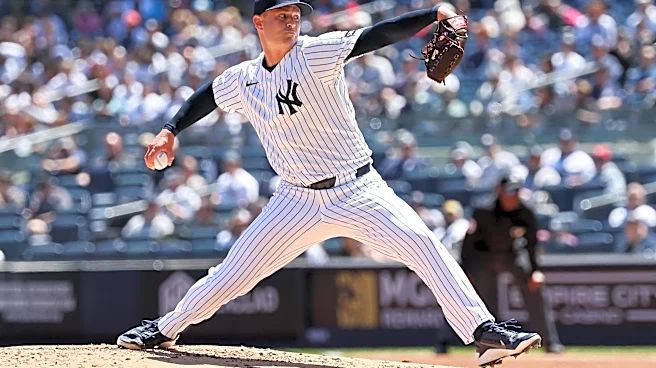
We join Cruz to open the seventh inning with the Yankees already trailing, 9-2. It’s as much a mop-up role as it is an audition to see if he merits sticking in the big league bullpen for longer than the two games of his initial cup of coffee back in May. Stepping into the box to lead off the inning is Kerry Carpenter, a lefty presenting an immediate extra challenge for the righty Cruz. Carpenter has already homered in the first off a Cam Schlittler cutter, hinting at the danger of throwing a pitch that breaks toward him.
One of the most important things for Cruz — and indeed any reliever — is to get ahead in the count with the first pitch. The difference between 0-1 and 1-0, especially late in games, is enormous. As such, there’s no messing about here, Cruz hoofing his fastball in the zone.
Um, what did I just see? My attention immediately snapped to the TV when I saw 101 on the corner inside and at the knees for called strike one. That’s almost an un-hittable pitch. For the rest of this AB, and frankly the rest of Cruz’s outing, my antenna was up. I knew he had high octane stuff from his initial cup of coffee but this is another level entirely. It’s such a crucial pitch to garner the strike one call in that spot, opening up bountiful opportunities for chases on the back-foot slider.
That’s exactly what is on the mind of Cruz and Ali Sánchez, the backstop immediately calling for a slider below the zone.
Cruz misses his spot, but earns the strike two call by back-dooring the mislocated slider to the corner up and away. While he certainly did not intend that location, it reminds me of an interesting point that David Cone has brought up on recent broadcasts. He talked about how effective a weapon the high slider can be for called strikes — despite the age-old prescription that an elevated slider is a dangerous pitch to throw. Because the pitch looks like a ball high out of the hand, it is common for the hitter to give up on it early. And because a slider has later movement than other breaking balls like the curveball or sweeper, hitters often don’t have time to react upon seeing the downward break that brings the pitch into the zone. Again, I’m not sure this was the intention from Cruz here, but it worked exactly how Coney described.
With the count quickly 0-2, I expected Cruz to stick with his wipeout slider and focus on better execution down and in.
Wait a second, Cruz throws a splitter now?!?! Not only that, but it’s a totally disgusting pitch?!?! This looks like one of those classic Fernando Cruz splitters that just nosedives off the table about halfway to home, except this one is thrown at 90 mph. Carpenter somehow catches the slightest nick foul to stay alive, though Sánchez is convinced that it was a clean whiff.
When you can throw a splitter with that much late diving movement and command it to your spot, you just have to stick with that pitch and let the hitter get himself out, as we have seen from Fernando Cruz in some of his highest leverage spots.
This one isn’t executed quite as well as the first one, catching a fat part of the plate down and in. However, Carpenter is again fooled as I suspect the scouting report said nothing about Cruz throwing a splitter. He swings as if it’s a four-seamer at the belt, meaning he is way early and over the top and can only pound it foul into the ground around home plate.
Carpenter has shown zero indication that he is able to adjust to this splitter, so all Cruz needs to do is command one a bit lower than the last one and he should get the strikeout swinging.
That is exactly what Cruz is able to achieve, unleashing a filthy splitter on the corner low and away. Carpenter still hasn’t made the adjustment and he is made to look foolish whiffing way out in front of this pitch that would have been called strike three even if he had left the bat on his shoulder. You can’t get much closer to a perfect pitch than this.
Here’s the full sequence:

Is it possible Fernando Cruz helped teach his new bullpen mate his disappearing splitter? Cruz threw seven splitters on Tuesday, the pitch averaging 90.2 mph and 32 inches of drop. That would place his splitter immediately into the elite tier when it comes to movement, the nearest comp for the pitch being Roki Sasaki’s splitter, which exhibits the 13th-most vertical drop vs. average of any splitter in MLB. It’s the type of overwhelming movement that can make the pitch a platoon-neutral offering, nasty enough to elicit whiffs from both right-handed and left-handed batters.
Yovanny Cruz has been pretty much untouchable in his first three MLB appearances. He has faced 15 batters and allowed one hit and no walks while striking out six. The question for him has always been his strike-throwing ability, and it certainly appears he has started to iron out those issues. After getting sent back down following his two appearances in May, Cruz slashed his walk rate from 12.2-percent to 7.1-percent with Scranton/Wilkes-Barre, and the fact that he has yet to issue a walk at the big league level lends further credence to these improvements.
Although the Yankees’ bullpen has been crying out for better swing-and-miss stuff, they curiously made the decision to demote Cruz after the matinee on Wednesday. David Bednar needed to be activated off the paternity list, but one can’t help but wonder if perhaps they might have been better off dropping someone else instead.