
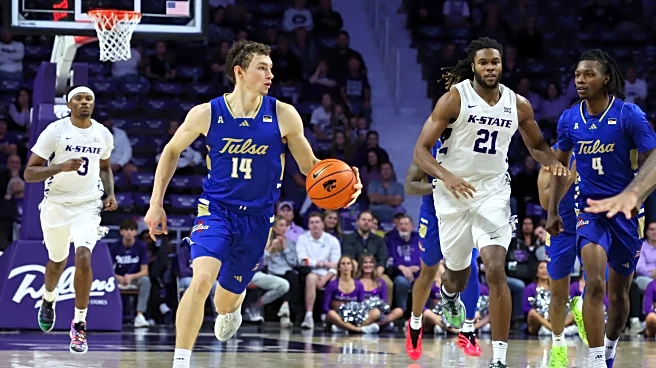

One thing that gets discussed on social media and in person during every college basketball season in the Mountain West is the abysmal officiating situation that plagues the league. Time and time again, the referees that oversee the conference games take a bit of negative spotlight due to their antics, which is an understandable consequence for their consistently below average performances on the court.
Whether its calling fouls to make the score card look even (regardless of whether or not the game
actually was)/missing calls then making them up with either things that wouldn’t have been a foul earlier, inconsistent calling throughout the game that looks weird or reviewing common fouls to upgrade to flagrants when they shouldn’t, it was an interesting year to be a Mountain West fan with the refs doing what they did. But there is a couple of solutions that could fix things up and get the new Mountain West a good start to the new era.
The Problems.
First, let’s really dive into the problems from the Mountain West referees. I will be using Nevada games as the main evidence through this section as that is what I mainly covered over the last few years. Feel free to comment a moment where your team had a similar issue with the refs to show it affects more than just the Wolf Pack.
Calling ‘make up fouls’ and making the foul card look good
Mountain West refs are notorious for missing calls on a constant basis. While the zebras are not robots and we do need to give them some room for error because they can not see every single thing on the court, there are times where the MW refs miss blatant calls. As someone who has sat courtside taking photos of the game, there are times where I can hear someone get slapped in the arm (both Nevada players and their opponents) while going up for a shot, and nothing gets called. But a light bump that had no impact on whether or not a forward would dunk the ball is damn near treated as battery.
This problem alone is decently annoying, as it ruins the flow of the game and how players will interact with their opponents. However, there is another part of the equation that makes this even worse: the fact that referees try to make up those calls with others that wouldn’t have been called otherwise. That slight bump in the paint that most referees would usually just let the players go through? An easy call that was made because a ref missed a call on the baseline. It’s plain sloppy and wrong, all in the way to even out the fouls and make things look like the calls were balanced when they weren’t.
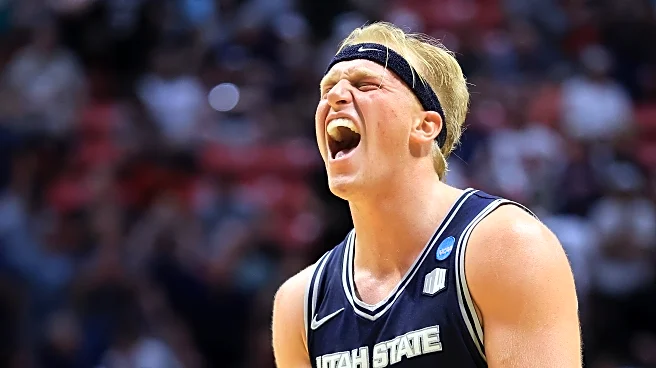
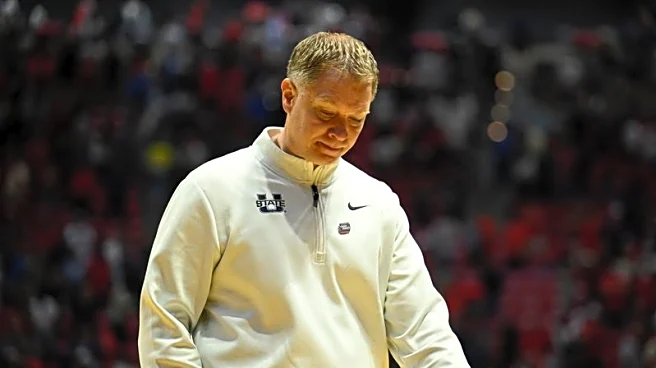
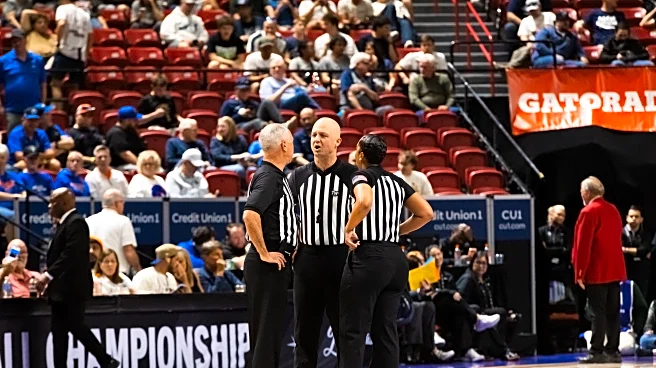
One source of evidence comes from the Nevada vs Utah State conference tournament semifinal matchup. In the first 13 minutes, when referees Scott Brown, Michael Irving and Verne Harris were letting the game take its course, the foul calls were 6-2 in favor of the Aggies, with five of the six resulting in free throws. Once a coach from Nevada confronted the trio on their calls (including the no-calls on Nevada’s possessions), they called three fouls back-to-back-to-back in 18 seconds of game time, with only one resulting in free throws. The scorecard read 6-5 in fouls, but all momentum was lost in the game, which showcases how disruptive the calls were not just in the moment, but the overall span of the game.
Inconsistency that messes with the players
Not only do make up calls make the game look sloppy and overall bad, it also messes with the players at the same time. One of the topics the commentators of the American Conference Championship during the No. 5 Charlotte vs No. 4 UAB game discussed was how the fouls the referees were calling during that game were disrupting the flow of the game, not allowing either team to really build momentum or get a feel to how they can play. This happens far too often in Mountain West games, and ruins the quality of a sport that is fueled off of momentum and going on runs.
The evidence for this reason comes from the Nevada vs GCU game on Thursday, March 12, the second match up of the day. When everything was said and done, referees Brown, Nate Harris and Steve McJunkins called 51 FOULS across both teams. And if you were to cut out the intentional fouls that the Lopes committed in the final five minutes of the game, there were still 42 fouls across the 40 game minutes. While I respect the fact that officiating a game where both teams are going to be physical can be rough to say the least (especially with a conference as physical as the Mountain West), calling a foul almost every 45 seconds is obscene and should put the refs who oversaw that game under review/more training.
Reviews, reviews, reviews…are all of them truly necessary?
On setting pace and getting momentum in your sails, reviews do the same, if not are more destructive, to actually playing for runs, which Mountain West refs (specifically one group/person) are notorious for doing. Reviews are meant to make sure that fouls are called appropriately and at the right level (common, flagrant one/two), and sometimes that does take a bit of time due to lack of proper angles and the possible need to debate on whether or not a foul deserves to be upgraded. While the debate thing is definitely a subjective matter, no one hates on refs for double checking and making sure they are calling things correctly.
However, Mountain West referees (especially in two games at Lawlor Events Center in Reno, Nev.) sometimes take the double checking like a high schooler with performance anxiety. In two games, specifically when the Wolf Pack took on Grand Canyon on January 27 and New Mexico on February 24 (both games featuring referee Amy Bonner), things went too far. There were multiple fouls that were reviewed that came out to common fouls, exactly what they were called on the spot. Having this happen time and time again did cause Nevada, GCU and New Mexico to lose momentum in the two games, which decreased the quality of the game.
The worst example of this actually comes from the quarterfinals rematch between Nevada and GCU as well. After a steal by GCU guard Jaden Henley, Nevada forward Kaleb Lowery went to possibly attempt a block on the fast break, but was too slow. He still jumped up and seemed to go for the ball, but did not make contact anywhere. Here is a picture I took from that layup attempt.

As you can see, very little to no contact that would actually matter to the play. This was reviewed and called a flagrant one by the trio of Brown, Harris and McJunkins due to what I will nicely call a flop performance from the GCU guard. Henley did miss both free throws (ball don’t lie), but it was still a long pause that slowed the pace and changed the game scenario.
To put into perspective how bad things have been with Mountain West officials, let’s take a look at Nevada’s first NIT game against Murray State. Across the 40 minutes of game time, NIT referees Ian Caldwell, Daryl Gelinas, Rob Kueneman called 22 fouls (12 on the Pack), just barely averaging above a foul every two minutes. There were multiple times where I said, “Wow, they’re letting the guys play,” on the sideline. Wolf Pack fans were also thinking this, as many tweeted out their approval.
Letting the athletes on the court handle things while making sure blatant calls are made are how referees should be. But when a trio of officials are causing the game to come down to their whistles or a video replay because they were unsure if a minor foul is a flagrant, the game of basketball is not fun to watch or report on.
The Solution(s).
Now that the problems have been discussed, it’s time to step off the proverbial complaining soap box. I’m not only here to cry to you all here, so let’s discuss what some actual solutions could be to the intertwined problems that have plagued MW refs for a long time. Like the problems, these will not be the only solutions that can actually fix things, so if you have any other suggestions, comment them below (I feel like a YouTuber, lmao).
@UmpScorecards…but for basketball
I tweeted out during the season (ironically enough, during the Nevada/GCU game) that something needed to be done about how much the Mountain West referees were doing this season. This was right around the time where fans of programs like Utah State were up in arms about how GCU was beating their teams thanks to the refs and were 1,000 percent sure this was a scheme to mess with the schools going to the Pac-12 next season. In that tweet, I said that some sort of system needs to be put in place like what the people at @UmpScorecards do, which is to review how the officials did in the game and publicly showcase their successes and failures.
(example of a tweet from last MLB season)
In this, the crew details how many missed calls there were, how many balls were called strikes and vice versa and how much one team favored from those calls over the other. It is as close as we can get to officials getting called out for their below average performances when keeping things clean between two teams, such as Angel Hernandez until his retirement during the 2024 season.
Now, there would need to be drastic changes to the system if this were implemented in basketball games. Outside of the obvious changes of foul calls versus balls/strikes, one would need a team of people to be at basically every game due to the view from the broadcast not realistically being enough to accurately assess whether a call was missed or shouldn’t have been made. The team would also need to have footage from multiple different angles similar to what the referees have at their disposal to make those decisions, which means the Mountain West and any entity that buys broadcasting rights for games would need to be lax enough to provide.
Despite the copious amount of overhaul that would be needed to implement this type of assessment, I still think this is doable. There are so many sports statisticians both amateur and professional throughout the nation that would take this opportunity and turn it into their baby. Heck, if the staff of every Mountain West school met up and collectively did this (with a vow to do this as impartially as possible), a College Basketball RefScorecard system could happen as soon as next season.
Pitch changes to what referees are assigned to MW games or leave the COC-MBB2
Yes, you read that right, the subtitle does say pitch. And here’s why.
In 2024, after the imploding of the Pac-12, the Mountain West joined the men’s basketball College Officiating Consortium (or COC-MBB2) to make sure, “…the Mountain West will continue to see high-level officiating, evaluations and trainings that will enhance our Conference and the student-athlete experience,” according to Mountain West Commissioner Gloria Nevarez.
This was supposed to be the golden ticket for the conference to make sure things went smoothly throughout the men’s basketball season. However, most would agree that calling over 40 calls per game on average during the quarterfinals of the conference tournament – drastically higher than other conferences in the consortium like the Big Ten – smooth per se. Probably the exact opposite.
Now, I will not sit here and say that joining the consortium was the start of officiating problems in the conference, as this problem goes WAY back. Nor will I say that the independently contracted officials do not deserve to have a stable work situation that supports them, because they do deserve that. But, the officiating in conference games has not gotten better since the Mountain West joined the COC-MBB2 two years ago, which should prompt some actions.
Nevarez and/or whoever can talk to the COC-MBB2 on behalf of the conference needs to have a discussion with David Smith, the director of Mountain West men’s basketball officials in the COC-MBB2, to see what they can do to get better contracted officials out to games. I am sure those conversations would be lengthy, but they are still worth having if it means important conference games are not a whistle-fest. If nothing can be done, then Nevarez needs to pull out of the consortium and either find another group to join or independently hire referees.
In conclusion…
No one expects referees to be completely, 100 percent accurate with calls. Humans are not robots, and a review system like the ABS in the MLB would take years to be implemented into basketball due to its high-pace action. However, just because we are human does not mean we are excused from consistent errors that affect people.
Something needs to be done about the officiating in Mountain West conference games. Whether it be from the community, both old and new, that cares so deeply about their programs or from the conference and/or its members themselves, this drastic problem that ultimately cost the conference March Madness seeds.