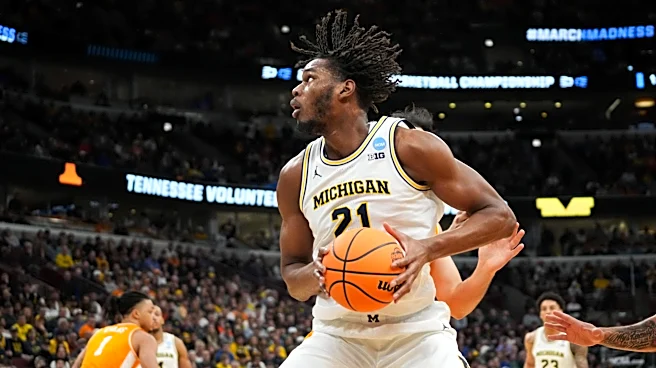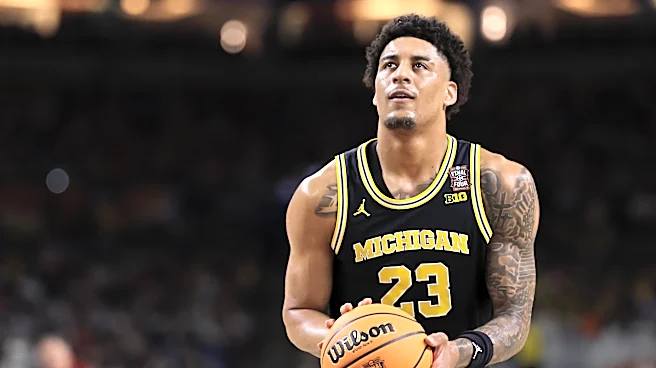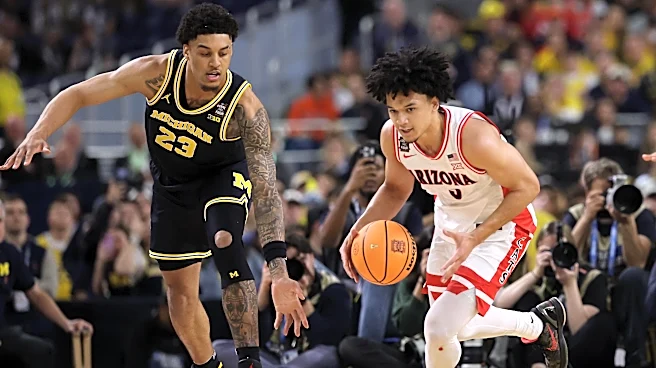

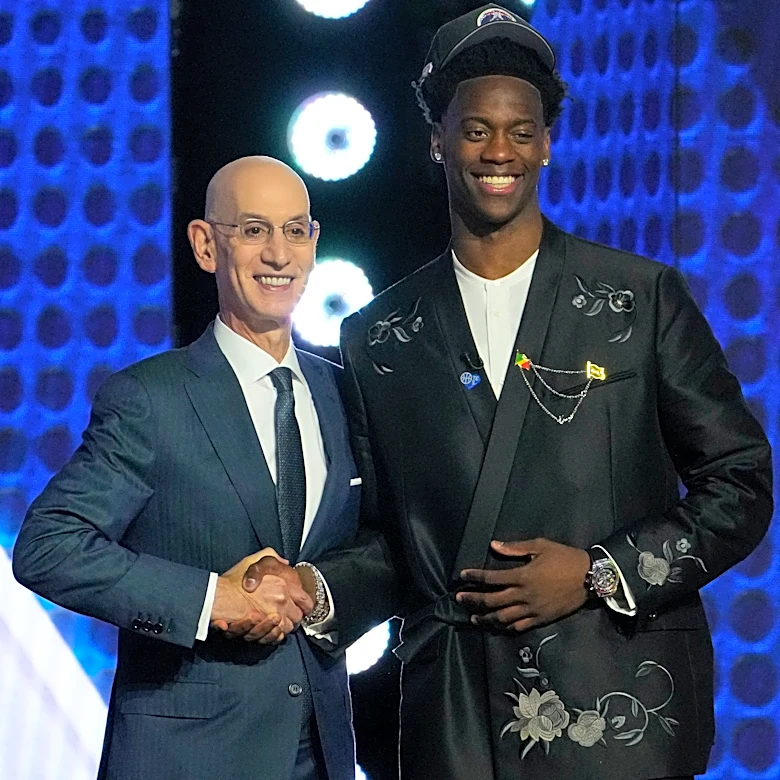


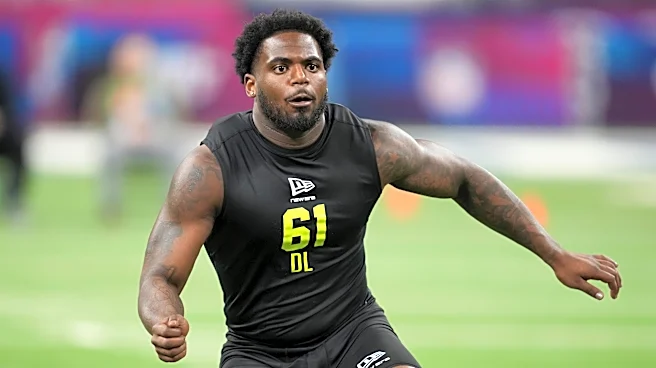


Michigan Wolverines forward Morez Johnson Jr. was just selected at No. 9 overall in the first round of the 2026 NBA Draft by the Dallas Mavericks.
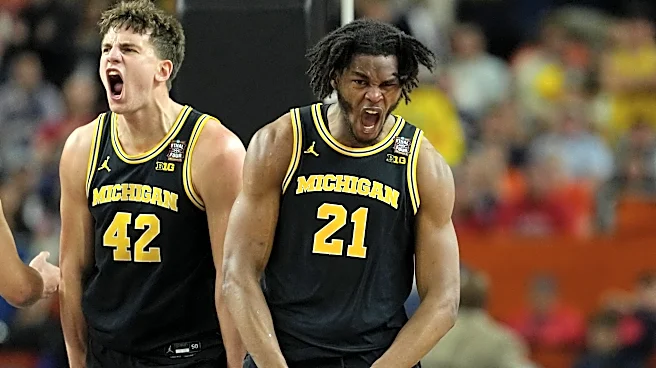
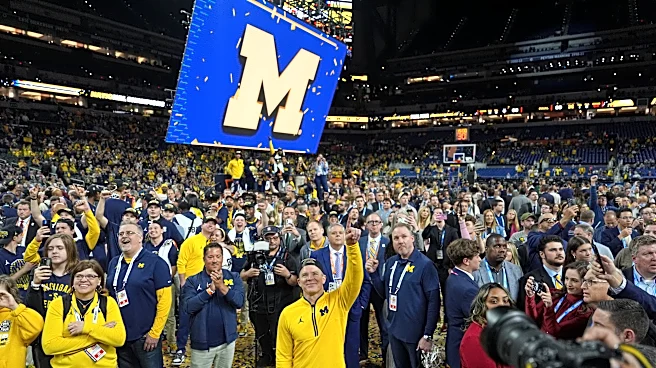
Playing alongside fellow NBA Draft prospects Aday Mara and Yaxel Lendeborg, Johnson became a critical contributor in the Wolverines’ title run, averaging 13.1 points and 7.3 rebounds, shooting 62.3 percent from the field, and earning All-Big Ten honors and a spot on the league’s All-Defensive Team.
While he still has raw components to his game, the 20-year-old has immense potential to become an NBA star, coming into the league with a championship and a hunger to be the most physical player on the court.
Quick Facts
- Height: 6-foot-9
- Weight: 251 pounds
- Wingspan: 7-foot-3
- Standing Reach: 8-foot-11
- Draft Day Age: 20 years old
- Career stats: 70 games (48 starts), 10.5 points per game, 7.0 rebounds per game and 1.1 blocks per game. 62.8 percent from the field, 34.3 percent from three and 72.2 percent from the free throw line.
Strengths
- Rebounding and screening via his strength and motor on the interior.
- Defensive impact and versatility with switch-ability to guard every position.
- High production in transition with instinctual cutting ability and finding easy looks.
Weaknesses
- Passing and play-making as a primary ball-handler.
- Shooting the three-point ball.
- Consistent free throw shooting in big moments.
Summary
Johnson has the potential to be the best NBA player out of the three Michigan prospects when it is all said and done, but he also has the furthest to go.
He grew as a complete player all season long at Michigan. He proved to be among the best defenders in the entire country this season, and has the size and the tools to continue offering the same at the next level.
Johnson was a staple of the Wolverines’ interior defense during their National Championship run, averaging 1.1 blocks and 0.7 steals per game, good for a near-five percent block percentage and 1.7 steal percentage, with a great 5.7 defensive box-plus-minus to wrap it all up, according to Sports Illustrated.
Against Johnson this past season, opposing players shot 33 percent on 155 shot attempts, notably just 25 percent on jumpers. Johnson doesn’t just stick to bigs either, as with his 7-foot-3 wingspan, he was able to guard the perimeter at a high rate this past season, easily switching 1-through-5, disrupting pick-and-roll situations, knocking bigs off their spots, deflecting passes with his long arms and sticking with guards due to his movement.
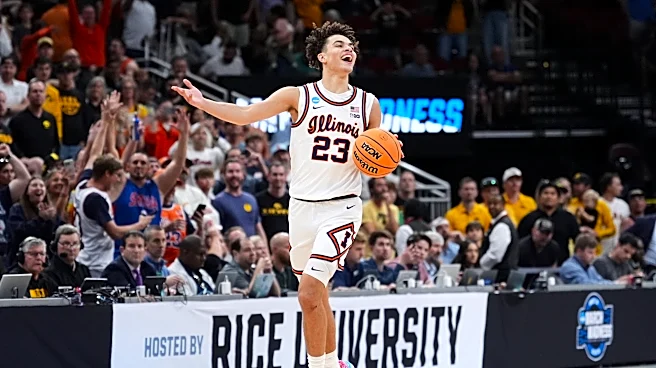
Offensively, he averaged 13.1 points per game on 62 percent shooting overall in 2025-2026. He proved capable of taking over games, notably finishing with 19 points, 11 rebounds and an assist in his homecoming at Illinois this past season. But more consistently, Johnson shot 62 percent on post-ups, scored the bulk of his points on cuts at a 75 percent clip and he converted 72 percent of his shots at the rim.
Nonetheless, his biggest strength is his rebounding. Johnson came down with 7.3 rebounds per game this season. In big moments, his motor never faltered, and he used his gritty play-style to crash the boards and bring down anything he could find. While his shooting may not be 100 percent ready for the NBA, he can make an immediate impact on the glass that will earn him minutes early on in his career.
As for areas of improvement, Johnson is a weak primary ball-handler, averaging 1.2 assists per game to 1.3 turnovers per game for a negative assist-to-turnover ratio of .85. He also took only a handful of threes in his college career, taking none at Illinois before shooting just 35 at Michigan, going 12-for-35 on the season.
Finally, Johnson has grown immensely as a free throw shooter, but there is still room for improvement in that area as well. He was a 61 percent free throw shooter a year ago in Champaign, and he drastically improved to 78 percent with the Wolverines. Given the small sample size, Johnson will need to show NBA teams he can continue to grow from the charity stripe, especially given his play style as an aggressive, physical interior player who is surely going to draw fouls at the pro level.
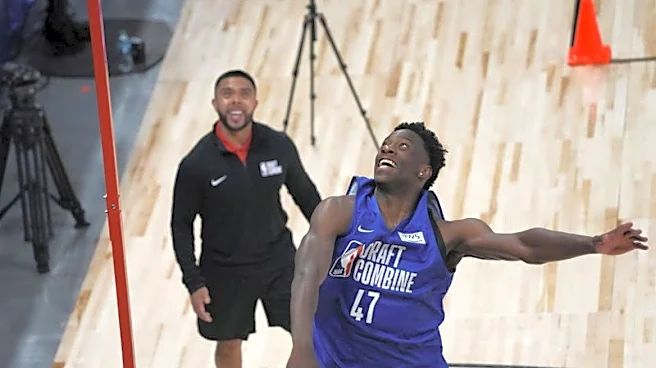
Johnson’s physical profile easily makes him one of the most intriguing rookies in the NBA next season; he had the highest maximum vertical (39 inches) among forwards at the NBA Combine, eclipsed an 8-foot-11 standing reach and was measured at 6-foot-9 without shoes. He is also a proven winner at every level he has played in, winning a sectional championship and Southland title as a senior in high school, winning a gold medal in the 2025 FIBA U19 World Cup and winning the National Championship at Michigan.
Simply put, Johnson is a game-wrecker who has not reached anywhere close to his potential. That is what makes him an exciting prospect.