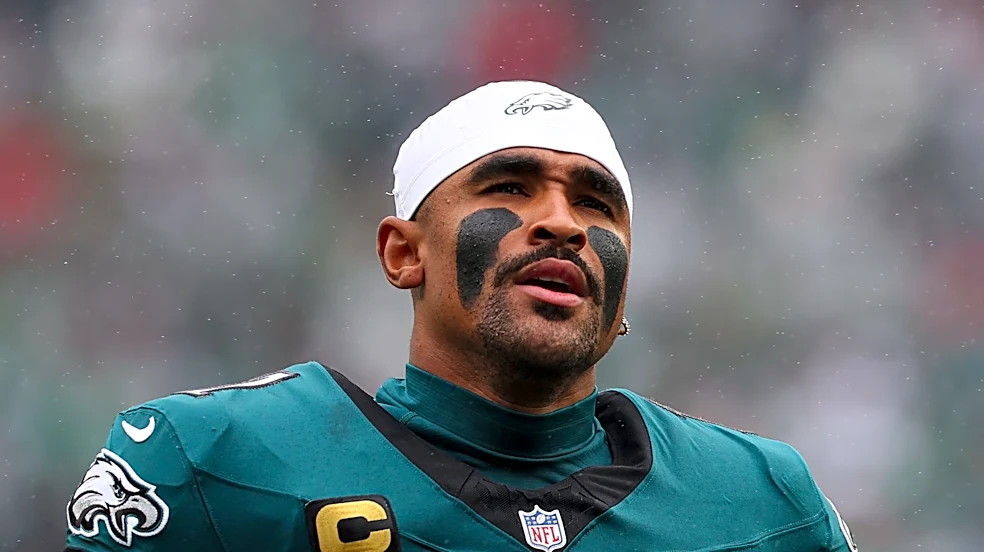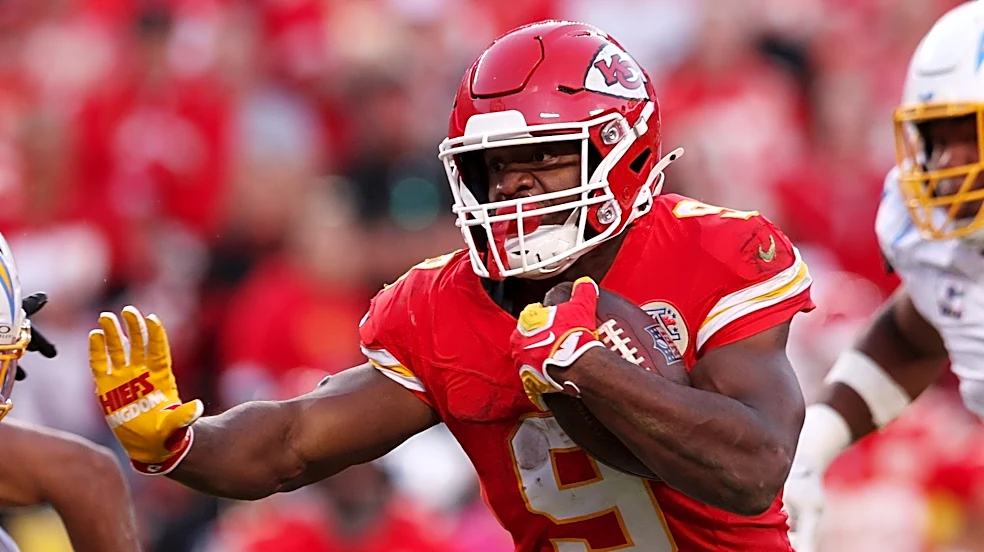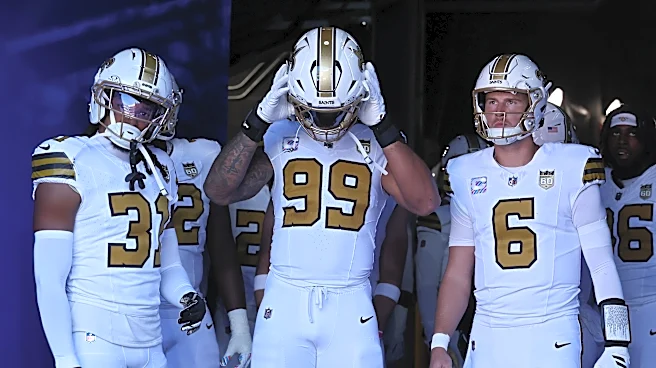



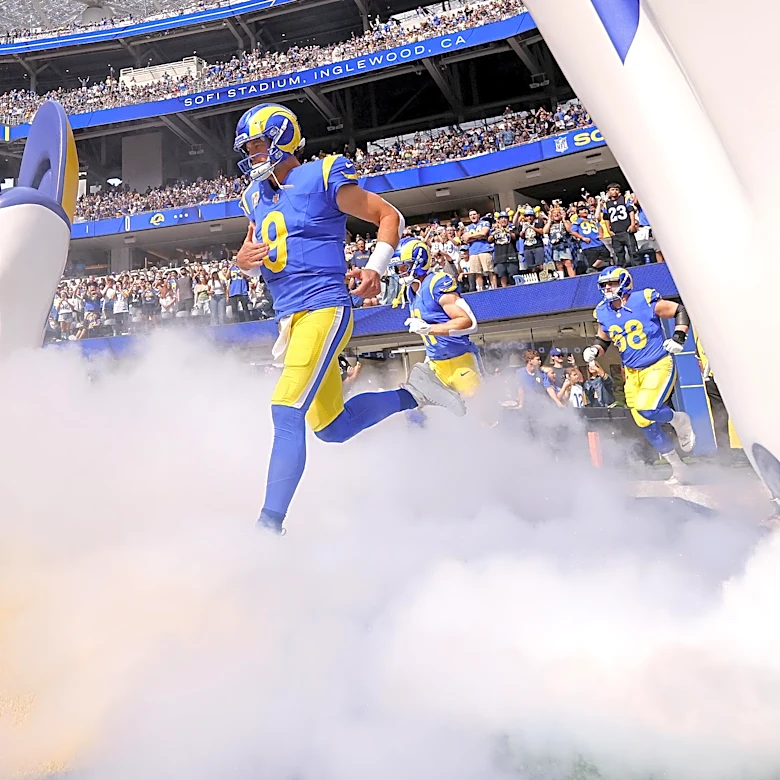

The 4-2 Steelers and 2-4 Saints will clash in Paris early Sunday morning in Week 7.
Currently second in a tight and highly competitive AFC North, Pittsburgh is hoping to stay in the mix and add to a current two-game winning streak following an overtime win against the Tampa Bay Buccaneers last week.
Meanwhile, the Saints are third in a weak NFC South after the first third of the season — and after New Orleans was a popular pick for the league’s breakout team in 2026. Under second-year head coach (and
former Cowboys offensive coordinator under Mike McCarthy) Kellen Moore, New Orleans will be hoping to establish its first winning streak of the season after a high-scoring win over the Giants last week.
What can Steelers fans expect from the Saints across the pond?
What to expect from the Saints’ offense

Rushing YPG: 97.3 (21st)
Passing YPG: 224.2 (17th)
PPG: 25.3 (10th)
RP: The first thing you’ll notice about the Saints offense is that while they have a dismal rushing attack and middling overall passing numbers, they also are somehow a top-10 scoring offense. Don’t be too alarmed, though. While there are some talented playmakers, and Kellen Moore is an offensive mind I view favorably, a slightly deeper examination of the Saints reveals they are more of a paper tiger.
For starters, the Saints have not faced many difficult defenses at this point in the season. Consider the points allowed per game rankings of five of their six opponents:
- Detroit (29.6 / 30th)
- Las Vegas (27.0 /26th)
- Atlanta (25.5 / 23rd)
- New York Giants (23.3 / 19th)
- Baltimore (22.0 / 15th)
Not exactly a murderers’ row of defenses. When the Saints did face a strong defense — the Vikings, who allow the fewest points per game (12.8) — they predictably folded, losing 23-13. I suppose some props should be awarded for clearing the Vikings’ season average.
Also consider that the Saints offense has often been late to the party. New Orleans is averaging just 7.2 points in the first half of games this season. All told, they have run 215 plays while trailing against just 26 plays while holding a lead.
A big factor in this is their ineffective running game. Some of this is due to losing starting tackle Kelvin Banks Jr. early in the season, which has forced 2023 fifth-round pick Asim Richards into a starting role. Richards has the 10th-worst run-blocking grade from Pro Football Focus among tackles with at least 100 run-blocking snaps this season. Some of the Saints’ struggles are also due to losing prized free agent signing Travis Ettiene Jr. to injury in Week 3, though he had struggled prior to injury, failing to top 57 yards in a game. In his absence, that has left a rotating trio of Kendre Miller, a past-his-prime Alvin Kamar, and CJ Donaldson. None of them have found consistent success.
The Steelers should be prepared to see a lot of inside zone against the Saints. So far this season, they’ve called 88 zone running plays compared to 31 gap runs, and their rate of inside run calls (64.3%) is second highest in the league. Regardless of what they call, the underlying metrics spell out how ineffective they’ve been. New Orleans averages just 3.8 yards per carry (T-19th), with an average of just 0.97 yards before contact (21st), and 2.84 average yards after contact (16th). They’ve been stuffed at the 14th-highest rate (16.9%), have a 39.6% success rate (T-17th) when running, and are failing to create explosive runs with just 12 runs of 10-or-more yards (T-20th). They are also averaging a half-yard less rushing yards than expected per rush, the fourth-worst mark in the league.
Because the Saints struggle to run the ball and are always trailing, a lot of strain is then put on the shoulders of second-year quarterback Tyler Shough. A former second-round pick who had a longer-than-usual college career due to injuries, Shough is in many ways a cool story for the Saints. Right now, he’s tied for the second-most passing touchdowns in the NFL. In fact, he has the same number of touchdowns (12) and interceptions (5) as Aaron Rodgers this year. Shough also has the 10th-lowest sack rate (5.2%), and he’s been making quick decisions with the eighth-quickest average time to throw (2.73 seconds).
But much like the rest of the Saints’ offense, the underlying metrics paint a more complicated picture for Shough. One reason he might be getting the ball out so quickly is because the Saints give up the seventh-quickest average time until pressure at 2.55 seconds. While they rank 20th in pressure rate (37.6%), the sheer volume of plays New Orleans runs has also allowed them to give up the second-most pressures (97) this year. The Saints don’t run much play-action either, with their 11.9% play-action rate ranked the second-lowest in the NFL.
Like most quarterbacks, Shough’s effectiveness takes a hit under pressure compared to when he’s kept clean. When facing no pressure, Shough completes 72.8% of his passes, racking up 1,012 yards, nine touchdowns, just two picks, and he averages 6.4 yards per attempt at an average depth of target of 6.5 yards. Under pressure, though, Shough’s completion percentage plummets to 49.4% and he’s thrown three interceptions against three touchdowns. His YPA drops to 5.6 while pressured, but oddly enough his ADoT spikes to 12.1, which seems to indicate he throws the ball away or forces attempts downfield when he gets a defender in his face.
So it would seem the simple answer for the Steelers defense is to get pressure on Shough and watch him crack. However, don’t think it will be as easy as dialing up the blitzes. Shough has seen a lot of football for just a second-year player thanks to his prolonged college career. And while his numbers dip when pressure gets home, he has a decent enough head for the game that he’s able to adjust when he knows where the blitz will be coming from. Despite opponents blitzing the Saints at the 10th-highest rate in the league (35.1%), Shough’s completion percentage actually improves when he’s blitzed (66.3%) compared to when he isn’t (64.1%). He’s thrown six touchdowns and three interceptions when blitzed, compared to six touchdowns and two interceptions without a blitz. And with an ADoT of 7.3 yards against the blitz, he isn’t just checking it down to his running back either.
If there’s one secret to stopping Shough beyond getting pressure home, it’s his struggles against zone. Shough’s numbers against man coverage are some of the best in the league, but his efficiency takes a dip when he faces zone.
Perhaps Shough’s struggles with zone coverages might explain why he avoids throwing to the middle intermediate (10+ yards) and deep (20+ yards) parts of the field. Oddly enough, he’s been effective when he attacks the middle intermediate area, going 14-for-15 for 197 yards and two touchdowns, but that’s at an average of less than three attempts a game. And that effectiveness isn’t exactly a fluke, as he went 25-for-31, 383 yards and a touchdown in 10 games in 2025. Again, though, that was at roughly a rate of three attempts per game.
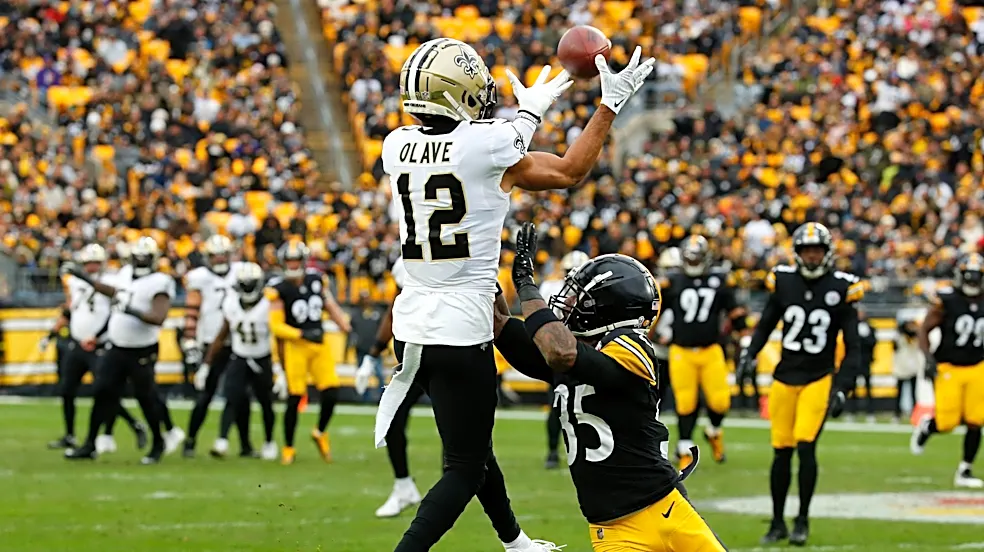
As for the weapons at Shough’s disposal, the one name to circle and highlight is receiver Chris Olave. Through six games, Olave is second in the league in receiving with 580 yards. Olave accounts for 40.2% of the Saints’ total receiving yards and is demanding a 27.1% target rate. The Saints’ passing attack goes as he goes. Olave is a deep threat who is outperforming his career averages on contested catches, converting 62.5% on 16 attempts this season, compared to a 43.4% conversion rate on 92 attempts across his previous four seasons. Olave also doesn’t add much after the catch, averaging 20.8 YAC per game, which ranks 64th in the NFL and 26th among wideouts. Olave has two touchdowns this year and 21 in 61 career games.
Elsewhere, receiver Devoaughn Vele (28 rec, 294 yards, 2 TDs), tight end Juwaun Johnson (25 rec, 248 yards, 3 TDs) and tight end Noah Fant (9 recs, 73 yards, 3 TDs) are other names to keep an eye on, though none of them pose the same threat as Olave. Rookie receiver Bryce Lance is also worth keeping an eye on after he scored his first career touchdown last week.
What to expect from the Saints’ defense

Rushing YPG: 138 (30th)
Passing YPG: 239.7 (25th)
PPG: 29.7 (T-31st)
RB: Tied for the worst scoring defense in the NFL and bottom-10 in a number of other telling metrics, the Saints’ defense has been one of the primary culprits behind New Orleans’ current losing record and third-place ranking in the NFC South.
A surprisingly solid unit in 2025 under coordinator (and former Chargers head coach) Brandon Staley, many expected the Saints defense to take a step forward in 2026. Instead, the group has regressed through six games in 2026, struggling in both the run and pass game. And despite a solid start last week against the Giants, New Orleans gave up a whopping 17 points in the fourth quarter, with New York’s JJ McCarthy entering the game late and tossing for 243 yards.
Starting with that pass defense, the Saints have a young cornerback room led by 2024 draft pick Kool-Aid McKinstry, and 2025 draft picks Jonas Sanker (nickel) and Quincy Riley. At safety, New Orleans has a bit more experience with the duo of Julian Blackmon (two interceptions this year) and Justin Reid. Former Cleveland Browns corner Martin Emerson Jr. has also been a ballhawk for the Saints with a pair of picks last week — expect to see him in the mix more going forward.
However, the Saints are the highest cover-3 team in the league in 2026, and in a mix of allowing too many underneath passes and some poor secondary play, they’ve allowed the sixth-highest completion percentage to opposing quarterbacks this season (66.5%), along with the seventh-highest yards per passing attempt (7.7).
The New Orleans pass rush has seen some success helping out its secondary, with edge Chase Young — once proclaimed as a draft bust — continuing to impress later in his career, currently tied for third in the NFL with 5.5 sacks. His 28 pressures this season are the eighth-most for an edge rusher this season, per Next Gen Stats.
Still, the Saints are seventh-worst in both quarterback pressure rate (31.7%) and time to pressure (2.73 seconds), although a powerful line, led by Young, veteran Cam Jordan, and Carl Granderson (four sacks this season) applied plenty of heat to New York’s quarterbacks last week.
While New Orleans ranks in the middle of the pack in terms of blitz rate (30%), Staley is a heavy user of simulated pressures and loaded defensive fronts in an effort to confuse opposing quarterbacks. That strategy should only get more effective this week with middle linebacker Kaden Elliss moving closer to a return to the lineup.
Elliss, who has recorded 12.5 sacks in the last three seasons, is one of the NFL’s best off-ball blitzers, and could wreak havoc on a Steelers’ offensive line that has struggled with free rushers this season, especially if Aaron Rodgers tries some play-action shots against the New Orleans secondary.
New Orleans could also use Elliss back when it comes to defending the run game, with Pete Werner and second-year linebacker Danny Stutsman having struggled to hold down the fort in the former’s absence. They’ve combined for 10 missed tackles so far this season, with the Saints as a team having the seventh-most in the NFL in 2026.
According to Next Gen Stats, the Saints have missed 16.9% of their tackle attempts on carries by running backs this season, the fourth-highest in the NFL. New Orleans also has the second-lowest stuff rate (12.1%), the sixth-most yards after contact per carry allowed (3.36), the highest success rate allowed on designed runs this season (45.3%), and 0.43 rushing yards over expected per attempt allowed (eighth worst).
This is not a great run defense, and with the Steelers’ Jaylen Warren being especially effective as a play-extending runner (47.5% of his rushing yards have come after forcing a missed tackle this season, the highest among qualified running backs, per Next Gen Stats), Pittsburgh should be looking forward to this matchup.
That’s a lot of stats to say that the New Orleans defensive front, despite having a solid run-stuffer in Davon Godchaux and some up-and-coming talent in Vernon Broughton and Christen Miller, hasn’t been great in containing running backs this year, and the players behind them have struggled to bring them down as well.
A heavy dose of Warren and Rico Dowdle in this game, paired with some of the quick-game concepts the Steelers used against the Buccaneers last week, should be able to move the ball effectively against the Saints in Paris. Pittsburgh is one of the NFL’s best yards-after-catch teams going against the league’s worst tackling defense — that’s a good matchup.
Pittsburgh will also want to use quite a bit of Darnell Washington as an extra blocker against New Orleans’ occasional overloaded fronts. Avoiding turnovers against a struggling secondary that was still very opportunistic last week against the Giants will also be important.
Ultimately, the Saints aren’t one of the more imposing defenses the Steelers will face this year. But New Orleans does come with a lot of young talent that could emerge more this season, and as with all NFL units, they certainly shouldn’t be overlooked.