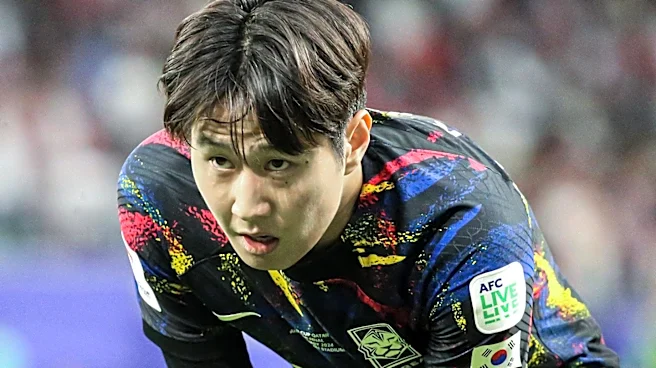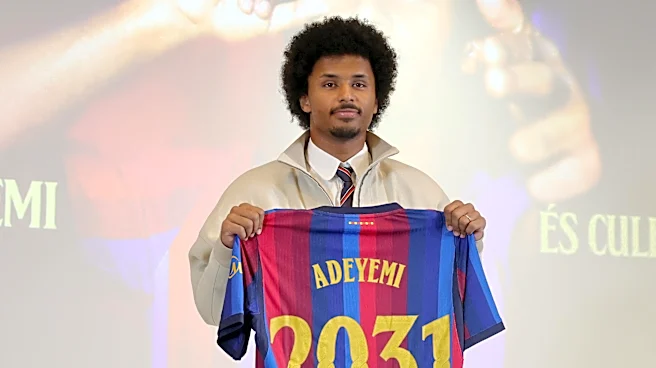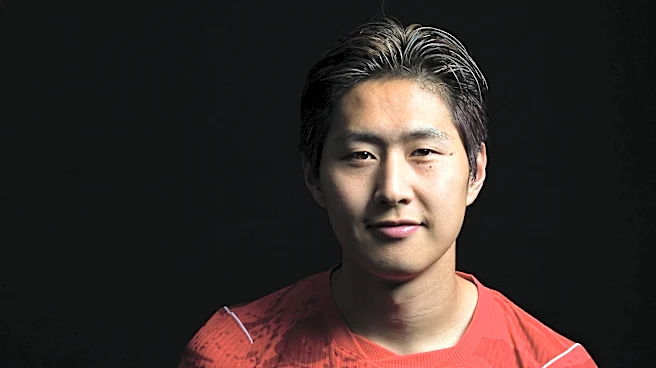

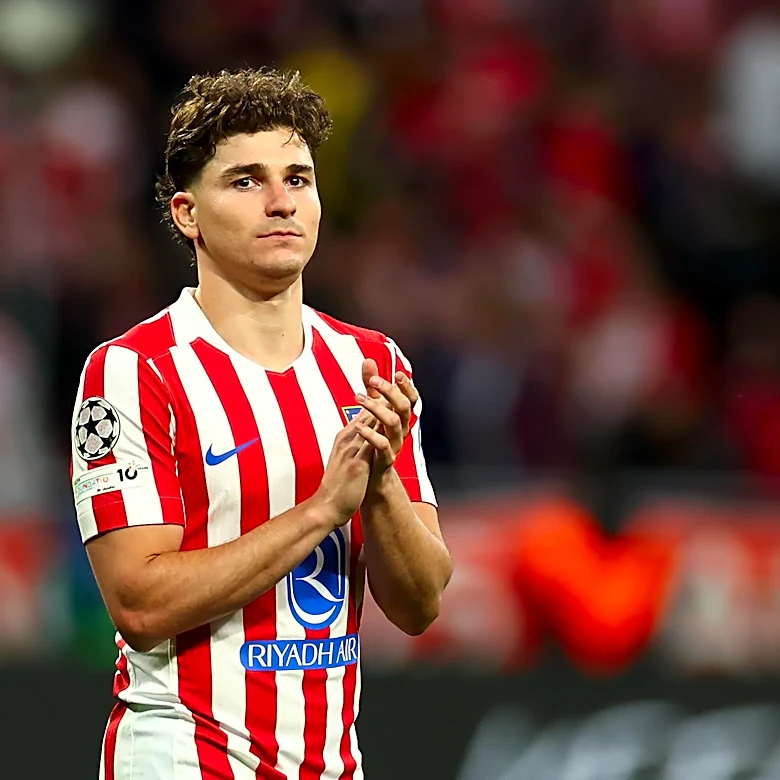

Atlético de Madrid’s summer is moving quickly. Before the Alejandro Grimaldo deal was even formally announced, Spanish media was already reporting that Kang-in Lee would follow him as the club’s second signing of the window for around €35 million plus bonuses.
It took a bit longer than expected due to administrative paperwork, but Lee now follows Morten Hjulmand and Grimaldo in joint this summer after the South Korea international put pen to paper on a deal until 2031.
Who is Kang-in Lee?
Lee was born in Incheon, South Korea, in Feb. 19, 2001, the youngest of three children. His father, a taekwondo instructor and Diego Maradona devotee, helped shape a son who would end up playing the kind of football Maradona would have recognized: small, low centre of gravity, technical, creative, obsessively close to the ball.
At six, Lee was already appearing on Korean football reality TV. By 10, he was in Spain, joining Valencia’s academy after his youth coach had seen enough to recommend trials against Villarreal and Valencia simultaneously. Valencia won that particular contest.
Lee spent a decade in Mestalla’s youth setup before becoming the youngest non-Spanish player to debut for Valencia’s first team — and the first Asian to wear the shirt competitively. At 17, he was starting Copa del Rey matches. At 18, he was on the Champions League pitch against Chelsea. He ended up the fifth South Korean to play in LaLiga, but the record books are full of his name across every age group. His most significant individual achievement before his senior career properly began was winning the Golden Ball at the 2019 U-20 World Cup, a tournament in which South Korea reached the final, with Lee scoring twice and assisting four more in seven games.
After his Valencia contract was terminated early in 2021, when the club prioritized a non-EU slot for Brazilian striker Marcos André, Lee signed for Mallorca on a free transfer. In the 2022/23 season he was one of the best dribblers in the European top five leagues by success rate, finishing with six goals and seven assists. PSG paid €22 million for him that summer, making him the first South Korean ever to play for the club. By May 2026, he had won back-to-back Champions Leagues with them, becoming the first Asian player to lift multiple European Cups.

Where does Lee play and how does he fit in?
Lee is listed primarily as an attacking midfielder but he has played across the front three, at false nine, in wider midfield, and even in deeper central roles when Luis Enrique needed options. The position he has occupied most meaningfully is one in the half-spaces, centrally oriented rather than on the touchline, operating as a classic number ten shaped by the demands of modern football. He is left-footed and, as a result, has tended to be positioned on the right, where he can cut inside onto his stronger foot.
The PSG years were productive, but not what Lee needed. He failed to start a single game in Europe last season, with Khvicha Kvaratskhelia’s arrival and Désiré Doué’s emergence boxing him out of Luis Enrique’s preferred eleven. His 1,522 Ligue 1 minutes in 2025/26 tell the story of a player whose talent was not the issue. When he played, he was influential, but the problem was frequency.
At Atlético, the context shifts considerably. Antoine Griezmann has departed, and Diego Simeone has been looking for someone who can create in tight spaces in the final third, take responsibility from dead balls and play across multiple positions in the front line without losing identity. Korea Times described Lee’s projected role accurately: not a direct “Griezmann replacement” but a key piece in the rebuild, a versatile attacker who gives Simeone selection flexibility.
The defensive question mark hanging over him could be his biggest test at the Metropolitano. Lee never has been a high-press specialist, and Simeone’s system demands a baseline of defensive work from every player. At Valencia under various coaches, it cost him minutes. Javier Aguirre at Mallorca worked around it by giving Lee the freedom to operate centrally and influence games through creativity rather than work rate, which immediately brought out his best football. The expectation is Simeone will manage something similar, but Lee at 25 is better equipped to adapt than the teenager who kept getting frozen out. He said so himself at PSG: “Since I was a kid, I’ve never been a physical player with a lot of strength or speed. I had to find my style.”
Who does Lee play like?
The clearest comparison in Atlético’s own history is Arda Turan. The Turkish midfielder spent four years at the Metropolitano between 2011 and 2015, and the profile overlaps in ways that are genuinely useful rather than cosmetic: technically elite, comfortable across multiple positions in the front line, a creative force in the half-spaces who needed a manager willing to build around his strengths rather than demand defensive rigidity he was not built to provide. Simeone got the best out of Arda by giving him licence to influence games centrally, and the framework he will likely offer Lee is similar.
In pure footballing terms within the current squad, there is also something of Griezmann in how Lee operates, not because they are interchangeable but because both work best between the lines, both are genuine set-piece threats and both need the ball in positions where they can turn and create rather than receive with their back to goal. Lee is quicker over short distances and more comfortable in tight central spaces. Griezmann was the better finisher and more consistent without the ball. The roles overlap but the profiles do not fully align, so it would be hard to label him a direct replacement.

Does Lee have any links to Atleti?
The most significant one is Mateu Alemany. The sporting director worked at Valencia while Lee was coming through the academy and was at the club for the beginning of Lee’s senior career. Cadena SER reported that Lee’s agreement with Atlético was reached “a long time ago,” signaling Alemany’s familiarity with the player stretching back over a decade. These are not abstract scouting relationships: Alemany has watched Lee develop from a teenager into a Champions League winner at close quarters.
There is also a geographical dimension that matters. Lee lived in Spain from 2011 until he joined PSG in 2023. He is not arriving in a foreign country. He knows LaLiga, knows Madrid and has been based in Spanish football culture for most of his adult life. He has also played at the Metropolitano many times before, the first, in October 2019, seeing him sent off for a late tackle on right-back Santiago Arias.
One fun fact is that Lee would become the first Asian player to represent Atlético de Madrid at senior level, and more broadly joins a growing line of South Korean players who have made genuine marks in Europe’s top competitions. Park Ji-sung is the reference point from his stint at Manchester United, while Heung Min Son is also high-profile from his time at Tottenham, but Lee’s two Champions League medals put him in that conversation regardless of minutes played.

What’s been said about Lee?
The praise for Lee’s technical ability has been consistent across every environment. The most revealing testimony about Lee’s quality comes from the man who shaped him.
Javier Aguirre, the coach who unlocked Lee at Mallorca and has since described him as being like a son, went on record ahead of Mexico’s World Cup group game against South Korea this month with a pre-match assessment that was as much a tribute as a tactical plan.
“Lee Kang-in is a player who is truly difficult to stop,” Aguirre said. “He effectively widens the field by moving from the wing into the centre and delivering sharp passes. Not only is his one-on-one dribbling ability threatening, but his long-range shooting is also very dangerous.”
Aguirre also once said of him at Mallorca, “I believe he is the most talented player in the squad and he’s so lethal in one-on-one situations.”
Luis Enrique offered a different kind of endorsement at PSG, more functional but no less pointed. After Lee scored his first Ligue 1 goal against Montpellier in 2023, Luis Enrique said, “Kang-in Lee, he’s small but he can play up front, behind, go inside, on the side, defend, score.” Elsewhere, Lucho praised his intelligence on the pitch specifically, and was reported to have blocked an exit the previous summer because Lee had become too useful as a rotation piece, complimenting his ability to read situations across multiple positions.
Korean football writers covering the World Cup went further. Lee Jong-sun of SBS Korea, one of the country’s main broadcasters, said Lee is the player with the greatest projection in the new Korean generation, and that the 2026 World Cup is the tournament where he must prove it fully. While the tournament may not have gone according to plan, it reflects his status in the squad.