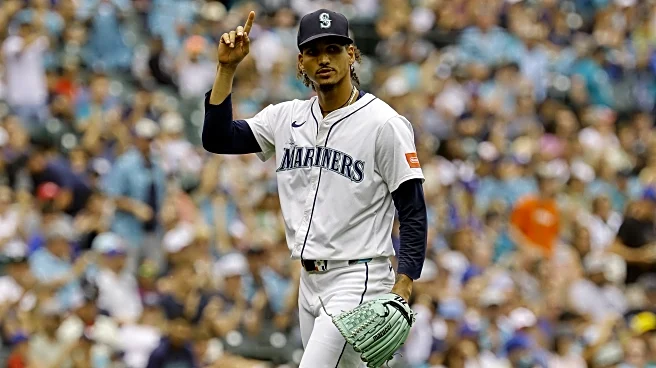


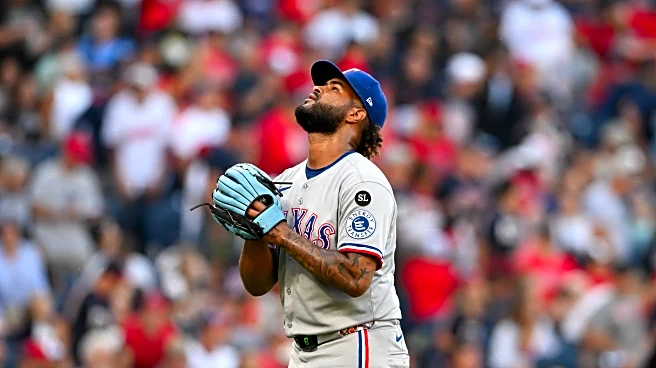
Carlos Vargas probably isn’t the worst reliever in baseball.
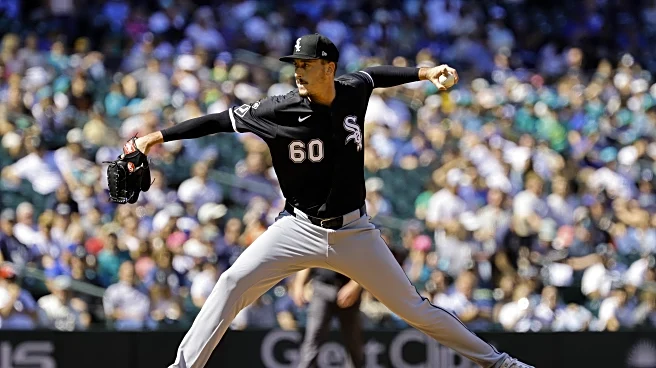
Vargas threw 77 innings for the Mariners in 2025. It was eighth most by any reliever in MLB. With a 4.59 FIP across all those appearances, he finished with -0.6 fWAR — tied for last among qualified relievers. The team tried to hide him in the playoffs; they weren’t always successful, and neither was he.
It wasn’t the ideal introduction for Vargas in his first full season in MLB. He had a cup of coffee with the Diamondbacks in 2023 before
coming to Seattle in the trade that sent away Eugenio Suárez. The Mariners raved about Vargas’ stuff but insisted he spend a full year in the minors to improve his command. That seemed to work: he halved his AAA walk rate in Tacoma and earned a spot on the Opening Day roster for 2025.
But it wasn’t the command that limited Vargas in his rookie season. Instead, he unable to miss bats. He finished 2025 in the bottom 10% for both whiff rate and strikeout rate. Innings had a tendency to slog and then snowball as he struggled to put batters away. His 15 meltdowns tied for fifth most in MLB, and Dan Wilson slowly hid him from big spots as the season got late.
The lack of swing-and-miss was not really news (Vargas struggled to miss bats in the minors, too), but it often felt incongruent with his visually impressive arsenal. His primary pitch was a sinker that he threw at 98 mph with devastating arm-side bite. It graded as one of the best sinkers in MLB by several “stuff” models. His secondary pitches showed a similarly impressive assortment of movement and spin, even if they too seemed incapable of fooling batters.
It’s hard to say what drove this chasm between stuff and results. One theory is Vargas’ repertoire lacked deception. He threw his sinker about two-thirds of the time in 2025; few pitchers relied on a single offering more. Batters could simply bank on getting a sinker near the zone, and most of the time they’d be right. There was also little downside in guessing wrong. Vargas threw each of his pitch types within 7 mph of each other on average, and none of them moved in drastically different directions. He ranked in the bottom 10 for both velocity and movement spread, according to Baseball Prospectus’ new arsenal metrics. In other words, if a batter swung at the wrong time and place, they still might make contact anyways.

It’ll be interesting to see how the Mariners approach this over the offseason. Their pitching philosophy generally boils down to “throw your best pitch in the zone as often as you can,” and that didn’t really work for Vargas in year one. Perhaps he’d be a candidate to learn a splitter or a curveball — something to help him change speeds and add a bit more vertical depth to his arsenal. But Vargas already has decent secondary offerings that he chooses not to throw. Maybe he should simply work on commanding those secondaries and mixing them in more often. It’s worth pointing out Vargas in the minors had a different pitch mix, with equal reliance on his sinker, slider and cutter. Though it’s also worth point out he wasn’t missing bats then, either.
Regardless, the results could look better for Vargas in 2026 even without a fundamental shift in ability. While he struggled to avoid contact last year, the contact he did allow was ideal. His 52% ground ball rate was top five among relievers. Unfortunately, the Mariners’ infield defense was among the worst in MLB, and they were especially bad when Vargas was one the mound. Mariners’ fielders posted -11 OAA while he was pitching. No pitcher got less help from their defense.

I was curious about how much this mattered. I found every grounder Vargas allowed for a base hit last year. I found the 10 grounders with the lowest xBA — the ones least likely to be hits based on their exit velocity and launch angle — and I changed those to outs. I then estimated how an out on that play would have changed the result of the inning. (It doesn’t really work this way, but I think it’s a useful illustration.)
I estimated with those 10 additional outs, Vargas would have saved:
- 10 hits (the 10 grounders we changed to outs), including eight singles and two doubles
- Four more hits in at bats that wouldn’t have taken place with an extra out, including three singles and a grand slam
- Six runs, including four from the grand slam
- 14 batters faced
Now, this would be a tremendous outcome for Vargas and the team (fewer hits, fewer runs, fewer pitches, etc.). And this would be a tremendous outcome for a fantasy baseball manager (presumably in a very deep league) who cares about ERA and WHIP. But this scenario wouldn’t change our perception of Vargas by the more objective, context-neutral tools like FIP and WAR.
It’s important to remember FIP stands for Fielding Independent pitching. It’s already removing the impact of defense from pitcher performance. The Mariners’ poor infield in 2025 had little (if any) direct influence on Vargas’ FIP. And at least in this hypothetical, there wasn’t much indirect influence, either. Only one of these missed plays lead to additional FIP outcomes (a slow chopper single to third that Eugenio Suarez couldn’t quite get to eventually lead to a two out HBP and grand slam). I estimated these 10 extra outs and their downward effects would drop Vargas’ 2025 FIP from 4.59 (15th worst among qualified relievers) to 4.38 (22nd worst).
This is why strikeouts are so coveted, and why Vargas’ lack of strikeouts is so concerning. They’re absolute. They eliminate the need to counterfactualize and think about the various things that can happen when a ball gets put in play. Not all of these outcomes are bad (Vargas tied with new teammate Jose Ferrer for the second most double plays by a reliever), but it’s far easier to believe in a pitcher who takes matters into his own hands, rather than relying on the bronze hands of fate.
The mandate for Vargas this offseason is clear: find a way to align his gaudy stuff with actual results; find a way to miss more bats. He’s already plummeted on the Mariners’ reliever depth chart, and he’s unlikely to get so long a leash in 2026 without more whiffs. There’s hardly a player with more to prove — and more to lose — when pitchers and catchers report to Spring Training in about 40 days.