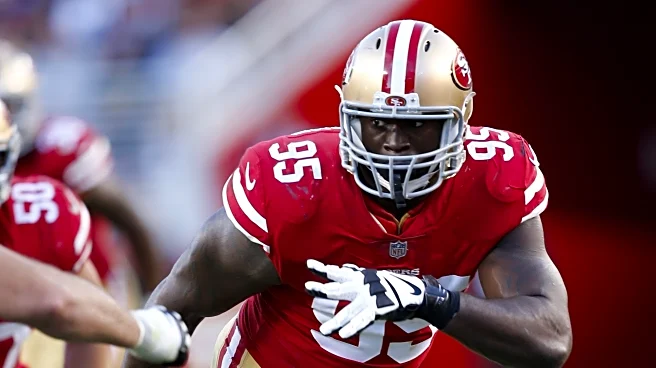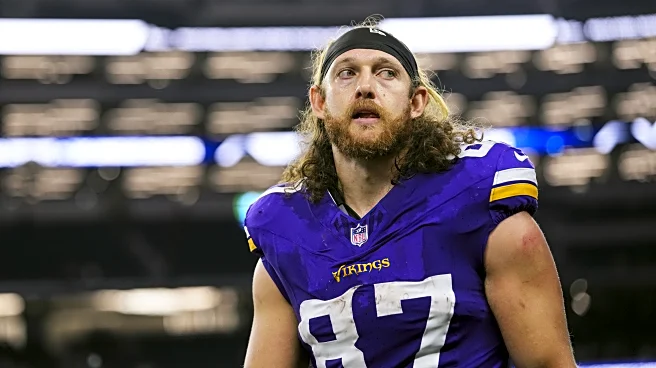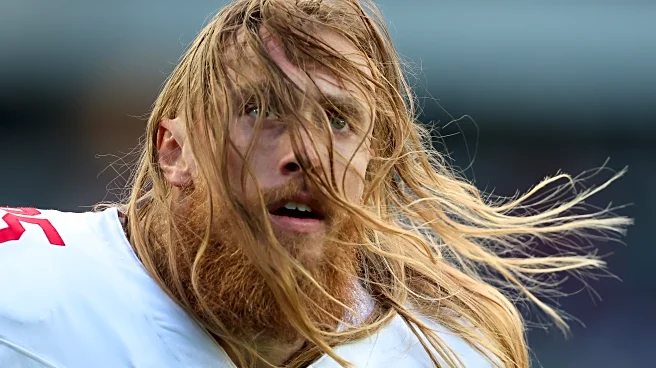

It was an eventful season for the San Francisco 49ers’ tight ends. George Kittle looked well on his way to another All-Pro year after four catches, a couple of first downs, and a touchdown against the eventual
Super Bowl champions in the opening quarter of the season.
We would not see Kittle again until Week 7.
Over the next month and a half, a guy named Jake Tonges caught four touchdowns and had a game against a playoff team in which he was targeted 11 times. Free agent signing Luke Farrell’s most memorable moment during that span was a fumble on the road in a game where the 49ers ended up losing.
Despite missing all that time, Kittle still ended up being among the most valuable pass catchers in the NFL. The passing game isn’t even the area where the offense missed Kittle’s presence the most.
It’s not a great sign if your offense can’t function if you remove one player from it, but the Niners struggled mightily to generate anything positive on the ground with Kittle. Their rushing numbers fell off a cliff. The playoff defenses didn’t have to respect it, which put more pressure on the backup quarterback.
Let’s get into the strengths and weaknesses of this group.
Strengths
You’d have no idea Kittle was coming off a hamstring injury at 32 if you watched him. The 49ers’ quarterbacks had a perfect passer rating when targeting Kittle on throws 10+ yards downfield. Kittle led the NFL with +156 receiving yards over expected despite missing those six games.
Kittle ended up catching 92 percent of his catchable targets while averaging 4.6 yards after the catch. He is what a Hall of Famer looks like. Week 10, when Mac Jones didn’t have any other options against the Rams, Kittle caught all nine of his targets. That kind of consistency became the norm for Kittle.
One of the coolest stories of the 49ers’ season was Tonges coming out of nowhere. He had at least 35 receiving yards in four games without Kittle. The offense needed every one of Tonges’s four touchdowns. Surprisingly, Tonges finished seventh among tight ends in passer rating when targeted. He looked like he belonged.
Weaknesses
The 49ers could not figure out how to get Kittle and Tonges on the field together. That remains one of the most baffling parts of the season.
Tonges had ten targets on 25 routes with Brock Purdy on third down. Seven of those resulted in first downs, including a touchdown. Kittle was only targeted 12 times on 55 third-down routes with Purdy. How does an offense struggle to feature Kittle on a down as important as third, but not Tonges?
Kittle’s 33-year-old season will be coming off an Achilles injury. Experts are optimistic Kittle will return to full health, but will he be a step slower?
The lack of other tight ends being able to function as blockers or pass catchers really hurt the team without Kittle. The 49ers’ explosive rush rate dropped from 11.2 percent to 5.8 percent without Kittle, while the average yards per carry went from 4.1 to 3.3. The 49ers rushed for 11 touchdowns with Kittle and only one without him.
The coaching staff couldn’t trust Tonges as a blocker, but Farrell, at 258 pounds, offered little in the passing game. Farrell’s lack of versatility makes you wonder if he’ll be a cap casualty this offseason.
How does the tight end room look in 2026?
We ranked tight end as the 6th-most pressing need this offseason. That might be low, given Kittle’s injury and the lack of experience behind him. Here’s how the tight end room looks heading into 2026:
- George Kittle
- Jake Tonges
- Luke Farrell
- Brayden Willis
Farrell is under contract through 2027 with an affordable cap number. It’ll be his 29-year-old season next year. He’s the epitome of a blocking tight end, although there were enough exposures to question his expertise there.
Tonges is a restricted free agent. It’ll be interesting to see whether another team offers Tonges a contract.
It’s early in mock draft season, but the 49ers are already being mocked a Kittle replacement. Kenyon Sadiq would quell any concerns about this position. He’s versatile, can block, win underneath as a receiver, but also stretch the field. Ohio State has a tight end who may make Kyle Shanahan salivate as a blocker. The 49ers could wait later in the draft and still find a tight end to contribute early. It’s a good year to need a tight end.
Then there is Kyle Pitts, who could follow Raheem Morris from Atlanta. You’ll have to pay a pretty penny for Pitts’ services, but he seems well worth the investment.
Other names in free agency may attract the 49ers, like Isaiah Likely, David Njoku, Dallas Goedert, Noah Fant, or Tyler Higbee. I could see the team being interested in Charlie Kolar. There is no shortage of options in free agency, either.
It’s the ideal offseason to address the position.

![Daily Slop: 12 Feb 26 – New Commanders OC David Blough: “How do we get Terry [McLaurin] 10 targets a game?“](https://glance-mob.glance-cdn.com/public/cardpress/binge-magazine-card-generation/spaces/US/en/sb-nation/images/ppid_2cf3d240-image-177091266842313096.webp)