
For every professional sports team, the end goal is always the same: Win a championship. Although that didn’t happen for the Chicago Bears in 2025, last season was easy to call a dream come true in many ways. Time flies, and sometimes it’s easy to forget the past. For most fans, 2024 was a season they’d like to purge from their memories forever. While living through former head coach Matt Eberflus’s last season in Chicago wasn’t pleasant, it also reminded everyone to enjoy the good times while they last.
That’s exactly what Ben Johnson provided this team last season: Hope.
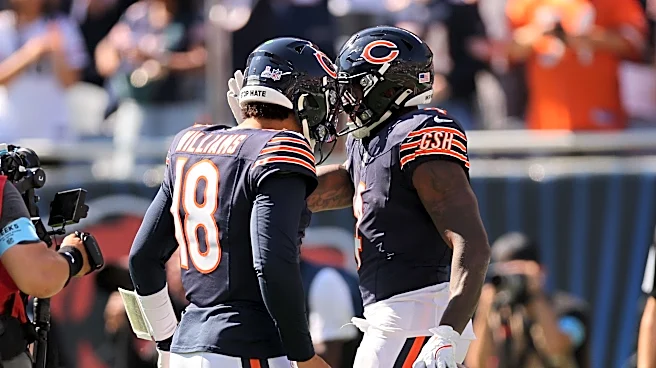
Eberflus became the first head coach in franchise history to be fired midseason. While that alone isn’t uncommon, his failures came at the cost of Caleb Williams’ development as a rookie. Johnson not only righted those wrongs, but he also instilled a new culture in the team and the city that should leave a lasting impression for years to come. Now comes the hard part: Maintaining that success.
It’s been 20 years since the Bears experienced back-to-back playoff seasons. Johnson and his team broke multiple “curses” last year. Will this be the next? Despite a lack of “flash” this offseason, the organization is optimistic its core is in place and that last year’s experiences (both good and bad) will give the team more tools to complete the road to Super Bowl 60. With the season set to kick off this week, let’s dive into our yearly Chicago Bears season preview.
Offseason Additions
Pre-Draft:
- LB Devin Bush
- S Coby Bryant
- C Garrett Bradbury
- DT Neville Gallimore
Others: WR Kalif Raymond, DB Cam Lewis, DT Kentavius Street, DT James Lynch, LB Jack Sanborn, and Xavier Woods.
For the first time since the start of the rebuild, general manager Ryan Poles and the team took a more conservative approach to the start of the acquisition period. Losing Drew Dalman to retirement forced a trade for Bradbury, but the primary focus was adding speed. Both Bush and Bryant provide that in the second and third levels of the defense, while Raymond gives Johnson a familiar face to rely on at receiver. Gallimore, Woods, and Lewis should provide quality depth at their respective positions. Oh, and Jack Sanborn is back for a Round 2 with his hometown team. There’s no doubt that this free agency period lacked flash. Now, fans must hope that the core they established last season is enough to take them to the next level in 2026. They’ll be starting the season without Bryant at safety, which is a tough pill to swallow for a team that was hoping he’d set the tone for the entire defense.
Draft:
Trades:
- No. 460 to Tennessee Titans for No. 69 and No. 144
- No. 129 & No. 144 to Carolina Panthers for No. 124 and No. #166
- No. 239 and No. 241 to Buffalo Bills for No. 213
- 1st Round (#25) S Dillon Thieneman (Oregon)
- 2nd Round (#57) C Logan Jones (Iowa)
- 3rd Round (#69) TE Sam Rousch (Stanford)
- 3rd Round (#89) WR Zavion Thomas (LSU)
- 4th Round (#124) CB Malik Muhammad (Texas)
- 5th Round (#166) LB Keyshaun Elliott (Arizona State)
- 6th Round (#213) DT Jordan van den Berg (Georgia Tech)
Following a lackluster free agency period, the Bears set their sights on yet another impactful draft class. Thanks to the DJ Moore trade, they came into the draft with four picks over their first three rounds. Round 1 started with a pleasant surprise in Thieneman. It was clear that safety was a top need for them, and having a player projected to go 10 picks early still on the board at 25 was about as good as it gets. They followed up the Thieneman pick with a trio of names on Day 2 that included Jones and two surprises in Roush and Thomas. Not many could have expected them to go all offense on Day 2, especially with the value of some of those picks in question. Luckily, they followed up on Day 3 with a trio of defensive players that, at worst, should provide quality depth over the next few seasons.
All in all, this wasn’t the same impactful class as we’ve seen (on paper) over the last few years, but that was expected considering how much lower in each round they picked. All in all, they added what should be multiple Year 1 contributors with the idea of developing them into bigger contributors down the line. Fans shouldn’t expect the same early impact from this class, but as the season goes on, most should settle into roles that have them contributing weekly.
Retained Free Agents:
- LB DeMarco Jackson
- LT Braxton Jones
- OL Theo Benedet
- S Elijah Hicks
Others: QB Case Keenum, DE Daniel Hardy, and iOL Jordan McFadden.
The ongoing trend of Poles and his front office not retaining many of their impending free agents continued this offseason. Despite having multiple starters hit the market, the team retained just two projected starters, along with some key depth pieces. Jackson was a must-re-sign after a breakout season, and picking up Benedet’s ERFA tag was a no-brainer. Retaining Jones for another year was a mild surprise, but much needed with Ozzy Trapilo’s status for the season still up in the air. The team also decided to keep their quarterback room together for another season, which seems smart after how well things went in 2025. All in all, each move made sense, even if fans expected to see more players back from last year’s roster.
Contract Extensions:
- RT Darnell Wright 4 years, $116 million ($93 million guaranteed)
Barring any last-minute surprises, Wright enters the regular season as the only player to receive a long-term extension this offseason. Given the money and resources needed for Caleb Williams and his offensive weapons in the near future, it makes sense. Wright was well-deserving of his new contract, and now holds the highest guarantee of any offensive lineman in NFL history.
Offseason Subtractions
- S Kevin Byard
- WR DJ Moore (Traded)
- C Drew Dalman (Retirement)
- LB Tremaine Edmunds (Released)
- S Jaquan Brisker
- DT Gervon Dexter Sr. (Traded)
Others: CB Nahshon Wright, WR Olamide Zaccheaus, DB C.J. Gardner-Johnson, DT Andrew Billings, LS Scott Daly, DE Dominique Robinson, LB Amen Ogbongbemiga, iOL Ryan Bates, DE Joe Tryon-Shoyinka, S Jonathan Owens, DT Chris Williams, TE Durham Smythe, CB Nick McCloud, WR Devin Duvernay, RB Travis Homer, and iOL Ricky Stromberg.
Heading into the start of the new league year, many expected Byard to be retained on an affordable deal. Despite productive talks heading into the legal negotiation period, the Bears chose a different direction at both safety positions. Moore’s trade surprised some, but for those who watched his usage before Rome Odunze’s injury, it was clear Johnson never valued him as a top option in his offense. Edmunds was a no-brainer to release, considering his play and money owed. Wright and Gardner-Johnson were two unsung heroes of last season’s secondary, but both got bigger deals elsewhere. The rest of the names on this list were simply depth pieces or role players. While it would have been nice to retain more of last year’s “core,” this type of roster churn is expected for every team in the league each offseason.
Reasons for Optimism
1. Year 2 of Ben Johnson and Caleb Williams should produce even more fireworks.
As expected, last year’s offense looked worlds better than anything we saw under Eberflus. In some ways, it was reminiscent of Nagy’s first year as the team’s head coach, but if the early returns continue to trend in the right direction, Johnson’s reputation as one of the best offensive minds in football will be cemented. The work the first-year head coach was able to do in 2025 shouldn’t be overlooked, especially following a slow start to the season. Getting the most out of a young quarterback was his most important task, but the way he rebuilt the offensive line and drastically reshaped the running game might have been equally impressive.
Chicago went from having one of the worst offensive lines in football to one of the best. Although two of their projected starters won’t be in the lineup for 2026, there’s reason to believe that Johnson and offensive line coach Dan Roushar will find a way to keep continuity, while further building off last year’s unheard-of turnaround. Not only will the offensive line’s success impact the pass protection, but it will dictate how successful they can be running the football.
Unlike the defense, the offense has notable continuity. Outside of Ozzy Trapilo, Drew Dalman, and DJ Moore, all of last year’s playoff starters will be returning. While the inclusion of Moore in this offense would have been nice, the one-two punch of Rome Odunze and Luther Burden III should flourish in this scheme. In addition, you’d be hard-pressed to find a better tight end duo than Colston Loveland and Cole Kmet. Depth behind the team’s top two receivers will need to be sorted out, but it’s clear with the additions of Kalif Raymond and Zavion Thomas that speed was a priority.
Of course, none of this really matters without top-tier quarterback play. Williams’ first season under Johnson had its fair share of ups and downs, but his late-game heroics and big-play ability aren’t easy to teach. Consistency from down to down will be a point of emphasis early in the season, but Year 3 has been home to some of the bigger breakouts when looking at the NFL’s current elite quarterbacks. Williams holds the keys to the kingdom for this team, and there’s little reason to doubt him taking the next step to stardom in 2026.
2. The experience from last year’s NFC North crown and playoff victory should serve this young team well this season and beyond.
Even if the Bears aren’t outwardly young at any position on the roster, their core players sure are. General manager Ryan Poles and his front office did a nice job last offseason of finding the right mix of veterans to go with a younger foundation of players. Now that the needle has been threaded and their core has last year’s experiences under their belts, it’s fair to expect that it will serve them well with a tougher schedule and a bigger national spotlight on them.
No NFL roster stays the same every year, and the Bears did lose some quality veterans who played key roles in last year’s success. Among those are: Kevin Byard, C.J. Gardner-Johnson, Tremaine Edmunds, Dalman, and Moore. That said, they added a Super Bowl-winning safety in Bryant and focused more on scheme fits than continuing to fit square pegs into round holes. Between last year’s success and the more experienced veterans added in free agency, fans should feel comfortable with the level of leadership on the current roster.
More than anything, the experience gained by players like Williams, Loveland, Odunze, and Burden should give them confidence and a roadmap for navigating another 17-game season and beyond. It’s also worth noting that despite plenty of outside interest, the coaching staff remains largely intact for Johnson. All in all, the most important players on this roster are in place, and the experience gained from last year’s miraculous season should serve as a reason for the team and fans to believe they can do it again.
3. Despite a mellow offseason in Chicago, the rest of the NFC North didn’t do much either.
Following your favorite team’s offseason can be an emotional rollercoaster, as Bears fans are very familiar with at this juncture. Whether tearing down or rebuilding the roster from the studs, Poles has made plenty of headlines since taking over in 2022. Couple that with a different outcome against the Rams, and this offseason felt like one that could get the team over the top. Instead, Poles and his front office took a more conservative approach, leaving some fans to wonder whether or not they did enough to take the next step.
While it’s not hard to argue that Chicago should have done more coming off such a successful season, sometimes it’s easy to ignore what goes on with the other three teams in the division.
On paper, the Lions probably did the “most” of any team in the NFC North, but even then, there wasn’t a “splash” move that an objective observer would label as “groundbreaking”. Instead, they focused on the trenches, hoping their current core of players would stay healthier for the upcoming season. The Vikings had more losses than gains, although it’s worth noting that the Kyler Murray signing could be the most impactful move any team made. That said, they lost plenty of firepower on their defensive line, and still have other questions plaguing their roster. Finally, we get to the Packers. Losing defensive coordinator Jeff Hafley is going to hurt, but their lack of activity along the defensive line is what I’d be most concerned about as a Green Bay fan. With Micah Parsons expected to miss the first six (or so) weeks of the season, they’ll be relying on Lukas Van Ness and multiple unproven edge rushers to pick up the slack of the pass rush.
Without getting too much into the weeds of what each team did (check out my 2026 NFC North Season Preview for that), it’s clear that the Bears were far from the only team in the division that feels like they can contend without breaking the bank or trading away high-round draft capital. Each year produces different results, but it’s key to take in all offseason context, and at least on paper, the Bears didn’t really lose any ground in the talent department within the division.
Where They Stand in the NFC North
Last year, the NFC North was the only division in football to have all four teams finish above .500. Suffice it to say. However, even if the Detroit Lions and Minnesota Vikings took a step back and were labeled “disappointments” in 2025, the NFC North still had plenty of competition. Considering none of their four teams really did much to separate themselves on paper this offseason, it stands to reason that this should be another tightly contested race for 2026.
Looking at the trend of betting odds, the Bears are a popular choice to finish outside of the top spot. In fact, there isn’t a single sportsbook out there (that I have found) that has the Bears as division favorites, despite their success last year.
In some ways, it’s understandable. The Lions, who are the odds-on favorite, haven’t had a losing record in four seasons and have strung together a 27-7 regular-season record between 2023 and 2024. Despite their recent lack of postseason success, the Green Bay Packers have made the playoffs in six of their last seven seasons. Heck, even the Vikings have posted three winning campaigns over the last four years. In most folks’ eyes, the Bears must prove that they weren’t a fluke and have enough talent to sustain the wave of regression in one-score games.
So, where does that leave Chicago in 2026? If there’s one lesson the NFL teaches yearly, it’s that parity is king. New playoff teams emerge every season, and there’s a case to be made for all four teams within the division. In addition, history is not on the Bears’ side. 2026 will mark 20 years since they’ve made back-to-back playoff appearances. For additional context, they’ve done it just twice since 1990. Even if fans don’t see the skepticism as warranted, there’s plenty of history to at least give the benefit of the doubt.
Assuming good health, the offense should take another step forward in Year 2 of the Johnson-Williams pairing. The bigger question will be the defense and whether they did enough to truly improve their unit to compete for a Super Bowl. The team’s head coach said it best after their Divisional Round loss to the Rams, but it bears repeating: Momentum does not carry from season to season. Despite last year’s success, the Bears must go through the process again to succeed. The biggest change is that now they’ll be the hunted and won’t catch anybody off guard.
The blueprint for another successful season is there, but the schedule is projected to be more difficult, and the NFC North might be the most competitive division in football. If they want to repeat as division champs and contend for a Super Bowl in 2026, Williams must take the next step, and the defense needs to improve significantly. Now, all that’s left to do is watch it play out.
Projected Record and Final Thoughts
On paper, the Bears will enter the 2026 season with one of the league’s hardest projected schedules. Sounds familiar, doesn’t it? We said the same thing last year, and as we saw over time, it didn’t pan out that way. That’s why fans should always be cautious with projecting seasons based on past years’ results. That said, the road back to a division title and the playoffs should be tougher. The Bears went from the hunter to the hunted, so it’s only natural that teams are going to approach them differently in 2026.
Despite what projects to be a tougher schedule and the “surprise factor” being gone, this is still a very good team capable of matching or surpassing last year’s record. Getting off to a strong start will be key, and although there aren’t many lulls in the schedule overall, there aren’t many stretches on paper that feel too difficult to overcome. Without further ado, let’s jump into my 2026 season predictions.
Projected Record: (12-5) — 1st in the NFC North
Week 1: At Carolina Panthers WIN
Week 2: Vs Minnesota Vikings WIN
Week 3: Vs Philadelphia Eagles WIN
Week 4: Vs New York Jets WIN
Week 5: At Green Bay Packers LOSS
Week 6: At Atlanta Falcons WIN
Week 7: Vs New England Patriots LOSS
Week 8: At Seattle Seahawks LOSS
Week 9: Vs Tampa Bay Buccaneers WIN
Week 10: BYE
Week 11: Vs New Orleans Saints WIN
Week 12: At Detroit Lions LOSS
Week 13: Vs Jacksonville Jaguars WIN
Week 14: At Miami Dolphins WIN
Week 15: At Buffalo Bills LOSS
Week 16: Vs Green Bay Packers WIN
Week 17: Vs Detroit Lions WIN
Week 18: At Minnesota Vikings WIN