
Everybody wants the NBA to fix tanking. Nobody knows how to do it.
Tanking. You’ve seen the word thousands of times in your recent social media doom scroll. You’ve heard it repeated countless times on television and podcasts to the point of semantic satiation — the word is losing all meaning. It’s just a jumble of sounds at this point.
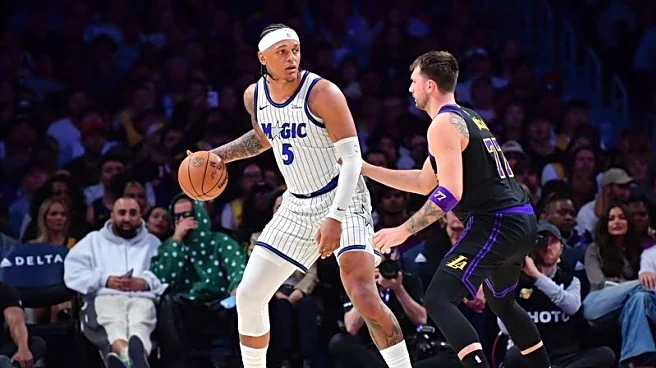
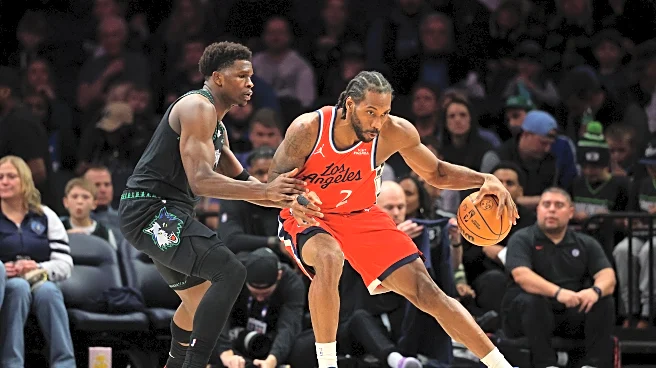
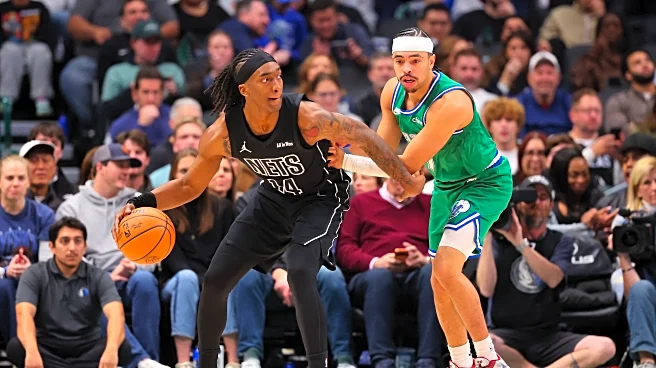
It’s an issue so significant and foundational to the National Basketball Association that at this point, half of the league’s eyeballs are glued to the bottom of the standings,
rather than fixating on the top half. Basketball teams don’t want to win anymore, at least not until they’re certain they found a winning formula. A potential superstar, a blooming project player, and the surrounding infrastructure to support the weighty task of pursuing the NBA Finals.
When it works (Philadelphia, Oklahoma City, San Antonio, Dallas), the results are magnificent. The stars of the league carry their team to the spotlight and duke it out for a chance to hoist the trophy at the end of the season. Isn’t San Antonio the picture of perfection — a mythical paradise where beast and man play as one? Who can stop Oklahoma City and their endless supply of young talent? Perhaps the aprons of the CBA?
When it doesn’t (Charlotte, Washington, New Orleans), the NBA points the finger of shame. How can Washington still be destitute this many years removed from the Wall-Beal era? Michael Jordan is gone, so why is Charlotte still so horrible?
The metronome is swinging for the Utah Jazz and their tanking efforts. The NBA imposed a tanking fine on them for sitting star players in a game the Jazz won, and one on the Pacers for listening to their team medical staff: refusing to medicate and force a player to enter a game when the professionals on staff advised against it.
Why are some teams lauded for tanking, while others are hand-slapped for reaching into the cookie jar?
The reasoning is irrelevant — the NBA is planting its foot on the tanking issue, and rule changes could arrive as soon as next season.
Rather than investigating the root cause of their illness (small market teams have too few avenues to become a championship competitor), the NBA is opting to attack the symptoms. It’s not the common cold that must be stopped; it’s sneezing.
Ignoring the logical inconsistencies, I’d like to evaluate each proposed remedy for tanking offered by Shams Charania’s report. Which ones could work, which ones probably wouldn’t, and which ones are just plain dumb (most of them are this last one). I don’t know how to solve tanking, but I can poke holes in the ideas of others like it’s nobody’s business.
How will the NBA eliminate tanking?
Option A: First-round picks can be protected only top-4 or top-14+
I’ll take this one further: if you’re restricting pick protections, why not just eliminate them entirely?
Why complicate the pick protections when a far simpler solution is to remove them from the equation? Do you want to put up your first-round pick to acquire a great player? Then trade the first-round pick. Utah has fallen under fire for tanking to remain below the 9 mark in the lottery order. Their pick is top-8 protected, and conveys to Oklahoma City if it falls below that mark. For the good of humanity, we must not allow another lottery pick to fall into Sam Presti’s clutch.
I like pick swaps — that seems like a great compromise for teams who want to wager their future for the present, but are unsure they’d like to give it up entirely. Keep pick swaps, eliminate protections entirely.
Verdict: Good idea. Could use a minor adjustment.
Option B: Lottery odds freeze at the trade deadline or a later date
This is a bad idea. The core idea is to avoid manipulating results to artificially fall in the standings, right? Tanking season will simply move to earlier in the season. Instead of a last-second struggle to tumble down the hill in April, you’ll see that happening in February, January, and even December!
This proposal is pitched in tandem with a round-robin style points system for the lottery teams beyond a specific date. Simply put, once the lottery order is frozen, teams in the lottery now compete for the top pick. Wins get 3 points, overtime wins get two points, overtime losses get one point, and losses get 0 points. While fascinating in theory, this idea falls apart when considering the original purpose of the NBA draft: saving bad teams from perpetual torment. It’s hard to imagine a world where teams like Sacramento or New Orleans would ever climb out of the dregs if they have to compete against Dallas or Oklahoma City (they traded for a lottery pick five years ago. They own the rights to the pick, so of course they’ll compete).
This idea is messy, and while it might affect the way tanking is executed, I don’t see this improving the overall competitiveness of the league.
Verdict: Bad idea.
Option C: No longer allowing a team to pick top 4 in consecutive years and/or after consecutive bottom-3 finishes
Sure, this may dissuade teams from prolonged tanking, but basketball Occham’s Razor grinds its teeth at the idea.
As a rule, I don’t believe that complicating basketball will improve the product or boost the health of the league. All you’re doing is tying our brains in knots. Does this apply to teams like Atlanta, who will likely pick in the top four thanks to the New Orleans pick? Should a team like Charlotte, which picked fourth last season, be barred from the top of the lottery? That feels a bit odd, even if their prize was Kon Knueppel. That makes Utah eligible for the top four in this coming season, since they snagged Ace Bailey fifth overall in 2025.
This rule is anything but straightforward, and doesn’t account for rare situations where star players are injured, traded, or otherwise affect the expected success of their team.
Verdict: Bad idea. Too complicated.
Option D: Teams can’t pick top-4 the year after making conference finals
Sorry, Indiana, we know that your star point guard tore his ACL in Game 7 of the NBA Finals, and you lost Miles Turner, your cornerstone big man, but you, a 5 seed in the East, played in the Conference Finals a year ago. Oopsies.
The same would go for Cleveland the year after they lost LeBron (both times). You’re not eligible for a top-four pick because a generational superstar carried you to the promised land before leaving you high and dry. Sorry, we don’t make the rules… wait, actually, we do. Again, oopsies.
Verdict: Bad idea. Doesn’t account for upsets or complete implosions.
Option E: Lottery odds are allocated based on two-year records
This is supremely idiotic. It incentivises prolonged tanking efforts and rewards the usual suspects just as much as a one-year record would. The same jersey could be worn by an entirely different roster from one year to the next — in what world does it make sense to punish one team for falling apart, while rewarding another for always being horrible? Isn’t that the exact problem you’re trying to solve?
Verdict: What are we doing here?
Option F: Lottery extended to include all play-in teams
Wonderful, now even more teams have reason to tank at the end of the season. And to sweeten the deal, good teams sitting in the 4th, 5th, or 6th place spots in their conference may want to push for that 7 or 8 seed. Play in the playoffs and have a chance at the number one pick! Surely, this won’t cause even more poverty below.
Verdict: Pull yourselves together.
Option G: Flatten odds for all lottery teams
Finally, an idea that makes sense. Do the teams at the bottom of the lottery need the pick more? Yes, but now it doesn’t matter if you’re the worst team or the 10th worst; winning basketball games will not be detrimental to your future. The truly bad teams will have a chance in the lottery, but they won’t be jockeying for position down the stretch (save for the teams just outside the lottery who may want to tank for a slice of the pie).
If I were in charge, I’d likely eliminate the lottery entirely. The truly awful teams will have no reason to tank for more than a season or two, and all the drama and accusations surrounding lottery fixing will be a thing of the past. Simplify the process, and watch your league heal. Then again, I could be completely wrong.
Verdict: Good idea, but we could do more.
Calvin Barrett is a writer, editor, and prolific Mario Kart racer located in Tokyo, Japan. He has covered the NBA and College Sports since 2024.