



It’s officially draft day, Rumblers! Months of prospect talk, rankings, and debates all comes to a head on Thursday night when the NFL tells us what they really think of these prospects. You’ve seen dozens (if not hundreds) of mock drafts at this point from your favorite analysts. We hope this is the last mock draft you read before draft time, but we’re pretty sure you’ll find a few more to soak up.
The Buffalo Bills have an assortment of different directions to take with their first selection of the 2026
NFL Draft. Heck — they may even sell the pick to move back, forgoing a pick of any type at their scheduled 26th overall slot. We can reasonably narrow down the selection to a handful of different position groups for what the team should covet in any potential impact starter.
One of the main names of the game with the draft has to do with value meeting need. The Bills have primary needs at edge rusher, defensive tackle, linebacker, safety, interior offensive line, and receiver. The team has some short-term options at all of these positions, so they’re not necessarily locked into picking one spot. Let’s dive in a bit further…
Narrowing down most likely position groups
History has shown that Bills general manager Brandon Beane likes the idea of selecting a player at a position of value outside of incredible value in general falling into their laps. This would narrow things down to defensive line and wide receiver in a vacuum. Many folks have the top defensive tackle in this draft estimated to come off the board in the latter stages of the first round. Buffalo’s primary need at defensive tackle is a true nose option — someone who doesn’t necessarily need to rush the passer. This, in some ways, makes the selection of a defensive tackle in Round 1 a bit less of a value proposition.
The receiver spot is its own conversation. Many folks are in the camp that it’s in play with a first-round selection. However, the team just sunk a second-round selection into the spot with the trade for DJ Moore . It would be difficult to double down on your most valuable draft capital at the same position when there’s already plenty of needs to fill — especially with the holes on the defensive side of the ball.
All this to say… edge rusher still feels like the most likely position the Bills will take if they do make a selection during Thursday’s opening round. There are plenty of different archetypes throughout the entire first round. There’s a chance nine or more players classified as edge rushers are selected in Round 1. One measured tier-gap that exists follows the first three consensus rushers in Arvell Reese, David Bailey, and Rueben Bain Jr. Those players will almost certainly be off the board before the Bills have a chance to even consider them.
The next tier becomes a bit murky with a bit of “beauty is in the eye of the beholder” among the group. With a nuanced and varied group here, selecting one will simply depend on what you’re looking for out of the position as a whole with scheme and specialty taking precedence.
Let’s mock one of these guys to the Bills and make one of the more realistic dream scenarios come to life.
With the 26th pick in the 2026 NFL Draft, the Buffalo Bills select…
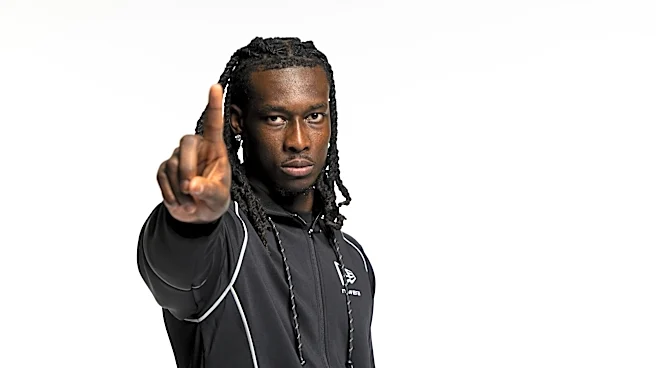
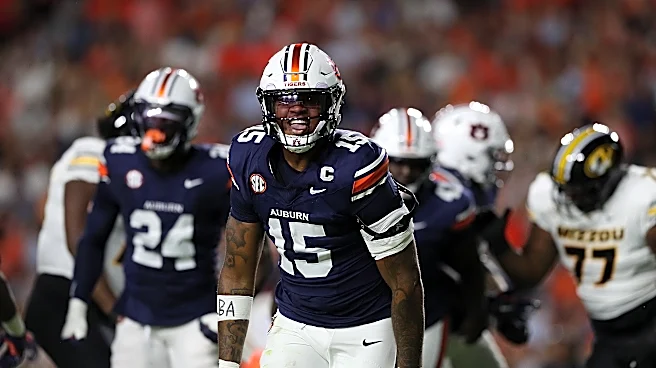
Keldric Faulk, Edge, Auburn
Faulk is considered by many as the next-best guy after the primary top three. But it’s not fully clear if he becomes the next edge drafted or when that even comes if he is next off the board. One thing that could keep him on the board up to pick 26 is his lack of production as a pass rusher. He’s fairly scheme specific, where he may do better in a diverse scheme or one that contains odd front elements where he can really thrive.
Why Keldric Faulk makes sense for Buffalo
Well… as just mentioned, he’s a schematic fit as a hand-in-dirt player for Jim Le0nhard’s scheme. This is a 275-pounder who carries it extremely well. Faulk has the versatility to play multiple techniques along the front. He’s built like every prototype from a height, weight, and length standpoint (over 34” arms). His ability to lock out against the run and punish blockers is an impressive trait and he’s shown himself to be an NFL-ready run defender from day one with downhill explosiveness and overall athleticism for a 6’5”, 275-pounder. Faulk will be 22 years old just days before the NFL season kicks off so you’d like to think there’s still more to work with. His hand pop comes up often on tape.
How Keldric Faulk could fail
There’s an easy pathway where Faulk finds failure. For all of the positives regarding his traits and overall strength, there are also some downfalls. One of those is pure production as a pass rusher. He had just 10 total sacks to his name in three years at Auburn, with just two of them in 2025. The scheme he was placed in within a true 3-4 forced Faulk to 2-gap plenty, so there’s some context necessary. But the production is the production at some point.
For as big-man athletic as Faulk is, he’s not wiggly or particularly fluid in harmonizing himself as an NFL pass rusher. There’s a bit of stiffness — and nobody will confuse him with someone truly able to bend the edge and be a force. Faulk was geared for a top-10 standing heading into the season, but the lack of sacks and total impact drop may lead to a fall despite the youth and testing athleticism.
In summary…
If you believe scheme truly limited Faulk (I do), then you’ll likely be very happy with the result of picking an edge rusher in the 20s for a position group that usually flies off the board. They don’t build them like Faulk often. There’s a reason he could be gone in the teens or fall to this spot, and it really boils down to who has the confidence they can get more from Faulk’s game as he transitions to a system that allows him to 2-gap and shoot gaps more often in true one-on-one situations.
Faulk will likely never consistently achieve 10 sacks per season. However, you’re hoping to get a well-rounded and versatile option with more to tap into as a rusher. He already has a high floor as a run defender purely due to his body type and what he’s already put on film at Auburn. The blueprints for a winning player are there — even if he’s never an All-Pro.