

This past Friday marked the anniversary of one of the most seminal events in US History: The terrorist attacks that hit New York, Washington DC and Pennsylvania. Nearly 3000 Americans killed, two of the largest buildings in the US destroyed, the command-and-control center of the US military damaged and the most powerful nation ground to a practical halt. One could argue that this was the moment that the US entered the 21st century, and the events of that day would drive American actions for the next
25 years. The impacts are still felt to this day, and likely will continue to be felt for the foreseeable future.
No aspect of American life was untouched by that day. Very much included in that was the world of pro sports. The NFL had just kicked off the 2001 season the weekend prior, and MLB was entering the stretch run for the drive to its postseason. However, the events of the morning of Sept 11 put those organizations on hold. MLB games did not take place. Given that Sept 11 was a Tuesday, the NFL apparently had time to figure out what they wanted to do (Thursday Night Games weren’t a regular thing at this point). Then, as now, the NFL ruled the sporting world in America. Other sports, like baseball, immediately cancelled/postponed games slated for that night, while trying to figure out when they would get back in business. The NFL faced two courses of action.
On one hand, there was an argument for the league to play the scheduled games. A chance for America to escape into a much-needed distraction. Also, the thought that America could and would not be thwarted by any adversary, especially one that based their operations out of some mountain caves was unbearable. Security was a major concern, but America could ramp up its internal and external security measures to ensure that there would be no repeat at a stadium full of fans.
Yet, the other side of the debate was just as strong. America reeled with shock and grief. Security upgrades were barely established for travel and industry. The stress of suddenly having to security massive stadiums filled with tens of thousands of people was hard to fathom. There was sense that the nation still needed time to grieve and that playing games in light of the worst attack against America since World War II was the wrong thing to do. Additionally, would the players that approached the games the weekend prior with passion and desire still have that fire to play in so short a time after Sept 11th? In particular, players from New York and Washington found themselves hardly able to focus enough to practice, much less get up for playing actual games.
Most sporting organizations don’t plan to face these scenarios. Yet, the NFL had seen this before. In November 1963, only 48 hours after the assassination of President Kennedy, the NFL, after some back-and-forth debate, decided that they should play their scheduled games to show that life could go on and offer a distraction from the shock of that event in Dallas. They even received encouragement from White House officials. What transpired was some of the most uninspired football seen to date. The players’ hearts and minds were not in the game, with several players saying they were just going through the motions. That carried over to fan reaction. Between the backlash for playing so soon in the wake of a national tragedy and the blowback from the poor caliber of play, many of the league’s powerbrokers felt they made a bad mistake and if given a mulligan, they would make a different choice.
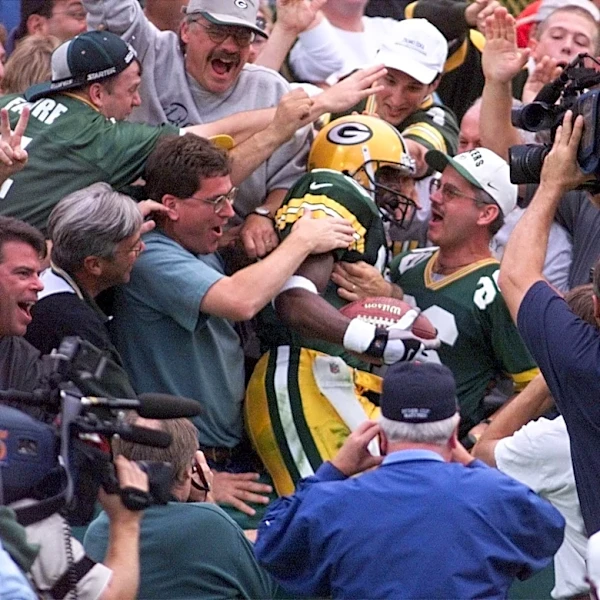
Nearly 48 years later, the NFL faced a similar dilemma. This time, the league decided to postpone the games, announcing the final decision Wednesday, Sept 12 and flexing the originally scheduled Week 2 games to the end of the season. This extended the league season by one week, ultimately moving the Super Bowl, the crowning pop culture event of January, into February for the first time. When the league returned to play, there was increased security across the board as well as outpourings of American patriotism. One of the games that weekend would be the New York Jets, still reeling from what they saw on Sept 11, flying up to New England to play the Patriots. The game started with a tribute to the first responders, especially as Patriots lineman Joe Andruzzi walked out with his three FDNY brothers, and ended with Patriots’ starter Drew Bledsoe injured in a losing effort, his place taken by Tom Brady.
9/11 did spur some significant changes to the league. Stadium security was ramped up. The NFL, once it crossed the Rubicon of playing the Super Bowl in February, made it a permanent move. In years past, to keep the game in January, the league might only have one week between the conference title game and the Super Bowl. Originally, the league planned to keep only a one-week gap between the conference championships and the Super Bowl for the 2001 and 2002 seasons, since they only switched to starting the weekend after Labor Day in 1999, and the 2001 and 2002 seasons’ Super Bowl locations and dates were already set. The league still kept the original date for the Super Bowl as the last Sunday in January 2003, but that would be the last time Super Sunday took place in January. It also ensured that the league would always get the two-week gap between conference titles and the Super Bowl. Patriotic displays, not always a common occurrence pre-9/11, save the playing of the national anthem, started to become a bigger part of the pregame ceremonies.
Yet, even without the attacks on September 11th, 2001 was always going to be a season in transition. That season would be the last under the old NFL model. The league had 31 teams at that point, split into three divisions (East, West, Central). The AFC fielded 16 teams, one of which was the Seattle Seahawks, and the NFC fielded 15. The current four division construct would debut the following season, with all division consisting of 4 teams. To get the conferences to have the same number of teams (16), the expansion Houston Texans would take their place in the AFC, with the aforementioned Seahawks moving to the NFC.
The playoff system would also change. For 2001, the three division winners and three wild cards would make the postseason in each conference, with the top two seeds gaining byes, and the Wild Card team with the best record getting a home playoff game for Wild Card Weekend. Under the four divisions, only division winners were assured of a home playoff game (top two division winners gained byes and only two wild cards). This held until 2021, when the league added a 7th playoff team in each conference, with only the #1 getting a first-round bye.
Of course, the biggest change would be the addition of the 32nd team. On Sept 11th, the Houston Texans franchise had a head coach, a team name, a place that they would play in, knowledge that they would get the 1st pick in the upcoming draft…and not much else. If Los Angeles got their collective acts together to bring a franchise back to the second largest media market (the league had been out of the city for 6 years to that point), the Texans are never a franchise. Then again, had Bud Adams not nuked every bridge possible with the powerbrokers of Houston, the Oilers, and not the Titans, would have been faced with how to manage such a sudden disruption to the football schedule that second week of playing in 2001.
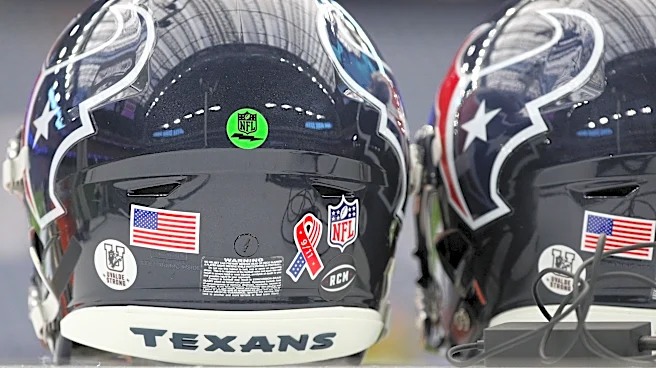
This weekend, you will find no shortage of articles and podcasts discussing the impact of 9/11 and how it resonates today. It hit all facets of life in America, and the NFL was no exception. While not the most significant area of American life, 9/11 did leave its mark on the league. The respective tributes that we will see with the games this weekend, including from a Texans franchise that hadn’t played a down in 2001, will elicit their fair share of emotions. It was a significant moment in US history, and while 9/11 moves further into the past, it is always worth taking a moment to remember what was lost and the impacts from that day.