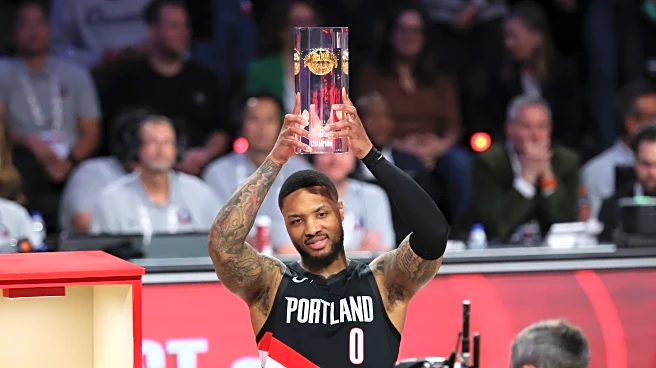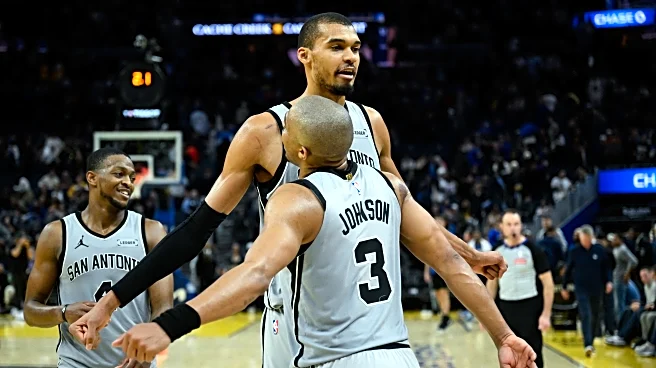

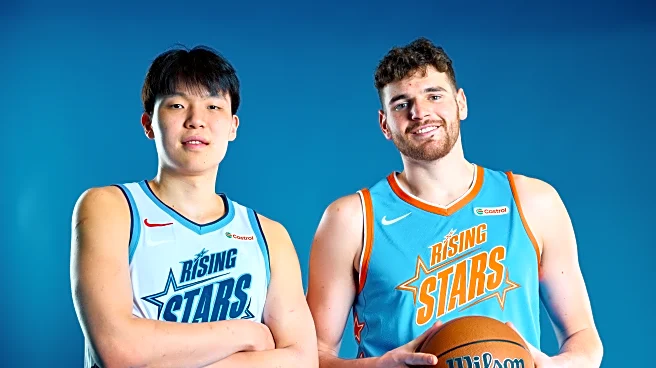
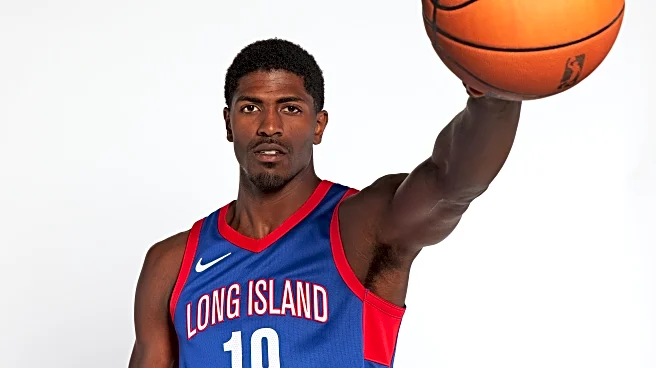
NBA All-Star Weekend is done for another year. Reviews on the proceedings have been positive, generally. The players played harder in the main game(s). Damian Lillard was a feel-good story winning the Three-Point contest. Shooting Stars is a glorified intermission distraction, but I don’t think anyone minded it. (See note at bottom of this post, though.) The one sore thumb remaining is the Slam Dunk competition. With all due respect to Keshad Johnson, neither he nor the 2026 show will go down in history.
Ten years from now the 2026 competition will be used as an Extreme Level sports trivia question or a means to win a beer at your local bar. “Bet you can’t name…” If people are complaining about anything this year, it’s the dunkers.
When confronting the issue, we bump up against two realities:
- The event lacks star power. This has gotten increasingly worse over the years. Casual observers, and even some dedicated fans, couldn’t name or remember the four participants in 2026. Having judges presiding over the event is enough. We don’t need observers turned into a parliament of owls when the contestants are announced.
- The Dunk Contest has been a regular part of All-Star festivities since 1984. That’s 42 years. How many dunks exist, really? What haven’t we seen? In order to really “wow” us, players have to go higher, farther, add more rotations. Even if someone were inclined, do they have the physical gifts to pull it off? Is it even possible without multiple failures?
These two problems feed into each other. Any dunks above the pedestrian—let alone stand-out slams—are the province of the young. That’s why springy unknowns get invited to this event. Understanding this, the league’s stars are in a no-win situation. What do they win if they join the competition? Beating a bunch of obscure players doesn’t bring any glory. The only thing worse would be losing to them, a real possibility, since big-name players tend to be older with less hops and more mileage on their frames.
If you follow the competition to its logical conclusion, this is always where you’ll end up. As long as the Dunk Contest is about the actual dunking, un-augmented and unfiltered, its decline will continue.
The trick is to keep the general integrity of the competition while adding enough interest and story outside of raw athleticism to make it palatable.
Put another way, we don’t just need dunks, we need spectacle and story to give the dunks meaning.
This is where the NBA should turn to the experts on creating spectacle and story out of nothing. Long-time readers know where we’re going with this. The the league needs to WWE-ify the dunk competition, adding meaning and/or narrative beyond the actual leaps and slams.
Before anyone gets up in arms about “predetermined” and “fake”, we know. We know. I’m not suggesting that the NBA rig the contest. I wouldn’t put it past them if it served their purpose. Does anyone really want to argue for the historic sanctity of the event and do a statistical comparison of the judge’s ratings? It’s already a show…far more so than the shooting or skills events, or even the actual games. But we don’t need to go that far in order to add spice to the event.
The real problem is, the Dunk Contest doesn’t feel like a show. It’s like watching a stand-up comedian deliver their routine with the same cadence as a presidential candidate delivering a speech. The mascots and mayhem around the edges of the court feel as natural and engaging as that same candidate breaking out into a messy version of a TikTok dance to see more relatable. Sit down, unc. It’s giving cringe.
Again, the WWE is in the BUSINESS of converting exhibition-style “fighting” (somewhat akin to dunking without any opposition) into engaging, “must-see” television. It’s all they do! The NBA doesn’t have to copy them wholesale, but they should at least adopt some of the principles for Dunk Contest purposes.
The first rule the league needs to understand is that what you do out there matters far less to the audience than who is doing it. In one of his many autobiographies, former WWE star Mick Foley described the first half of his career as a series of death-defying feats that ruined his body forever, offered in exchange for tepid applause. The second half of his career consisted of pulling a sweat sock out of his tights and sticking it in an opponent’s mouth to standing ovations. The difference was simple: in the latter years of Foley’s run, the audience knew and loved him. It didn’t matter if his athletic prowess was on par with a first-grade-aquarium-dwelling Guinea Pig. When observers identified with him, they engaged.
This is not quite so easy with the NBA Dunk Contest. For the reasons listed above, the league can’t just recruit four elderly stars whom everyone already knows. Even if they could convince the superstars, it wouldn’t work. The ways in which we “know” NBA players are limited. We see them operating on the court, in the midst of standardized competition. Outside of that context, they’re unproven. If LeBron James got rim-checked on a dunk-contest attempt, we wouldn’t go, “Who cares? It’s LeBron! All 10’s!” We know James as dominant, the GOAT. As soon as he showed he wasn’t, we’d stop believing in his Goathood, which is exactly what these stars fear.
The trick is to populate the contest with players who can actually dunk well, layering some kind of relatable identity or story on top of them to translate to the audience. It’s the same difference between watching a bunch of wrestlers do abstract body slams to each other in the ring (and yawning at it) and getting wrapped up in the story and its outcome.
It’s nearly impossible to convey personal relatability in a seconds-long introduction to an All-Star Weekend event, but you could certainly craft narrative archetypes for the participants. It’d be easier if something differentiated them from each other organically. This is a strong argument against having four, relatively-similar unknowns participate. There’s no texture, no edges on which to hang a story. We need an older veteran, trying to prove he’s still got it…a young upstart, trying to topple the field…the cocky favorite, looking to stay on top of the hill. The participants don’t have to embody these personas. We don’t need them to do promo speeches. We just need to be able to talk about them in this way.
Once we have the basic threads of the story, we need to set up the contest to reflect that, with announcers and presentation matching. They don’t have to hammer every point all the time. Coming back to a couple touchstones would be enough to add shape to the event.
Want to see what I mean? In a crazy, parallel world, here’s what I would have done with this year’s contest, not altering the participants (much), just adding one element to spice things up and set the table for the future.
We introduce our four participants: Johnson, Carter Bryant, Jaxson Hayes, and Jase Richardson. The crowd doesn’t know any of them. That’s fine. They go through their first dunks. Polite applause and oohs. Everything is on course. The contest will be only semi-memorable unless someone uncorks a huge dunk.
All of a sudden, someone comes out of the tunnel in a hoodie. He grabs a microphone, rips off the hood, and says:
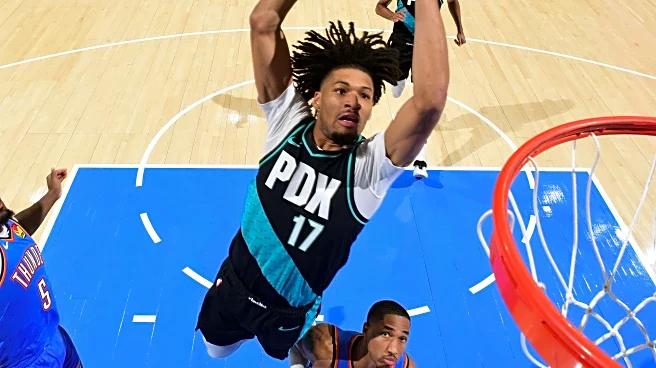
Ladies and gentlemen, my name is Paul…Heyman. You probably know me better from Wrestlemania (tickets available now for Las Vegas, April 18th and 19th) but I am here today to disrupt this little shindig. You see with all due respect to our fine participants, I have brought along with me today the man who is going to WIN this contest. He is the High Flyer, the Rim Destroyer, the most Game-Ending, Fatal-Finishing, Slam-Dunking specimen this league has seen in its ENTIRE HISTORY. And his name is…Shaedon Sharpe!
At this point the Imperial Death March (or some other ominous villain music) plays and Sharpe comes out of the tunnel, dressed in a hooded cape or some such. He throws back the hood like Heyman did, drops it to the ground, grabs a ball, and leaps into a very non-complicated (he cannot miss this first dunk) but very high-flying straight jam through the hoop. The judges give him a score and at this point the contest is ON. It’s the four unknowns versus the ringer.
If Sharpe wins (and he well might) it’s even better. Because next year you have him come back to face the guy out for revenge, a star that wants to put Young Sharpe in his place (remembering that “in its ENTIRE HISTORY” remark), and an upstart contender.
Notice what we’ve done. We’ve gotten a young guy in Sharpe…not a star, just a really good dunker. We’ve immediately established an identity for him without him speaking a word. We’ve disrupted the normality of the contest (adding an extra entrant, surprising the heck out of everyone) to gain huge attention without breaking the format hardly at all. We’ve set up Sharpe as the villain against the field, establishing at least a rough identity for him and the formerly-anonymous quartet of dunkers originally scheduled for our program. And we’ve set up a hopeful storyline for next year to spin off of should Shaedon win. We’ve added no huge names, no sweeping format changes, no complicated explanations, and very little extra time. But now all of a sudden everyone is talking about our contest instead of struggling to remember it.
You get the idea. Long story short, it’s possible that the Slam Dunk contest doesn’t need to be fixed. It needs to be personalized and given meaning beyond itself. A little frosting on that cake will make it easier to swallow. More fun too.
And P.S., about the Shooting Stars competition? I don’t hate it, but could we get some version of “elimination” where opposing players shoot from the top of the key or three-point arc, the first one to make it eliminating the other? That’s always fun and exciting in person. It’d be interesting on an NBA level too.