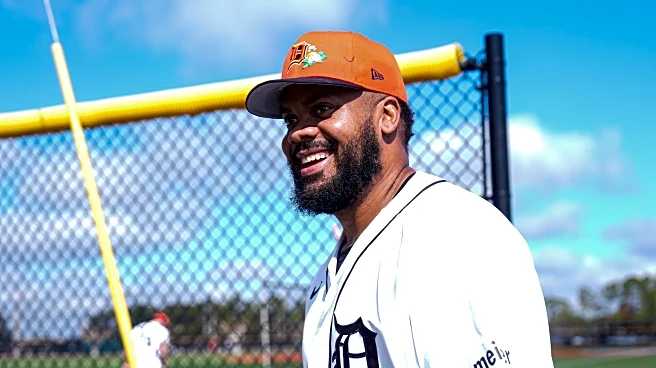

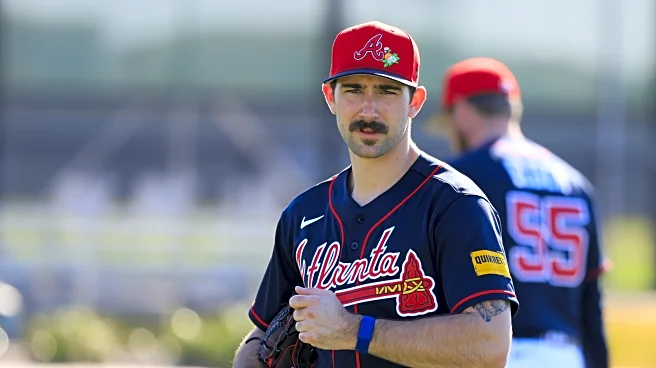


Beyond all the talk of splitters, sweepers, seam-shifted changeups, and the like, the best pitch in baseball remains the most elusive. The riding cutter, most famously the pitch that carried Yankees closer Mariano Rivera, remains one of the hardest pitches to pick up for pitchers, and one of the toughest to handle for hitters. With all-time great closer Kenley Jansen now in the fold, though in the later stages of his career, let’s take a look at his money making cut fastball.
The term “cutter” has
been bastardized somewhat over the last 15 years or so, coming to refer to all kinds of pitches that are really just hard sliders. A cutter really does move gloveside without much drop, but an actual cut fastball is really a fourseam fastball with plenty of ride, but set with enough offset in either grip pressure or seam alignment, that it actually breaks late to the pitcher’s gloveside as well. Not too many pitchers, at least since these things started being tracked, have ever managed to throw a pitch like this.
Jansen got 18.8 inches of induced vertical break on the cutter in 2025. That’s better ride than most fourseam fastballs. It has enough backspin to drop 18.8 inches less than it should based on gravity alone. It also moves an average of 2.4 inches to his gloveside, making it a true cut fastball as opposed to just a straight riding fourseam fastball. That one pitch, averaging 92.8 mph, albeit with plus extension, and topping out at 96.7 mph, accounted for 81.4 percent of Jansen’s pitches in 2025. Even in it’s somewhat diminished form from his prime years, it still carried him to a 2.59 ERA last year, though his peripheral numbers were more worrisome.
Jansen will throw his slider here and there, and even less often, mix in a sinker against left-handed hitters as a change of pace, but for the most part you’re going to see cut fastball after cut fastball. That’s how he’s worked for most of his major league career, and he’s never really needed anything else.
He’s aided by crazy high spin rates for what is still essentially a fastball. He averaged 2610 rpms in 2025, which is absolutely elite by fourseamer standards. There aren’t enough pitchers capable of throwing a true cut fastball for there to even be a standard, but one of the great high spin fourseam pitchers of all time is now in-house as well in the form of Justin Verlander. The highest average fourseam spin rate Verlander has produced in the Statcast era was 2618 rpms back in 2018. Back in the days when the Tigers ace was routinely pumping 99-100+ late in games, no doubt he was averaging even higher rates, but spin wasn’t measured at the time.
The difficulty in throwing a true cut fastball is what makes it such a rarity. Casey Mize tried it early in his career, but struggled to control it. Even then, it didn’t really ride much, it mostly just had a bit of late cut. With a slider, sweeper, or curveball, all of which might move gloveside, you can hang on tighter and rip around or even on top of the ball in the case of a 12-6 curve. A cutter like Mariano or Kenley’s requires the fore and middle fingers to stay underneath the ball, while still throwing it hard and with as much spin as the top fourseam fastballs. That’s pretty hard to control. There aren’t even so many truly great riding fourseamers in the game, let alone having the wrist and finger dexterity to hold the ball slightly off-center and throwing it essentially the same way.
The true cut fastball always seems to come with a story. Mariano Rivera just started accidentally throwing the pitch in a catch session with teammate Ramiro Mendoza when he was still just a young reliever back in 1997. Rivera just throwing with his fourseam grip, but suddenly started producing a riding pitch that suddenly veered gloveside as Mendoza tried to catch it. They knew immediately that something strange was going on, but Rivera actually fought it because he was trying to throw a normal fourseamer and couldn’t stop getting that gloveside bite at the end. It took manager Joe Girardi to encourage him to just start throwing it, and the rest was history.
Jansen’s cut fastball has its own story, but it’s not too dissimilar. Jansen was signed out of Curacao by the Dodgers as an international free agent when he was 17 years old. He was a catcher at the time, even starting for Team Netherlands in the 2009 World Baseball Classic, and continued catching until well into his years in the minor leagues. Eventually, he just wasn’t hitting well enough, but his arm strength from behind the dish was impressive and the Dodgers encouraged him to convert to pitching late in the 2009 season. They saw enough to add him to the 40-man roster as a pitcher that winter, and he made his major league debut in July of 2010, only a year after his conversion. Now, 476 saves later, he’s a Detroit Tiger.
He stumbled upon the cut fastball in the same way Rivera did. In practice, his fourseam fastball was cutting late and he couldn’t figure out how to prevent it. Instead, Dodgers bullpen Mike Borzello recognized what was happening and put a stop to any attempts to straighten the fourseamer out. They began a process of refining the pitch instead, trying to tune his mechanics to maximize the spin, ride, and velocity of the pitch.
Like Rivera, Jansen doesn’t really know how he does it, and as he’s said repeatedly in interviews, it’s better not to try and understand it. He mentions that perhaps his long fingers might play a role, but clearly doesn’t want to unpack it. Guys who can do this, and it’s a small group, all seem to either want to keep it a secret, or simply don’t know why the pitch cuts. They all say they’re just trying to throw a fourseamer, and it just started cutting. Jansen mentions trying to finish through the pitch by just slightly getting around the side of it a bit more in the clip below, but earlier in his career he was still basically just shrugging and saying he didn’t know. High speed cameras and tons of data available have explained it a little, but even now I can’t really find another pitcher in the league who can do this. Plenty of guys have tried to throw this, and for the most part they just end up with a hard cutter that doesn’t ride.
I might theorize that trying to straighten out throws to second base as a catcher, rather than watching them tail back into the runner, may have something to do with his ability to do this so naturally. Still, it’s nowhere near that simple. A whole combination of elements from arm angle, finger shape and length, grip and release, to natural spin rate all come together to create a unicorn of a pitch, mastered by few. Add typically good command, a deceptive delivery, and tons of high leverage experience, and you have the ingredients of a future Hall of Famer.
Here are a few examples from the 2025 season below. Jansen will move the cutter up and down in the zone, so he’s not just trying to go up and away from right-handed hitters. The pitch doesn’t get same the amount of whiffs it did when he was sitting 94-95 mph with it, but despite the fact that he’s throwing it more than 80 percent of the time, it just doesn’t get barrelled up very often. Hitters know it’s coming,but it’s difficult to anticipate that explosive combination of ride and late, gloveside cut well enough to crush it. Opponents batted just .159 against the cutter in 2025. They also slugged a truly meager .293, though for once, his expected slugging percentage against the pitch was quite a bit higher, at .443.
Hard cutters aren’t so scarce anymore. Several teams, like the Cubs and the Brewers, are trying to teach this to guys who have the traits to potentially throw it well. But there are quite a few guys around the league who are already using a mid-90’s or faster cutter. Yet these are all just regular cutters. They’re good pitches, especially thrown with that kind of velocity, but they’re still distinct from Jansen’s in that they don’t having that induced vertical break.
Guardians closer Emmanuel Clase is the most obvious recent example of a really hard cutter for Tigers fans. But his cutter doesn’t ride either, it just cuts. That’s a really tough pitch at 98-100 mph, but it’s just a different beast than what I’m terming the true “cut fastball” that rides as well as it cuts. Corbin Burnes, now with the Orioles, developed his version with the Brewers, and they’ve worked with Brandon Woodruff on trying to throw it too. Neither has anywhere near the strange ride that Jansen produces. Former Giants closer and now Yankee, Camilo Doval, Carmen Mlodzinski, Graham Ashcraft, and Ryan Helsley are some other examples of hard cutters that are good pitches, but still don’t have that strange ride that Jansen, and formerly Rivera, had available.
The top spot on the Statcast leaderboard for vertical movement on a cutter goes to Jansen at 18.8 inches, Wander Suero of the Braves at 17.2 inches and averaging 92.1 mph and league average extension, is second and that’s really it. No one else has a cutter with more than 15.2 inches of induced vertical break. You just don’t see many outlier pitches like this in baseball.
If there was a candidate to try and develop this pitch on the Tigers, it probably would be Justin Verlander, or perhaps Troy Melton. They’re natural supinators with relatively high arm slots and high spin rate fourseamers with ride. But it just doesn’t seem teachable. They could throw a more straightforward cutter, and that could be useful instead. But trying to learn to throw one that rides would just screw up everything else they do. They have the velo, spin, and ride on their fourseam fastballs to get it done, but asking them to adjust finger pressure to push around the side of the ball a bit at release is too big and too subtle an ask at the same time. Learning to command it would take a long time if it even worked out, and in the meantime they’d potentially be a complete mess.
What the Tigers like about adding Jansen, on top of his experience and stellar track record of success, is just the fact that this is such a unique look. Like a lot of teams, the Tigers have been trying to diversify their bullpen with different arm angles and pitch types, so that opposing hitters in a series rarely see similar stuff from the pen, no matter who is on the mound. There aren’t many more unique pitchers than Kenley Jansen.
Jansen was good for the Angels last year other than a few rough outings early in the season, and with Will Vest and Kyle Finnegan in house, he doesn’t necessarily have to be the guy in the ninth inning. A.J. Hinch will probably use him to close most nights as long as it’s working. The trick is still playing matchups where applicable, and not riding Jansen too hard either. As long as his cut fastball remains intact, he should be fun to watch and a good addition to the Tigers pen.