

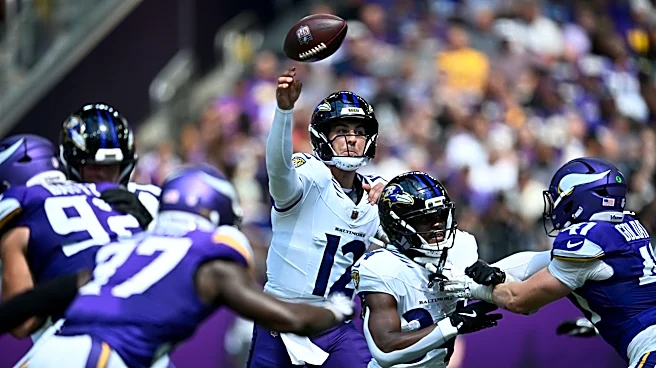
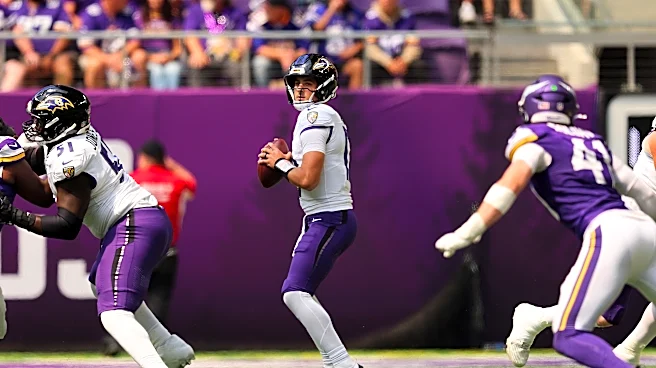
Baltimore’s second preseason game gave us a much clearer picture of where several young defenders stand after two weeks of live action. Against Minnesota, the most important developments weren’t limited to the box score. Zion Young began showing answers beyond his power-rush foundation, Ethan Burke turned an expanded role into one of the defense’s most productive performances, and Chandler Rivers backed up his strong debut with another impressive night in the secondary.
Here’s how each player’s preseason
Week 2 performance looked from a developmental perspective:
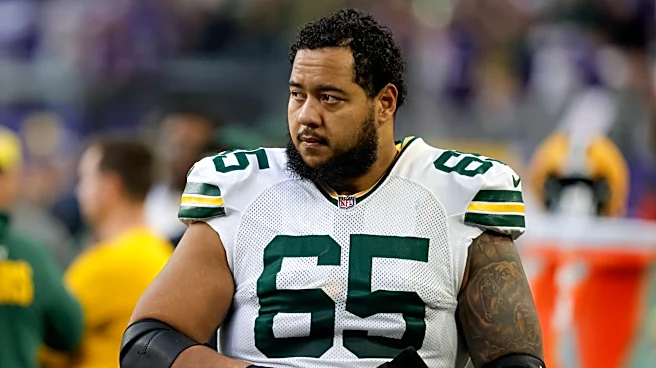
EDGE Zion Young (Round 2, No. 56 overall)
20 snaps | 13 pass rush | 7 run defense
The biggest question surrounding Young coming out of Missouri was never his ability to play with power. His length, physicality, long arm and bull rush were already established strengths. The question was what his pass-rush plan would look like when an offensive tackle took those tools away.
Against Minnesota, we started to get an answer. Young still leaned on the speed-to-power and bull rush that made him effective in college. His hand placement and length were efficient, and there were several snaps where he created immediate displacement by striking the offensive tackle and driving him backward toward the quarterback.
But what made this performance different was the variety he showed after establishing that power. One of the weaknesses I mentioned in Young’s scouting report was how one-dimensional his rush plan could become. This week, he flashed an arm-over as an inside counter along with an inside swim move. On another rep, he reduced his surface area, got skinny through the block and split the offensive tackle to the inside.
Those counters are important because they give Young potential answers when tackles begin oversetting to handle his outside rush or bracing themselves for his power. The bull rush becomes much more difficult to defend if the tackle also has to respect Young crossing his face.
His run defense was another positive. On a backside rep against duo, Young showed excellent patience. Instead of immediately chasing the football and potentially taking himself out of the play, he remained disciplined, stayed home and closed down to make the tackle once the run declared.
Young finished as Baltimore’s fifth-highest graded defender by PFF, but the development within his pass-rush plan was more encouraging than the grade itself.
Postgame takeaway: Young’s established traits continued to translate, but Week 2 gave us our first real look at him expanding beyond them. His bull rush and speed-to-power remain the foundation of his game, while the arm-over, swim move and other inside counters provide the beginnings of a more complete pass-rush plan. Pairing those counters with the patience he showed against the run would be an important step forward in his development.
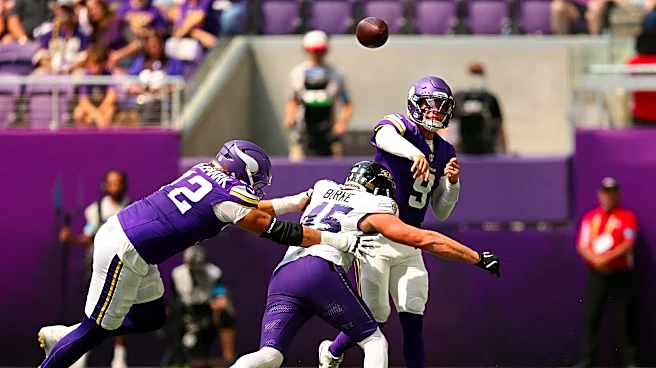
EDGE Ethan Burke (UDFA)
34 snaps | 2 pressures | 1 sack | 1 forced fumble | 1 PBU
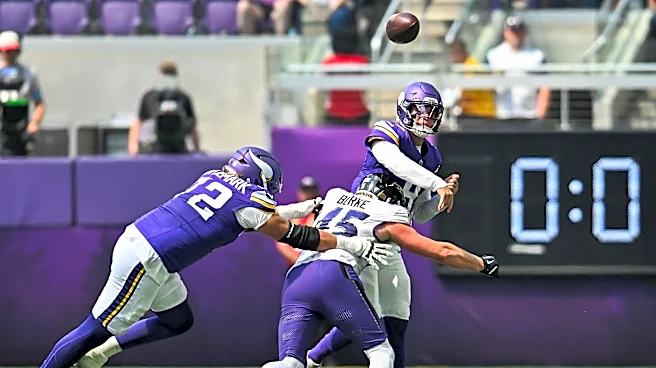
Burke’s 34 snaps against Minnesota gave Baltimore an opportunity to test him in several different roles, and he responded with one of the most impactful performances of the game.
The Ravens didn’t keep him in one spot. Burke took snaps on the edge, reduced inside to the 4-technique and was even asked to drop into coverage. That versatility alone matters for a young defender fighting for a place on the final roster, but Burke also produced within those assignments.
His pass-rush repertoire was the most impressive part of the performance. Burke flashed a cross-chop multiple times, mixed in an arm-over and spin move, and showed the ability to convert speed into power. Rather than repeatedly attacking blockers with the same approach, he showed several different ways to create pressure, and the production followed.
Burke recorded a sack and forced a fumble, while also showing good awareness by recognizing a screen and knocking the pass down. The screen play was a good example of Burke finding another way to affect the quarterback when his initial rush wasn’t going to get home.
For a player competing near the bottom of a deep defensive front, that combination of versatility and production is significant. Baltimore can move him around rather than being forced to reserve a roster spot for a defender with only one defined role.
Postgame takeaway: Burke significantly improved his chances of making Baltimore’s 53-man roster. The sack, forced fumble and batted screen provided tangible production, while his ability to rush from different alignments and win with several different techniques strengthened his overall case. If that continues, Burke is making himself increasingly difficult to leave off their roster.
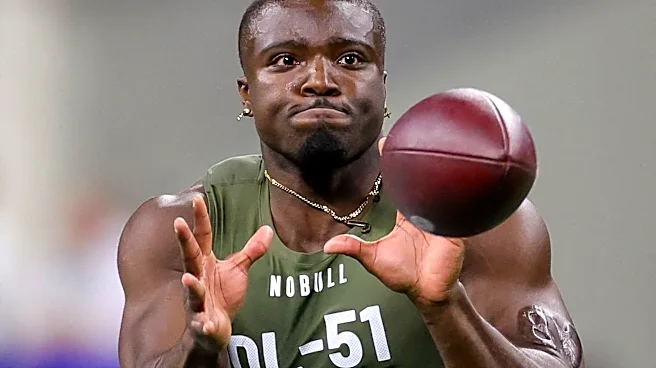
CB Chandler Rivers (Round 5, No. 162 overall)
40 snaps | 5 targets | 6 yards allowed | 2 run stops | 1 sack
Rivers followed his impressive preseason opener with an even larger opportunity against Minnesota, playing 40 snaps and once again making an impact in several areas. He finished as Baltimore’s second-highest graded defender by PFF and received a 90.0 coverage grade. Across five targets, Rivers surrendered only six yards.
The film matched the numbers. Rivers consistently stayed in phase with receivers and showed good timing when attacking the football. His physicality becomes particularly noticeable once receivers reach the top of the route stem. Rivers does a good job staying connected as they make their break, closing space and playing through the catch point to disrupt the football. That resulted in another pass breakup against Minnesota and continued a trend we saw during his first preseason appearance.
Baltimore also gave Rivers more opportunities outside of traditional coverage responsibilities. He was effective when sent as a blitzer, turning one of those opportunities into a sack, and added two stops in run defense.
His tackling continues to strengthen his evaluation. Through two games, Rivers hasn’t looked like a corner who simply wants to survive his coverage snaps. He has shown a willingness to trigger downhill, contribute against the run and finish plays in space. That becomes especially valuable for a rookie trying to earn playing time in a crowded secondary. The more responsibilities Baltimore can trust Rivers to handle, the easier it becomes to find ways to get him onto the field.
Postgame takeaway: Rivers continues to look like one of Baltimore’s most impressive defensive rookies. Five targets resulting in only six yards allowed is encouraging on its own, but the sack and two run stops showed that his impact extended beyond coverage. His ability to stay in phase, remain physical through the top of routes and finish at the catch point has translated immediately through two preseason games.
Final Thoughts
The first preseason game showed us what Baltimore wanted to test with its young defenders. Against Minnesota, we started seeing progress within those assignments.
Young’s performance was encouraging because he began addressing one of the biggest questions from his college evaluation. The power is still there, but adding legitimate inside counters could make that power even more dangerous by preventing tackles from sitting on one approach.
Burke took advantage of an extended 34-snap workload and showed Baltimore that he can contribute from multiple alignments. His production stood out, but so did the number of different ways he generated pressure and affected the passing game.
Rivers, meanwhile, continues to build momentum. His coverage has remained tight through two games, his tackling has consistently shown up, and Baltimore expanded his responsibilities by using him as a blitzer and run defender.