



The Chicago Bears made massive strides in 2025, but last year is last year, and they’re turning the page to a new chapter. To have sustained success, they’ll need several players to break out, so here are my top 5 who I believe will.
Picks 10-6 can be found here!
5. WR Rome Odunze
Despite some less-than-ideal moments early in the season for Odunze, he was well on his way to his first 1,000-yard season and potentially 10-plus receiving touchdowns. Injuries happen in the game, and the third-year receiver
deserves plenty of credit for trying to play through a stress fracture in his foot. That said, the production has tailed off, leading many to wonder whether he is capable of reaching his pre-draft ceiling.
All the concerns aside, there’s never going to be a better opportunity than what’s in front of him heading into 2026. Not only does Odunze have the chance to be the “featured” weapon in this offense, but he goes into the year as their primary X-receiver on the outside. While Burden (who we will cover later) is flashier and more explosive, the combination of Odunze and Colston Loveland could feed this offense all season.
The talent is there, and the size is clear. Drops and lack of success on 50/50 balls are the big concerns coming out of last season, but playing through that painful of an injury isn’t easy. 2026 should be the year Odunze proves why he was taken No. 9 overall.
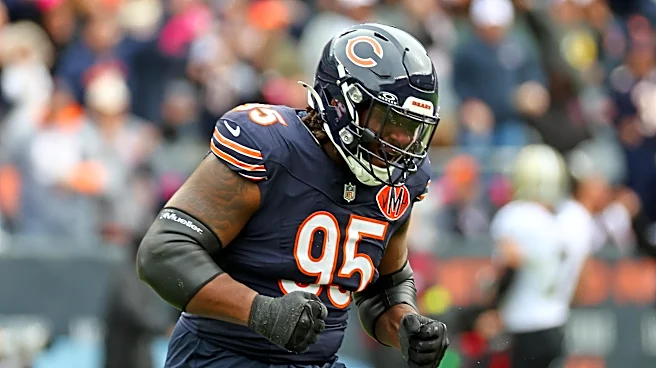
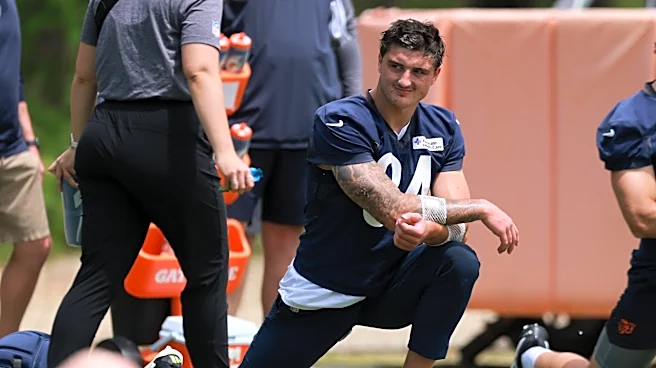
4. DE Austin Booker
Contrary to what many believed the team would target during the offseason, no impact edge rushers have been added to the roster for the upcoming season. Part of that could be due to how much money they already have tied up in their current group, but the coaching staff continues to be vocal in support of the talent on the depth chart. While Montez Sweat could be considered a top-end DE2, the depth behind him is what is in question.
Dayo Odeyingbo is returning from the second torn Achilles tendon of his career but appears to be on track to be ready for Week 1. That said, the bigger focus is on Booker, who enters Year 3 with plenty of pressure. Despite a strong showing to kick off last preseason, the former fifth-round pick missed the first 7 games of last season with a knee injury. After recording one sack over his first six games, Booker totaled 3.5 sacks over the final four regular-season games, including another in the playoffs. Although his underlying pass-rushing metrics don’t stand out, it stands to reason that Booker could benefit from better depth and a more defined role moving forward.
The team’s pass rush will be an unanswered question until it isn’t, but with Sweat’s rebound year in the books, don’t be surprised to see him drawing more attention than before. If that’s the case and Odeyingbo can be healthy and productive, this will allow Booker to be featured more as a stand-alone pass rusher, which should drastically help his pressure rate and sack total.
3. S Dillon Thieneman
For the first time in recent memory, the Bears found themselves picking in the 20s on draft night. While some might argue that lower picks in each round equate to lesser impact value in Year 1, consistent playoff contenders would beg to differ. For Thieneman, this was a player that some believed was closer to S1 (Josh Downs) than S3 (Emmanuel McNeil-Warren). Despite that, he dropped to No. 25, and it’s easy to feel like the Bears got a “steal” compared to the rest of the talent on the board.
The Bears remade their safety rookie just one season after Kevin Byard’s All-Pro campaign. Despite a league-high total in takeaways, it was easy to argue that every level of their defense needed more youth and higher-upside talent. That’s exactly what the former Purdue and Oregon product should bring to the back end of the secondary. It was clear that defensive coordinator Dennis Allen valued versatility in the secondary, which Thieneman should bring, whether it’s at safety or in the nickel.
With Coby Bryant as his running mate at safety, the team values athleticism, versatility, and play-making ability. This should allow Thieneman some additional freedom in coverage and play to his overall athletic profile. It’s easy to see what the Bears are going for, and assuming they get better pass-rushing production up front, the Bears’ first-round rookie should be in for an impact rookie season.
2. WR Luther Burden III
Just one year ago, many questioned why the Bears would take back-to-back “luxury” picks with so many other needs on the roster. Although the start of the season did nothing but fuel those questions, it became clear in November and December why both Burden and Loveland were taken. Following the trade of DJ Moore, Burden’s role should grow exponentially in Year 2.
As a rookie, Burden averaged 2.7 yards per route, which ranked third among receivers and fourth overall. In addition, he ranked third among rookies in separation win-rate at (12.4%). Despite having little involvement in the offense until halfway through the season, Burden’s underlying metrics are notable. There were some obvious lapses in concentration, and at times the route details were sloppy. That said, this is a player with the athletic profile to be a true No. 1 receiver, and his skill set fits exactly what Johnson wants to do on offense. Assuming the former Mizzou product can stay healthy, Johnson’s advice on buying “Luther Burden stock” should be taken seriously.
1. TE Colston Loveland
If you follow fantasy football, you’ll know there’s been an internal debate raging for most of the offseason between the Bears’ first- and second-round picks from last year. There’s little question that Johnson’s offense will be productive; the bigger unknown is who will lead the charge. There’s no question that both Burden and Loveland are special talents, and while Burden is the flashier player, Loveland was the more reliable target in 2025. Although the pick of Loveland shocked many people for multiple reasons at the time, the second half of last season showed what Johnson and the offensive coaching staff saw in the former Michigan tight end.
To say that Loveland was the focal point of the offense from Week 8 on. The rookie finished as the team’s leading receiver, totaling 47 receptions (64 targets) for 597 yards and six touchdowns in the regular season, and adding 12 receptions for 193 yards in two playoff games. Considering his lack of involvement in the offense throughout the first six games of the season, his pace over the final 11 games of the season would have landed him at the top of most statistical categories as a tight end, rookie or not. Even as a rookie, Loveland averaged 1.92 yards per route, which ranks third highest among tight ends since 2014.
While Cole Kmet and rookie Sam Roush will see plenty of combined snaps in both 12 and 13 personnel, Loveland should and is expected to be the primary tight end on the field most of the time. Combine that with his safety-blanket-like presence for quarterback Caleb Williams, and it’s easy to see a path for Loveland to become the team’s first 1,000-yard tight end since Mike Ditka in 1961.