



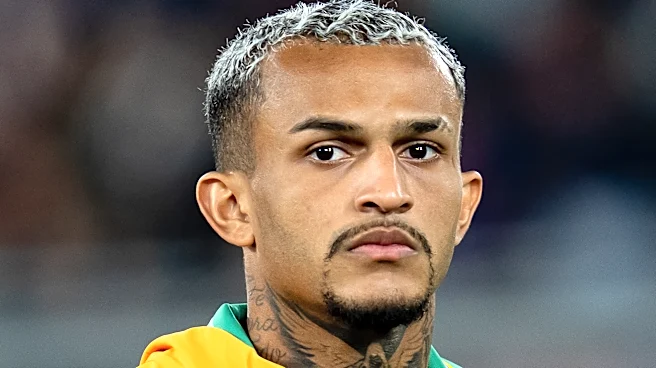
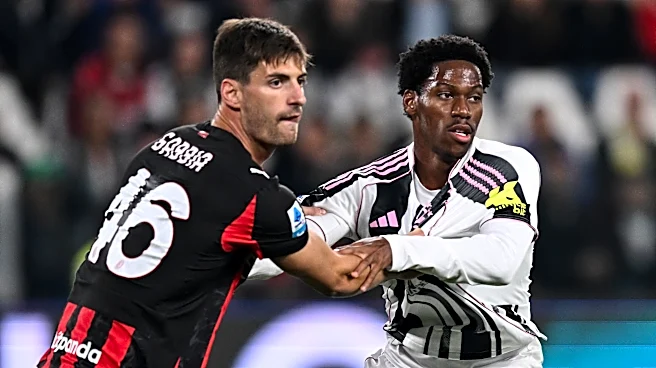
Fiorentina’s season has been woeful at a level we couldn’t have imagined back in September. There’s enough blame to go around that everyone in the club can have second or third helpings but for now, I want to focus on the strikers. At the start of the year, I was confident that the Viola were well-stocked up front. Moise Kean had been the best striker in Serie A the previous year. Roberto Piccoli, while overpriced, was a competent top flight center forward. Edin Džeko offered a Plan B and leadership.
Albert Guðmundsson was there too.
Fast forward 9 months and my feelings about the strikers have flipped. Kean’s been dealing with injuries all year, which may explain his miserable numbers. Per Understat, he’s mere decimal points away from obtaining the largest xG underperformance since the site started publishing the metric in 2014-2015. The only player in the database with a larger xG underperformance is also on this roster, by the way. It’s Roberto Piccoli from last year and his finishing has gotten, if anything, even worse; he’s become as reviled in Florence as any striker I can recall over the past couple decades. Džeko talked himself out of town in January. Guðmundsson is Guðmundsson.
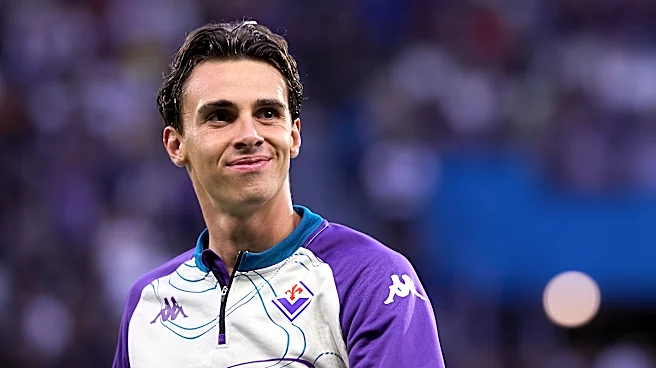
With Kean injured and Piccoli misfiring as per usual, there was speculation that Paolo Vanoli would turn to Primavera star Riccardo Braschi against Sassuolo. Braschi, 19, has 17 goals and 4 assists in 27 Primavera appearances this year and made his debut against Raków Częstochowa. He’s been a regular on the first team bench for the past 6 weeks. He combines height and pace with a good first touch and solid off-ball movement. With the season just about wrapped up, the fans want nothing more than to see if he’s ready for the next step.
And Vanoli disappointed those fans against Sassuolo. With neither Kean nor Piccoli available, he turned to Guðmundsson to lead the line. It didn’t work as the Icelandic forward shied away from contact as ever, making the Neroverdi back line’s job one of intimidation rather than actual defending. The attack clearly wasn’t working with Albert as the tip of the spear. The camera focused extensively on Braschi during halftime. It was all set up for him to get his first Serie A minutes.
And Vanoli stuck with Guðmundsson for all 90 minutes. Despite 22 shots and an xG of 2.19, the Viola simply couldn’t find the finishing touch. Guðmundsson had the most shots (5) and highest individual xG (0.9), earning the brunt of the criticism. With Fiorentina most secure—3 points over its final 4 games will mathematically secure survival and probably won’t even matter given how bad Cremonese looks—expect that clamor for Braschi to increase in volume and intensity.
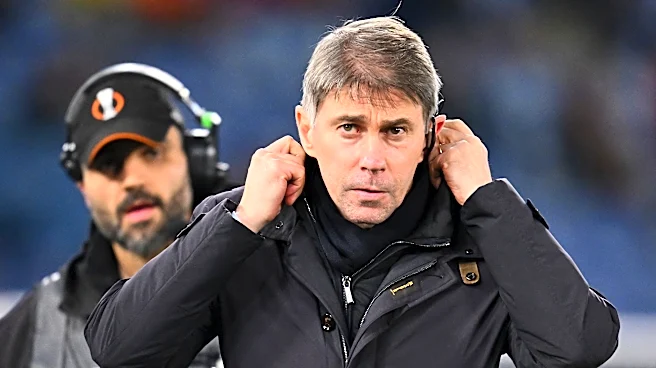
Unsurprisingly, Vanoli’s been immune to that clamor. When he signed back in November, he knew that this was a short-term gig. He doesn’t care about sustainability, about nurturing talent for the coming seasons. He’s here to win games so that Fiorentina survives its record-settingly bad start to the year. And you know what? He’s done a good job. A club that was all but guaranteed relegation in December has clawed its way to safety through his work.
And even so, he’ll ride off into the sunset in a couple months with nothing more than a handshake. It’s an unfair reflection on his work so far but the circumstances have conspired against him and here we are. The problem here is one of motivation: Vanoli’s goal and that of the fans and the club aren’t aligned. He’s coaching for his next job; this is the highest-profile club he’s managed and he’ll want to catch on at a similar level this summer. If he thinks that trotting out teenagers to “develop” (i.e. make the mistakes that accelerate their development) will lead to losses, he won’t do it.
Nor should he. The terms of his employment were made clear when he signed and he’s sticking to them. That means sending out the strongest XI. If he doesn’t think that includes Braschi, all we can do is nod along, however reluctantly. Here’s the thing: Vanoli’s been around calcio for a quarter century. He’s played at the very highest level (2 Italy caps) and learned under the best (albeit most irritating) coach in the nation in Antonio Conte. He’s worked with every type of player. He knows more about this stuff than I ever will.
He’s also evaluating his players every day at training, in person and for hours. We, on the other hand, watch them for 90 minutes a week. A lot of our analysis of these guys is extrapolation rather than knowledge. If a winger dribbles his defender once, our minds put a little check in the box “can always beat his man” that stays there forever. The sample size we work with is minuscule and we thus have to project it onto a much larger surface than it actually occupies.
That’s true for any player but doubly so for youngsters. We take that tiny sample and connect it to potential, the idea that every academy kid is going to reach the ceiling of what we think they could. I’m as guilty of it as anyone (Andy Bangu, anyone?) and fall into the trap time and again. Real people, however, aren’t bits of code in FIFA or FM. They don’t have a maximum potential rating that they’ll automatically reach if the conditions are right. It’s more likely that they’ll fall short because our projections for them were wildly optimistic to start with, an exercise in small sample size wishcasting that would make any statistician tear their hair out.
Think of all the Primavera players you’ve believed had superstar potential over the years. I’ll start: Matthias Lepiller. Amidu Salifu. Gabriele Gori. Tòfol Montiel. Louis Munteanu. Dimo Krastev (sorry, Hesanka). The list is endless. Sure, there’s the odd Federico Chiesa or Michael Kayode in there, but by and large Primavera standouts reach a level of professional competence, often in the lower leagues, rather than top flight impact, no matter how assiduously we pray to whatever dubious gods are listening.
Like most human behaviors, it comes down to creating a sense of control over a universe that is inherently uncontrollable. We’ve chosen to align ourselves with Fiorentina, making it an extension of ourselves, and that means we need the organization to exhibit intelligence, which we can then interpret as a mastery over the randomness of the world. It shows that we’re smart enough to pick a winner, giving us an illusion of foreknowledge and thus a handle on the swirling mayhem. If we can see the future, we can control the present.
That gives us the double drive to 1) make predictions so that if they come true, we can point to our knowledge and thus mastery of the universe; and 2) always forecast as optimistically as possible, because then we’ve tied ourselves to a team that’s smarter and thus better. It also means that when anything thwarts those predictions, we react with assertions that we know better, that we understand things that the professionals working every day with these players don’t. That, if you really think about it, we’re in control.
It’s a losing battle, of course, and Fiorentina’s done a fantastic job of exploding this whole train of thought this year by being bad and stupid. Naturally, fans have identified everything that’s gone wrong, but the unspoken conclusion to every diagnosis is that, “If I was in charge, this wouldn’t have happened because I know ball.” It’s absurd when you write it out but it’s the sort of Borgesian logic that works perfectly in the squishy, smooth interior of the mind.
Bringing it back to Braschi, I’m not all that upset about him not getting minutes. Sure, I’d like to see him play but he’s probably not ready, either physically or mentally, for battling defenders who’ve been playing in the top tier of the game for a decade or more. That’s fine. It’s no reflection on him now or on what he’ll become in the future. 45 meaningless minutes against Sassuolo won’t define his career and probably won’t make any huge difference in his development. Any problem fans have with him not playing is about them, not Vanoli.
What it does show me is just how out of alignment Fiorentina is, though. Everyone at the club ought to be focused on success, prioritizing the present’s while shepherding in the future’s. As it stands, that’s not the case. Vanoli needs to win now. The fans need to see some evidence that this season isn’t a complete waste; maybe a youngster breaking through will give meaning to months of suffering through unwatchable games. If we can rationalize our pain as necessary to the club’s growth, we can tolerate it. Maybe even embrace it.
Neither party’s at fault here; their objective oppose each other, sure, but that’s not surprising. Following opposing objectives is how the Viola have operated for the past few years. Nearly every action Fiorentina’s C-suite has or hasn’t taken over the past several years has been in service of short-term results and this is just the latest example. Whether Paolo Vanoli plays Riccardo Braschi is just a facet in a larger struggle, which is Fiorentina against the imp of the perverse that constantly whispers that delaying gratification would be stupid. It’s the same dynamic that we as fans confront every day, too. And none of us are doing a great job.