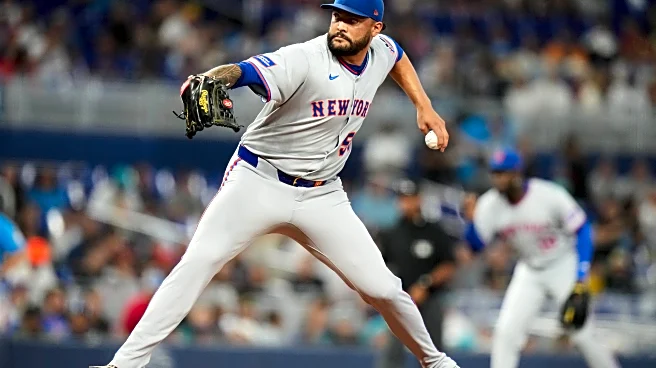



If you still don’t know who Devin Williams is, you’ve definitely seen him pitch before. You’ve seen him throw the same pitch, in fact, over and over again—rocking back and firing a changeup on the lower-outside corner which Pete Alonso connects with the other way as the Mets’ dugout erupts and Howie Rose delivers the call of a lifetime. In the time it took for you to read that sentence, you probably could have watched the highlight another couple of times.
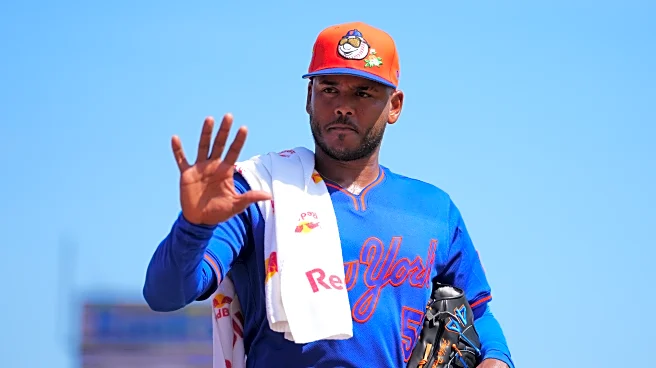
So, who is Devin Williams? To the Mets, he used
to be the man who gave up Alonso’s iconic 2024 homer in the Wild Card Series. Now, he’s the new face of their bullpen. But to the rest of the league, Williams has simply been one of the best relievers in baseball for the better part of a decade.
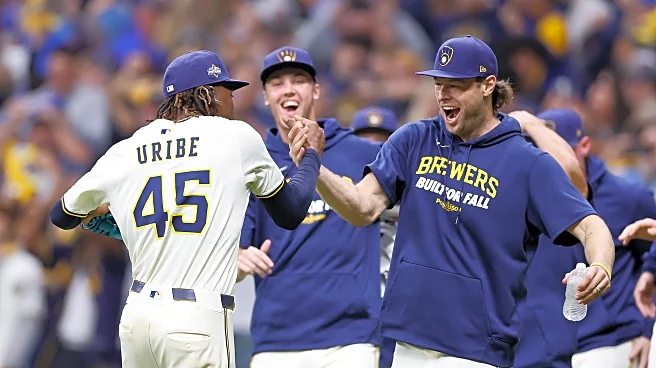
The Mets signed the 31-year-old Williams to a three-year, $51 million deal, marking the first of two ex-Brewers whom president of baseball operations David Stearns would reunite with (along with Freddy Peralta) this offseason. Williams was signed in early December, back when he was expected to be the setup man to Edwin Díaz; but Díaz, of course, broke for Los Angeles to join the back-to-back champion Dodgers, leaving Williams slotted into the closer spot on the roster. It’s a role Williams has played before. Over the course of his six scintillating seasons in Milwaukee from 2019-2024, Williams oscillated between the role of setup man and closer depending on whether bullpen-mates like Josh Hader or Trevor Megill had the job at a given time. One thing that remained consistent was Williams’ spectacular performance. From 2020-2024, Williams put up a 1.70 ERA (the second-lowest among qualified relievers in that span) while posting a 14.64 K/9 rate (second only to — you guessed it — Edwin Díaz). Along the way, Williams earned two All-Star selections, two N.L. Reliever of the Year Awards, and a Rookie of the Year Award for his absurd 2020 season in which he pitched to a 0.33 ERA while striking out 53 of 100 batters faced.
Despite what the Alonso homer may have led you to believe, Williams’ calling card has always been his un-hittable changeup, better known as the “Airbender” pitch. From ’20-24, Williams’ changeup produced an incredible 46.8% Whiff rate while yielding just a .135 opponent batting average, both marks ranking the best in baseball for any pitch among right-handers (min. 2000 pitches thrown). Since 2020, no single pitch by a reliever has produced as many strikeouts (284) as Williams’ Airbender.
But after being traded from the Brewers to the Yankees following the 2024 season, the ever-consistent Williams had a confusingly ineffective season. In 2025, he pitched to a 4.79 ERA while recording -0.3 bWAR. A look at his underlying metrics don’t reveal all too many problems — in fact, they seem to bear all the signs of a usual dominant season from Williams. His changeup still had its good break, while his Chase%, Whiff%, and K% all ranked in the 97th percentile or higher. Most perplexing of all, Williams’ xERA (expected ERA) was 3.02, almost two full runs-per-nine below his actual ERA.
So…who is Devin Williams really? Is he the dominant arm from his Milwaukee days, or the struggling Yankee trying to avoid further damage? The most likely answer does actually seem to be the most promising one, though perhaps also the least satisfying: it really was just a fluke. The baseball gods with their small sample sizes and unpredictable balls in play may have just done a number on Williams’ numbers, while the expected stats and underlying metrics tell the true story of a still-elite reliever.
There are statistical deep dives arguing the above point with far greater precision, but for a perhaps more digestible piece of evidence: Williams did put up good traditional numbers for significant stretches of the season. From May 7 through July 13, he pitched to 1.90 ERA in 23.2 IP. From September 7 on, he threw nine scoreless innings in nine appearances. That’s about three months of the season where Williams wasn’t only getting great results, but elite results — the kind he’s become accustomed to over the course of his career.
This spring, Williams gave up a solo home run to Cardinals prospect J.J. Wetherholt on the first pitch he threw: a new cutter that he’s been developing with the Mets’ coaching staff. Since that swing, he’s allowed no runs and two hits in four more spring appearances, striking out six batters and utilizing his signature changeup to record four of those (one in each appearance). It’s a hard thing to truly believe in a bounce-back season, especially after a player puts up negative WAR with an ERA near 5.00, but if there ever was a time to do so it’s now. The predictive stats are there. The not-so-cherry-picked traditional stats are there. The spring stats are there. And perhaps most importantly, Williams is here. The Mets committed to having him in their bullpen for three years — not a carefree expenditure, especially for a reliever — after seeing the numbers he put up last year. That should be a sign to any who trust Stearns’ front office that they firmly believe his 2025 season was an anomaly, and that he’ll be ready to deliver high-quality, high-stakes innings in 2026 and beyond.
So, one final time: Who is Devin Williams? He’s no longer a show-stopping rookie, but he’s not necessarily past his prime. He’s coming off an ugly season, but not a damning one. He’s not Edwin Díaz—nobody is—but he doesn’t have to be. He’s been one of the best relievers in baseball, all signs point to him continuing to be one of the best relievers in baseball, and he’s the Mets’ closer for the next three years. Even if he’ll forever be “the guy who gave up the homer to Alonso,” maybe we haven’t yet seen the most famous Williams changeup in Mets history.