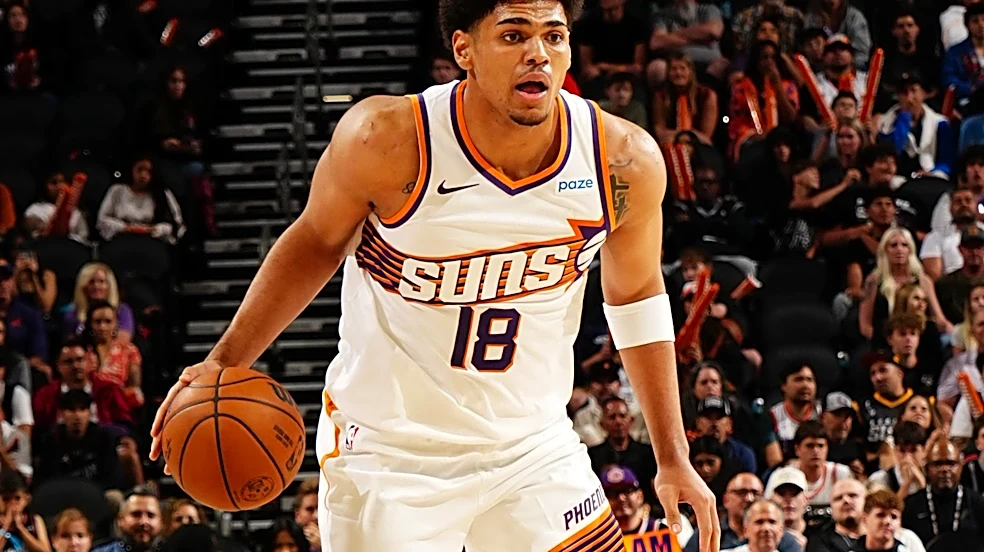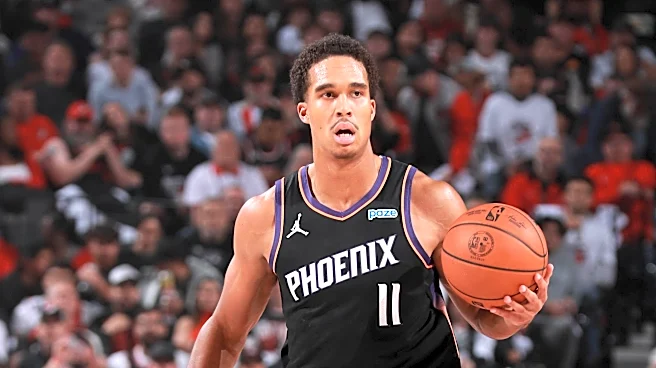




Over the last few days, as fans awaited the NBA season’s tip-off (which we are all trying to forget), the Phoenix Suns tweaked their roster to ensure they were ready for Wednesday Saturday night. This included an extension for a solid centerpiece of their bench, along with minor moves on the edges to fill out the roster from top to bottom. With these recent moves, the front office has once again signaled that it’s willing to adjust on the fly and push for the best chance to win on the court.
We saw
this last year with some late roster moves, and it truly paid off for this team. Claiming Jordan Goodwin off waivers was the first swing, and it paid off tremendously for the team, as he proved to be a spark off the bench and earned himself a nice payday because of it. They also added Jamaree Bouyea to a two-way spot when the Milwaukee Bucks waived him in the first half of the season. Bouyea proved his worth in that two-way spot, showing he could contribute with injuries at the guard position. This earned him a roster spot and kept him on the roster through the end of the season, a sign of their belief in him.
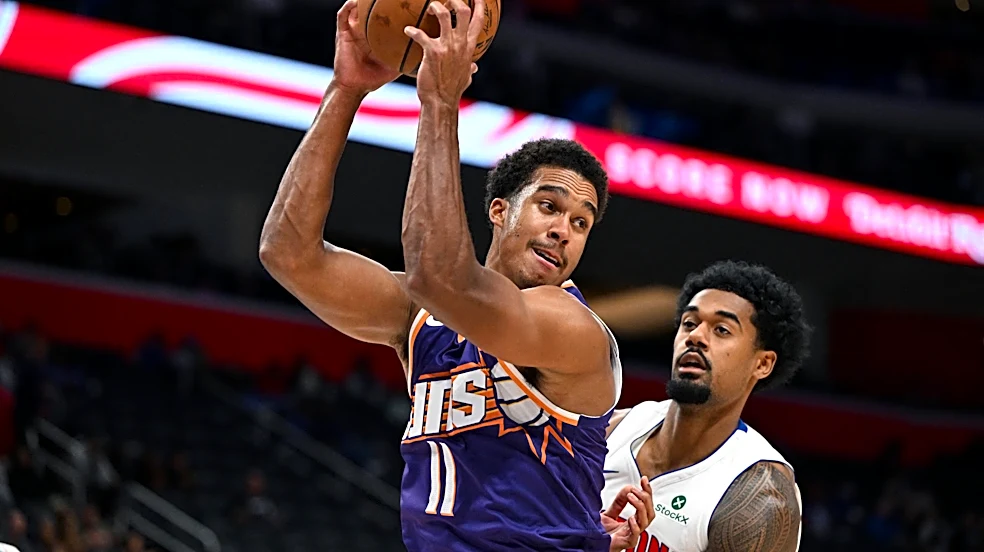
Coming into this season, the Suns did the same thing I mentioned above, and it really looks like these moves, even if minor, set them up for a better-than-expected outcome. First off, let’s discuss the biggest news, and probably the most impactful: extending homegrown talent Oso Ighodaro. They gave him a three-year, $29 million extension, which is a solid deal. For starters, an average annual value (AAV) under $10 million for someone who’s been a key piece is great. Then you add that it doesn’t kick in until the 2028-29 season, which makes it even better. That means Ighodaro is still on his rookie-scale deal for two more seasons (this and next) before the Suns have to shell out that money, giving them financial flexibility leading up to the 28-29 season. Ighodaro also makes only $2 million on his rookie contract, which will be well worth it for the team given his expertise.
By the time this extension kicks in, he will be on a scam contract, in my eyes, because he will be worth more than what he will be paid then. For the skeptics out there, this deal will be cheaper than many backup bigs, including one of Neemias Queta or Mitchell Robinson on the Celtics, Robert Williams III, Daniel Gafford, John Collins, Daniel Gafford, and Wendell Carter Jr. Now, some of these guys may not be backups now or in their roles play similar to the Suns with two startable bigs but not a true number one center.
Personally, I think he has a chance to be better than all these players by the 2028-29 season, proving he can be the best-valued backup center in the association if he can keep up the pace. That is some good company to be in, and this contract extension reminds me of the one that Payton Pritchard took a few seasons back, when he was making around $7 million annually.
These later moves are all smaller, but they still affect the team’s direction. Sadly, the Suns waived Haywood Highsmith again, cutting their roster from 15 to 14 players. This is now allowed under the new CBA, giving teams ultimate flexibility at the trade deadline to take in more players in a deal, depending on which apron the team you trade with is under.
Highsmith was waived earlier in the offseason and brought back to a non-guaranteed deal. Unfortunately for him, with the Suns seeing some brightness from Ryan Dunn in preseason and drafting two forwards, Rasheer Fleming and Koa Peat, in back-to-back drafts, he has very little opportunity in Phoenix. The Phoenix front office knew he wouldn’t contribute and had to make the most sensible business decision. For Highsmith, a solid veteran wing who can contribute off the bench, I hope he finds a spot by the end of the year.
Then the Suns adjusted their two-way room: they waived both Koby Brea and C.J. Huntley and brought in two new faces, Drew Timme and Duop Reath. By losing Huntley and Brea, the Suns signaled they would rather go with veteran-ready guys over developmental pieces. The Suns brought both in last year: they drafted Brea in the second round and signed Huntley as an undrafted prospect. They had opportunities with the Valley Suns last year, as neither saw much burn with the main squad. At this point, neither has signed with a new team, so both could return to the Valley Suns to develop in the G League, or be plucked by other G League squads.
Brea was one who confused me, as the Suns seemed to value his shooting ability highly, and it felt weird to give up on a second-year player. Unfortunately for him, the Summer League was not his best showing this year, and the preseason did not help, as he did not get much opportunity. With Huntley, he had been waived off a two-way roster before (for Bouyea), so I expected that.
Now, for the new faces, this explains why they were brought in. Reath signed an Exhibit 10 deal with the team to play in training camp and compete for a spot. With Mark Williams suffering a shoulder injury, the Suns’ center room is already thin, with just Ighodaro and Maluach, so that some insurance would be nice, and that is what Reath is. He’d be the third big man who can shoot and add utility the team has lacked. Reath has been someone I have had my eye on for this team, so I am intrigued to see how he fits and whether he can work his way to a contract spot by the end of the season.
Lastly, but certainly not least, is the newest name and the one that came as the biggest surprise to most: the addition of Drew Timme. Timme, who has spent time with the Brooklyn Nets and Los Angeles Lakers, looks like the newest splash and adds some versatility. The forward will add more size to this frontcourt, something they could use with Williams’s injury and Peat as a rookie. Then you see he can also shoot the ball pretty solidly, something the team lacks at forward without Royce O’Neale. With the Lakers, he shot 44% from three, which is a definite boost they can add. Not to mention that, once again, he was claimed from the Lakers, just like Goodwin was last year. Could this be another steal the Suns get off the Lakers? I think so, especially when you compare who was in his spot before.
No offense to Brea or Huntely, but Reath and Timme have more NBA experience and seem more ready for that action. The Suns have made that abundantly clear with their two-way room, especially after adding Pat Spencer earlier in the season. They want to use the two-way to potentially contract growth, build around the edges, and define their culture. A smart move for a front office that has found success with this in the previous two years and still hopes it can work for a third straight year.