


The new season is just around the corner for Roma Women, but after another summer of change, there’s been a lot to keep up with. Allow us to get you up to speed ahead of the kick off by tackling the big questions.
Right, where did we leave things?
With Roma as champions, of course!
It was a domestic double, in fact, for the Giallorosse after they added the Coppa Italia after the Scudetto.
And that was an impressive success story for an evolving team in what we now know was Luca Rossettini’s only season in charge. Remember, Roma had
come third the season before.
Back-to-back titles directly before then showed the club’s potential, but this time last year, it felt like it might take a while to reclaim it. As it happened, Roma were dominant in Serie A and worthy winners of the Coppa too.
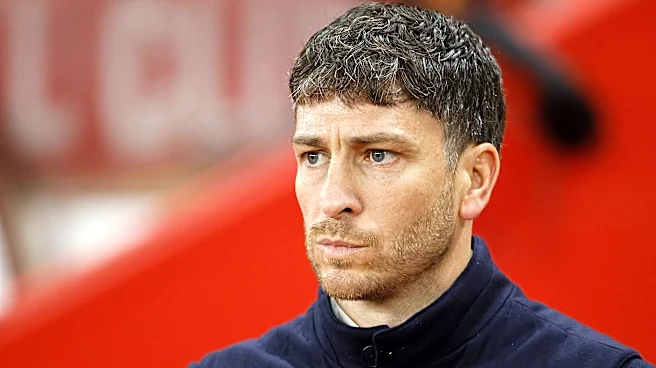
So now, it’s over to Gianpiero Piovani to pick up from where Rossettini left off to try and make Roma’s success sustainable.
Hang on… there’s a new coach?
Yep, that’s right. Rossettini defied expectations in his first season in women’s football – he was previously involved with the Padova youth ranks in the men’s game – but left the club after the end of the season.
It all came a bit out of the blue. His exit was announced in early July, just a few weeks after Roma had been lifting their second trophy in the space of a couple of weeks.
Rossettini hasn’t been confirmed in a new job yet, but since there were doubts over Roma’s performances in the Champions League, maybe he felt he’d done all he could by winning the domestic trophies. Some suspect he might return to men’s football in some capacity.
So Piovani has replaced him and it’s perhaps a more orthodox choice than Rossettini was in the first place. The new boss, who used to play for Parma, Brescia and Cagliari in the late 80s before a long spell with Piacenza through the 90s, has been coaching in women’s football since 2017 – a whole year before Roma even set their women’s side up.
Piovani led Brescia in 2017-18, coaching a teenage Manuela Giugliano among a few other familiar faces, before a six-year spell with Sassuolo. For the last two years, he was at Inter, finishing second both times – to Juventus and then, of course, Roma.
And what can we expect from him?
His Inter side usually lined up in some variation of a 3-5-2 formation and he might be looking to build from a back three at Roma too, but we’ll have to wait and see on that front. He hasn’t been afraid to switch it up with a back four either in the past.
Interestingly, in his first interview as Inter boss, Piovani was asked if his past as an attacking player would be seen in his tactics, but he emphasised “balance” as being at the core of his philosophy.
In contrast, in his first Roma interview, he said: “My main focus is for the players to press high to score. I was a forward, so I know a few things about that.”
This might be reading too much into the lines, when coaches use the same cliches over and over when being introduced in new jobs, but they seemed to be the words of a coach optimistic that this group of players might be more suited to his game plan.
Speaking of the squad… what’s changed? Who’s gone?
Last summer saw some high turnover in the Roma squad. This year hasn’t been quite as drastic, but there’s still been a few notable exits.
Emilie Haavi will be the biggest loss; she’s joined newly promoted Como 1907 (there are two Comos in Serie A Women – this one is affiliated to the Como in the men’s Serie A). Injury limited her last season, but at her best she was one of the most dangerous wingers in the league and probably the Giallorosse’s best foreign player yet.
Evelyne Viens has also made way from Roma’s attack, joining Paris FC, but her form did dip last season.
Then there’s Giulia Dragoni, the precocious talent Roma had on loan from Barcelona for the past two seasons. Rather than stay at either club, she’s embarked on a new challenge with Chelsea.
Roma also said goodbye to Samantha van Diemen, one of their defensive recruits from last summer who looked promising at first glance but soon suffered a serious injury. She’s moved to Inter.
Finally, Oihane Valdezate, one of the backup centre-backs, has been released and Roma haven’t retained their other loan players, midfielder Anna Csiki and striker Froya Dorsin.
More importantly, who’s joined?
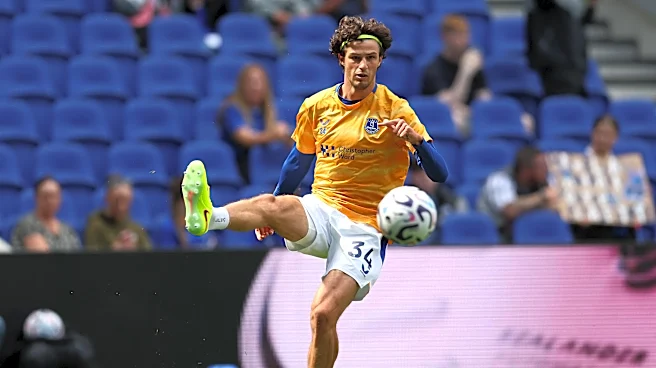
The headline additions for Roma this year are striker Martina Piemonte and winger/full-back Elisabetta Oliviero, both Italy internationals arriving from (gasps) Lazio.
The other players with Serie A experience added to the ranks are Californian midfielder Maya Doms, who played for Sassuolo last season and now makes the step up, and 23-year-old Italian centre-back Bianca Vergani, joining from Napoli for the next step in her development.
Newcomers to the league courtesy of Roma are Canadian winger Ella Ottey and teenage Finnish striker Sofia Jahnukainen to provide support for Piemonte.
Wait, one of those names sounds familiar.
Indeed. Piemonte was Roma’s main striker way back in their first season. She wasn’t quite what they needed back then, but should be more rounded now.
Roma have been needing a reliable striker for a couple of years. Valentina Giacinti was the best they’ve had yet, but she began declining in her last season (2024-25) and Roma simply replaced her from within with Viens for 2025-26. This might sound like nitpicking – these are the reigning champions we’re talking about, after all – but it didn’t quite work out to full effect, and nor did the mid-season loan of Dorsin.
Piemonte, now in her prime at 28, should be a solid focal point. She hit double figures of goals in each of her three most recent seasons in Serie A (the last two with Lazio and one before that with Milan, separated by a single, less successful season in the WSL with Everton).
She has come a long way since only scoring four league goals in Roma’s inaugural season. In terms of pure numbers, she’ll have to do about three times better to be a success this time around – but there’s every reason to believe she can.
Who else is going to be key?
At the other end of the pitch, you just had to marvel at the development of Shukurat Oladipo last season. The Nigerian centre-back was a young backup by the start of it and an absolute rock by the end of it, taking home the league’s best defender prize.
Oladipo got a well-deserved new contract in the summer and now she’ll be raring to go again. Still only 21, she could really turn some heads if she backs up the season she just had. This time, she starts it as one of Roma’s key players.
Giada Greggi, the last player standing from the Giallorosse’s original squad and second in command to Giugliano in the leadership department, is another of those key players. At 26, she’s approaching the prime of her career and should be a leading light again this season.
And let’s not overlook the brilliance of Giugliano herself, the league’s MVP for a second time last season. We just expect magnificence from the captain these days, but that doesn’t make what she does any less special.
And who’s got something to prove?
The battle between the goalkeepers will be one to keep an eye on. Roma brought back Rachele Baldi last summer with the expectation that she would back up Olivie Lukasova, just returning from an ACL injury.
But Lukasova wasn’t quite up to scratch yet and Baldi seized her chance, showing much more dependability than in her previous spell as Camelia Ceasar’s backup. In fact, Baldi was better than Ceasar had been the year before. Can she maintain that, or will Lukasova find her feet?
Another one to watch is Alayah Pilgrim. She’s flattered to deceive on the wing for a couple of years now for Roma; her potential is clear but her decision-making leaves something to be desired. Still, there were signs of slight improvement last season and now she’s out of Haavi’s shadow (taking her number 11 shirt too). Pilgrim is out of contract at the end of the year, so if ever there was a time to step up, it’s now.
The same goes for midfielder Marta Pandini, who chipped in with a few goals last season but in the main has been… just about OK during her whole Roma career. Beyond the usual suspects, it’s players like that who Roma will need to see an uptick from to boost their chances.
So, can Roma win the league again?
You’d hope so, but with it being another fresh project, it’s hard to say for sure.
Roma have earned the right to be classed as favourites, but how they react to Piovani’s changes remains to be seen.
Last season, they finished 11 points clear of Inter and 16 above Juventus. You’d imagine those two will be the main challengers again, but they too have new coaches. Inter, obviously, have had to replace Piovani – plumping for David Sassarini from Napoli – while Juventus have picked out Spaniard Isaac Guerrero in place of Max Canzi. Guerrero has an interesting CV, recently having a few different roles on the USMNT coaching staff and previously being employed in the men’s sector (though never as the head coach) by the likes of Barcelona, Espanyol and Venezia.
And keep an eye on Napoli too, since they’ve now got Alessandro Spugna – the architect of the Giallorosse’s first two Scudetti – in charge. They’re normally mid-table fodder in Serie A Women, but Spugna is one of the most proven coaches in the league.
So in short, there’s a lot of changes to keep up with in the league this year. Roma start as the team to catch and they’ll be hoping to defend their crown.
What about Europe?
That’s the next step for Roma if they remain out in front in the league. Their poor return in the Champions League was the only major blot on Rossettini’s records.
Roma looked some way off the likes of Barcelona, Chelsea and Real Madrid last season in the new league phase format. All three of those condemned Rossettini’s side to heavy defeats.
And while Piovani has more experience in women’s football than Rossettini, whether he’s cut out for overseeing a genuine run in the Champions League is debatable. Inter didn’t make it to the league phase last season, getting knocked out in the second round of qualifying.
As Italian champions, Roma don’t have to navigate those rounds, going straight in at the league phase. They’ll either be a first or second seed, which looks pretty good, but few would argue if you said Roma still have some ground to make up with the truly elite women’s sides.
Right, when does it all start?
Imminently – if you take the Serie A Women’s Cup seriously.
Roma and their 11 Serie A opponents have the chance to start the season with a trophy thanks to this tournament, which was brought in last summer to compensate for the number of games each team had in the league decreasing after a change of format.
Roma are away at Ternana on Saturday (kicking off at 6pm local time) and then host Sassuolo the following Sunday (same kick-off time). Their final group game will be at home to Fiorentina the weekend after (a precise date TBC).
As with last year, the three group winners then go into the semi-finals with the best-ranked runner up. The final takes place on the weekend of September 19/20.
Roma then have their first Champions League game that midweek, on either September 22/23, and only after that does Serie A get underway, with Roma travelling to face Sassuolo in their season opener on the weekend of September 26/27.
In other words, there’s time for Piovani to iron out any tweaks that need making before the title defence begins, but there’s silverware at stake early on and a prime chance for Roma to send a strong reminder to their rivals.