

As mentioned in few other profiles, a part of the Detroit Tigers draft strategy under Scott Harris has been tilted toward allocating their bonus pool to lure prep talent from their college commitments. The corollary to that strategy is finding inexpensive college players who have some major league potential and trying to develop them into role players while hoping someone has a Kerry Carpenter level breakout along the way.
Most of these have been speedy, light hitting types, but while Pepperdine infielder
John Peck played shortstop in college, he’s more interesting for the fact that he packs enough raw power at the plate to eventually be an impactful major league hitter. Like most college players who sign for close to the minimum, Peck, who got an extra $62,500 over the minimum from the Tigers in the seventh round of the 2023 amateur draft, has a lot of risk in his game, but there’s at least a chance he could put it all together in time.
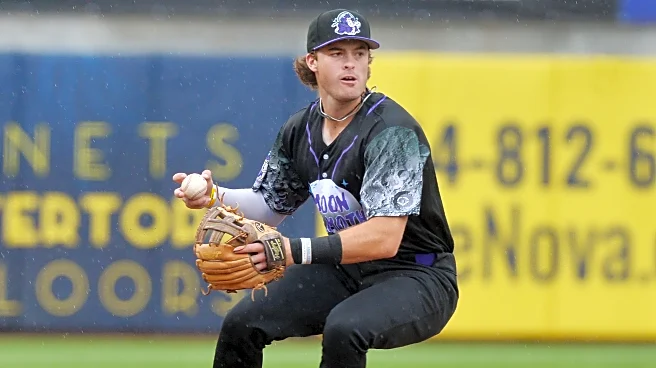
While Peck has continued to play shortstop in High-A ball and will likely continue to get plenty of reps there in Double-A next season, he likely profiles best at second base, where he should be average. He has enough arm strength to play on the left side of the infield, and that should translate to playing a solid third base as well. He has pretty good hands, but his range limits him a little as a shortstop. He’s seen time at all three positions in his two full professional seasons since draft day. It’s not out of the question that he could play some shortstop at the big league level eventually, giving him plenty of versatility if he can conquer some swing and miss issues and a tendency to put the ball on the ground too much.
In his full season 2024 debut, Peck showed solid plate discipline in Single-A Lakeland, but then struggled in his first look at High-A, striking out quite a bit. He battled some minor injuries throughout the season, and his high hands setup, pre-pitch movement, and pronounced leg kick left him a little too vulnerable to more advanced pitching. He had a distinct tendency to fly open toward third base, opening him up too early and struggling with breaking stuff moving away from him.
In 2025, he took some steps to get his hands in a better position at pitch release and trimmed down his leg kick. Those were positive developments, and his swing decisions improved somewhat as well as he went on to a pretty good season for the West Michigan Whitecaps. He carried that into a solid month with the Erie SeaWolves late in the season. However, there’s still plenty of swing and miss and only modest success driving the ball in the air more often. He does make plenty of hard contact, spraying line drives and ground balls from line to line. If he can adjust a little more and change his batted ball profile, things will get much more interesting.
Peck is unlikely to become a low strikeout, high walk type of hitter, but there’s enough power in his solidly built 6’0” frame to rack up more homers and extra base hits if he can start handling breaking stuff better and driving the ball in the air more often. His splits are typically pretty even, though he defied them a bit by hitting 9 of his 11 home runs in 2025 against right-handed pitching. There’s a chance that Peck continues settling into the swing adjustments and everything comes together for him. In that case, the Tigers might have a 15-20 HR hitting, right-handed infielder who posts decent on-base percentages, but can play all over the diamond. That would be a pretty valuable platoon asset at least.
Peck was only 20 on draft day, so despite the fact that he’s got two full years of pro ball under his belt, he won’t be 24 until July. If he can handle the jump and put togehter a good Double-A season this year while adding more hard hit fly balls to his profile, he’ll be tracking like a future platoon infielder. His power potential, balanced splits, and defensive game give him a higher ceiling than some at this level, but it’s still a longshot that he hits his way to the major leagues in a regular role.