








[Editor’s Note: The following article is designed to be a source of information. Nothing in this article should be interpreted as an endorsement to act. The author, the entire TOC staff, SB Nation, and Vox Media all maintain an official stand of neutrality on the current events surrounding Michigan State University’s Board of Trustees.]
Tom Izzo recently spoke out on the loss of President Kevin Guskiewicz and Athletic Director J Batt to Clemson and Kentucky, respectively. Guskiewicz was not shy about
placing blame on the MSU Board of Trustees as the reason for his decision to leave, as did Samuel Stanley, who preceded Guskiewicz in the President’s office. Here at TOC, Robbie offered some thoughts following Guskiewicz’s announcement.
Join the conversation!
Sign up for a user account and get:
- Improved notifications system!
- Fewer ads
- Create community posts
- Comment on articles, community posts
- Rec comments, community posts
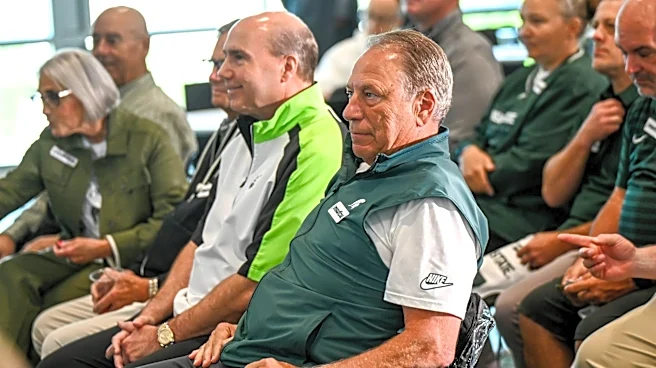
For his part, Izzo appeared visibly angry, but not like when defensive effort lapses or a call goes against the Spartans. This seemed different. He stated that all 600,000 Spartan alums needed to stand up together at this time against what’s happening at the university. Comments from some in the TOC community seemed to indicate that more specificity was needed regarding what Izzo wanted them to do, or what they could do.
While Izzo indicated that he would soon have more to say, we wanted to look at some options for MSU alums, and others who care about the university, who are unhappy with the current situation on the Board.
Unfortunately there do not seem to be any easy options, given the political component of this situation. But options may exist for Spartans determined to make a difference.
Before we get to those ideas we wanted to briefly cover:
- The individuals who compose the current MSU Board of Trustees,
- Recent scandals involving current board members,
- How trustees are elected to the MSU Board compared to university boards in other states,
- Why it has proven difficult to change how university board members are elected in Michigan, and finally
- What concerned Spartans can do.
The Current Trustees
According to the MSU Trustees website, the trustees are publicly elected by Michigan voters and have general supervision over the university and its funds. The board has eight members serving eight-year staggered terms without compensation.

A summarized bio from the above website and the year their term ends is listed below for each trustee. Each term ends on January 1 of the listed year.
- Brianna T. Scott, Chair, 2027. MSU Eli Broad College of Business and Wayne State Law School grad. First African American assistant prosecutor in Muskegon County prior to opening her own law firm in Muskegon.
- Kelly Tebay, 2027. Graduate of the James Madison College at MSU. Has also earned a masters from MSU in law enforcement intelligence and analysis. Director of government and external relations at The Henry Ford in Dearborn. Previous experience in professional fundraising and corporate relations for nonprofits as well as state and federal government agencies.
- Sandy Pierce, 2029. Appointed to the Board by Gov. Gretchen Whitmer to complete the term vacated by Pat O’Keefe. Previously an Executive VP at Huntington National Bank. Wayne State graduate.
- Rema Vassar. 2029. Holds a PhD from UCLA. Currently a professor at Wayne State in the College of Education. Previous experience as a K-12 teacher, counselor, and administrator. Founded two organizations aimed at amplifying the needs of, and supporting, Black students and education leaders.
- Renee Knake Jefferson, Vice Chair, 2031. Tenured law professor at the University of Houston. Law professor at MSU from 2006-2016. Author of three casebooks. Has testified before Congress. Practiced law in Chicago and Virginia. Univ. of Chicago Law School grad. Her husband is the first African-American to serve as a Supreme Court Justice in Texas and is an alumnus of the James Madison College at MSU.
- Dennis Denno, 2031. 1992 MSU grad who also holds a master’s from UM. Investigative Analyst for the Flint Police Dept. Cold Case Homicide Unit. Previously worked in the Lansing PD, founded his own nationwide polling company, and worked as a senior staffer in the Michigan legislature. Chaired the search committee that recommended the hiring of Kevin Guskiewicz.
- Rebecca Bahar-Cook, 2033. 1992 MSU grad & parent of two Spartan grads. CEO of Capitol Fundraising Associates, consulting with a wide range of nonprofit organizations. Formerly an Ingham County Commissioner, served on the Ingham County Jury Board and as chair for the Ingham County Board of Canvassers.
- Mike Balow, 2033. Vice President at CBRE in Southfield. Has worked at Johnson Controls, Toll Brothers, and Ashley Capital. Naval Academy graduate who served seven years as a surface warfare officer. Oldest daughter is a 2023 MSU grad.
The Current Trustee Scandals
The State News has covered the Board’s recent efforts to update its ethics policy, including a provision that bars trustees from publicly dissenting from majority board decisions. Balow and Vassar both refused to sign the pledge, saying it was designed to strip them of their First Amendment rights and silence minority dissent.
The two trustees were censured by the board and had certain privileges taken away including complimentary athletics tickets, travel reimbursements, university-funded legal counsel, and credentials for the Mackinac Policy Conference.
Denno also voted against the ethics policy revisions but ultimately signed the pledge and avoided censure, while voting against censuring Balow and Vassar.
Unfortunately, scandals involving some of MSU’s current board members go beyond opposition to a loyalty pledge.
In fact, this does not appear to be Vassar’s first censure experience. In 2023, Scott produced a letter accusing Vassar of bullying the school’s interim president, interfering in administrative affairs, and violating conflict-of-interest policies. A third-party investigation corroborated some of the allegations, leading to Vassar’s first censure in 2024 and a board request to have Governor Whitmer remove her, which Whitmer declined to do. For her part, Vassar has fiercely defended her actions and has recently threatened a $25 million lawsuit against the university where she alleges years of racial discrimination and retaliation.
The outside firm that investigated the allegations in Scott’s letter also found evidence of additional widespread misconduct by Denno.
Balow had avoided censure until his opposition to the loyalty pledge, but has been accused of breaking board unity criticizing his colleagues and pushing an effort to investigate or remove the university’s General Counsel.
For her part, Scott was criticized by some peers and student groups for releasing her letter, making the Board’s internal disagreements public while other Board members have faced opposition from free-speech advocates for passing the new ethics policy.
Trustee Elections in Michigan
Unlike the state’s 12 other public universities, whose trustees are appointed by the governor, the trustees at Michigan State, Michigan, and Wayne State are chosen via a statewide partisan election. Every two years, two seats are up for election on the November general election ballot.
Candidates for the MSU Board of Trustees do not first run in a primary election. Ballot access is determined by party conventions or signature petitions.
Major party (Democrat and Republican) candidates seeking a trustee nomination must win the vote at their party’s fall state nominating convention. Third party candidates (such as the Green or Libertarian Party) must also be selected at a party nominating convention.
Independent candidates must collect and submit at least 12,000 signatures from Michigan registered voters. These petitions must include at least 100 signatures from registered voters in at least half of Michigan’s congressional districts.
Michigan is the only state in the country that elects the governing boards of its largest public universities via a statewide, partisan popular vote. In most states, and particularly those in the Midwest, trustees are appointed by the governor with state senate confirmation.
Here is a look at how trustees are elected in some other traditional Big Ten states:

Nationally, only three other states besides Michigan use some form of public voting to choose university trustees. Colorado, Nebraska, and Nevada also elect university regents or trustees through a public vote but they use district-level elections rather than a statewide election. In a district-level election, a state is carved up into distinct geographic zones (districts) – similar to how a state is divided for the U.S. House of Representatives. Instead of the entire state voting on every single trustee, only the residents living within a specific district vote for the trustee representing that area. Michigan is the only state where candidates run on a statewide ballot under a major political party.
Why Hasn’t Michigan Changed its System?
Changing the way university board members are selected in Michigan has proven to be an uphill battle for at least three reasons.
First, the current election process is spelled out in Michigan’s state constitution. It can’t be changed with a regular legislative bill. Changing the current system would require passage by a two-thirds majority in both the State House and Senate.

Second, the legislative process, with its partisan maneuvering, also adds to the extreme difficulty of getting something done. After Guskiewicz’s departure, a bipartisan coalition of current Governor Gretchen Whitmer and former Governors John Engler and Jim Blanchard pushed for a change to the system but it failed in a 52-54 House vote, well short of the 74 votes needed for the two-thirds margin.
The Governors’ push fell victim to the usual political infighting. Democrats criticized Republicans for rushing the bill to a vote without meaningful negotiations. Republicans wanted a compromise to create a nine-member board with four Democrats, 4 Republicans, and one Independent appointed by the Governor but Democrats opposed this provision. This, combined with other contentious provisions led to a bill that went nowhere.
As noted earlier, and by Julia Roeder of the State News, Whitmer has the ability to remove trustees but has thus far decided not to, despite the scandals and the last two MSU presidents citing board member behavior as their reason for leaving. Removal, of course, would not change how board members are selected but it would have sent a clear message that Whitmer would no longer tolerate the situation at her alma mater. Instead, she chose to support the difficult path to permanent change that begins in the state legislature and ultimately didn’t make it out.
Third, even if a resolution were to miraculously make it through the legislature, it would likely face an even stiffer challenge from Michigan’s voters. A recent article from Kim Kozlowski quotes political analyst Bill Ballenger: “Citizens of Michigan prefer to elect people,” Ballenger said. “Any time you say to the citizens, ‘We want to take away your power to elect certain officers and give it to an appointed process,’ the public does not like it.”
What can alums and those who care about MSU do?
For those unhappy with the current situation, there are a variety of options, ranging in both ease of implementation and potential impact. What follows are some options, with their various pros and cons. However, this section should probably begin by saying that while many of the options presented below have drawbacks and a level of complexity, one thing that obviously should not be considered a rational solution, regardless of frustration level, is doxxing and threatening current board members.
Signing petitions that demand the immediate resignations of Vassar, Denno, and Balow. The change.org petition calling for the resignation of MSU board members had surpassed 16,000 signatures as of Friday afternoon. Petitions can be effective at signaling anger and keeping a story in the news but they have zero legal power. A trustee’s decision to resign is theirs alone.
Writing to Governor Whitmer to demand removal. The Michigan Constitution technically grants the rare executive power to remove officeholders for gross neglect of duty but this appears to be a dead end right now. As noted, even though she has been critical of the MSU Board at times, Governor Whitmer has resisted calls to remove trustees and instead has pushed for a legislative fix.

Targeted alumni donor boycotts by tying financial gifts to governance reform. Donors can attach binding conditions to their contributions or withhold them altogether until specific board reforms are met. If major boosters stop donating, pressure may rise on the board members to act professionally.
Launching a Political Action Committee. This was suggested by TOC reader ChiTownSparty in the comments section for O’s article confirming Batt’s departure. A Super PAC could theoretically raise unlimited funds and run targeted ad campaigns in election years.
Infiltrate the party conventions. Major party candidates are nominated at closed Fall State Nominating Conventions rather than in public primaries. Citizens can register as precinct delegates in their local Democratic or Republican parties and then directly vote on these nominations. Registering as a precinct delegate actually isn’t all that hard. Please see the appendix section below.
Lobbying for a clean constitutional amendment by contacting state representatives. As mentioned, a legislative effort to change how board members are selected has already failed once in the Michigan House. “Clean” bills are almost always dirtied by partisan demands and attempted add-ons, making for a rough legislative path forward.
Launching a statewide ballot initiative. Michigan residents could bypass the legislature entirely by forming a ballot proposal committee and draft an amendment to change the trustee selection process. This would require approximately 450,000 signatures to place the question on a statewide ballot for voters to decide.
While many of these options appear daunting, the MSU students, faculty, and staff may hold a bit more power, through two additional actions, given their more immediate proximity to the board.
Take advantage of public comment periods. The Board of Trustees must hold public comment meetings. Packing these meetings and presenting unified blocks of comments could quickly make things very uncomfortable for troublesome trustees.

Current students and faculty members can make use of the MSU Student Government (ASMSU) and Faculty Senate for continued votes of “no confidence” in the board and demand that the next presidential search prevents trustee interference.
Conclusion
I have no idea if any of this is what Izzo meant when he implored Spartans to stand up together and I certainly look forward to hearing more from MSU’s most recognized and respected leader.
Izzo did say that Guskiewicz was one of the best presidents MSU ever had. I’ll trust his judgement on that. If this really comes down to a few people creating what the past two presidents view as an unworkable situation, then I think I can also begin to understand Izzo’s extreme frustration.
Equally frustrating is the fact that it’s so hard to do anything about this. But not impossible. What’s the saying? If it was easy it would have been done already.
Appendix: Registering as a precinct delegate in Michigan
A precinct delegate may be the most accessible public office in the state. A precinct represents a small part of a neighborhood and the pool of candidates is generally small as well. Many of these positions go unfilled in election cycles because no one applies.
Becoming a precinct delegate in Michigan is easy because:
- No signatures are required,
- There are no filing fees, and
- Campaign finance rules do not apply! The Michigan Campaign Finance Act does not apply. There is no need to form a campaign committee, open a separate bank account, or file financial disclosure reports.
There is a three step process to follow to become a precinct delegate during an even-numbered election year:
- Make sure you qualify. Candidates must be US citizens, at least 18 years old, and a registered voter living in the precinct they want to represent. Verify your precinct number through the Michigan Voter Information Center online or by calling the local city or township clerk.
- Complete a one-page Precinct Delegate Affidavit of Identity, providing your contact information, precinct number, and declare the political party you want to represent
- Sign the affidavit in front of a notary public and turn it in to your County Clerk’s office by 4:00 PM on the thirteenth Tuesday before the primary election (usually this is in early May).
Once the paperwork is processed, candidates’ names will appear on the August primary election ballot under “Candidate for County Convention Delegate”. If a race in a precinct is uncontested, a candidate needs only a single vote to win – their own will do!
Sources
- A Message to the Spartan Community
- The MSU Board of Trustees is an Embarrassment to the University
- trustees.msu.edu
- MSU Board of Trustees: Meet the Trustees
- Vassar condemns MSU ethics overhaul, compares board culture to Nassar era
- After ethics showdown, two MSU trustees shut out of Mackinac conference
- MSU Trustees Rema Vassar and Mike Balow to be censured
- MSU board censures two trustees for not agreeing to new ethics policy
- Michigan State University Trustee Demands Ethics Overhaul, Threatens $25m Lawsuit
- Michigan State U. Democrat-led board punishes two trustees for refusing to sign ‘loyalty’ oath
- Board split over Quinn dossier
- Trustees have ‘serious concerns’ about Quinn
- Understanding Michigan’s elected University governing boards
- Establishment of the MSU Board of Trustees
- Wikipedia: 2026 Michigan State University Board of Trustees election
- Michigan is an outlier in electing university boards
- House Fails to Pass Resolution Changing Way University Boards Are Selected
- Whitmer pushes for appointed university boards after passing on MSU trustee removals
- Bipartisan group wants to change elections for university boards and 2 top state offices
- Should Michigan governor appoint university boards? It could backfire, some say
- Report: Whitmer should consider removing two Michigan State trustees
- MSU board censures two trustees for not agreeing to new ethics policy
- Police sent to MSU trustees’ homes after threats, doxxing
- Become a Precinct Delegate
- Precinct Connections
- Maximize your voice: Become a precinct delegate