




Though the midsummer fervor has calmed down, negotiations between the Portland Trail Blazers and local government entities regarding the Moda Center arena—the Trail Blazers’ home—are scheduled to continue between now and the end of the year. December 31st is the theoretical deadline for the sides to reach an agreement on funding renovation of the building in order to secure funding the Oregon State legislature has already approved for the project.
Throughout the process, Trail Blazers owner Tom Dundon
has been cast as something of a villain. His hard-nosed, corporate-minded approach is inherently anti-provincial. Tension has been exacerbated by the real possibility of the franchise moving to greener pastures, a fear bubbling just beneath the surface of the minds of Blazers fans.
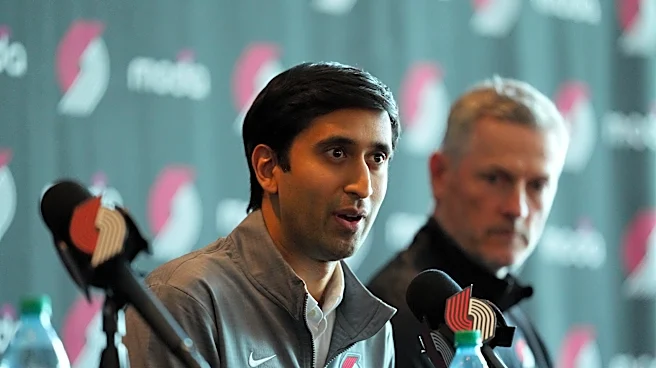
Alongside that concern has come the hope that Dundon’s minority-stake co-owners can leaven the process, preventing the majority-stake owner from pulling a cavalier relocation in the vein of Clay Bennett and the Seattle SuperSonics at the turn of the millennium. The main character cast in Portland’s favor has been Sheel Tyle, subject of a profile by Jason Quick of The Athletic back in April [subscription required]. The profile described Tyle as a local, passionate about keeping the team in Portland.
Not so fast, said writer Chris Thompson of Defector in an article today. If Blazers fans think Tyle is going to moderate Dundon, or even be on their side in these negotiations, they have another large think coming.
Thompson points out the obvious, that Tyle’s main connection to the city came through his wife, Dr. Sejal Hathi, who was (for a brief time) the Director of the Oregon Health Authority. She no longer serves in that position, cutting the main ties to the area for Tyle.
But then Thompson goes further. He cites a source within the Blazers organization saying that not only is the Trail Blazers ownership conglomeration united, they are agreed that Dundon is doing excellently so far as the majority owner:
…the new ownership group is wary of politicians twisting their words, and the five co-owners have decided together to hold their fire as much as possible until after the completion of negotiations. But rest assured, says our source, that all five members of the ownership group are in absolute lockstep about all of the following: that they purchased a deeply distressed franchise, one in need of just the sort of painful “right-sizing” that has made headlines since the transfer of ownership; that the deal they are offering to Portland, such as it is, is as good as anyone has any right to expect; that their share of arena expenditures is covered absolutely by the terms of their purchase of the franchise; that anxiety about negotiations is crescendoing among the public largely because of reporters and politicians; that delays in the completion of this arena deal are the fault of the city council; and that Dundon is doing a terrific job.
Thompson goes on to eviscerate Quick’s piece and its depictions, pointing out just how far removed Tyle, the supposed fan advocate, is from the area and the common resident:
Prior to moving to Portland, Tyle had lived in many other places but never in Oregon, and in fact his venture capital firm, which invests in startups all over the country, is run out of New York. Hathi resigned her public post in July, effective Aug. 1, and is currently listed on LinkedIn as an attending physician and assistant professor of medicine at Stanford University School of Medicine. Tyle’s cell phone number has a San Francisco area code. A public records search revealed two addresses associated with his name, one is in Texas and the other is a PO box in California.
There’s much more in the article worth reading. It’s an eye-opening depiction, including several more critiques of Quick, open questioning of how easy it is to be considered a “hometown” Portland person, and descriptions of the moves and motives of the Trail Blazers ownership group.