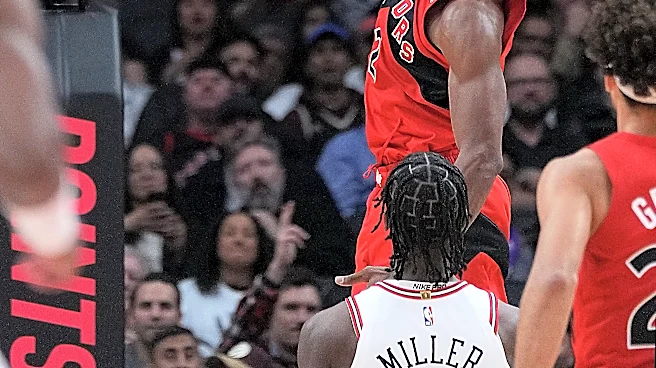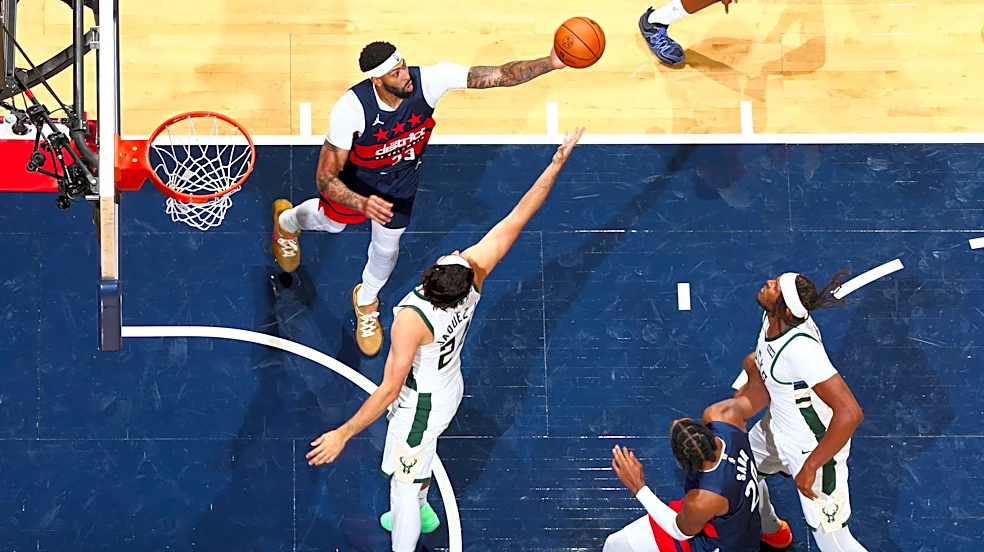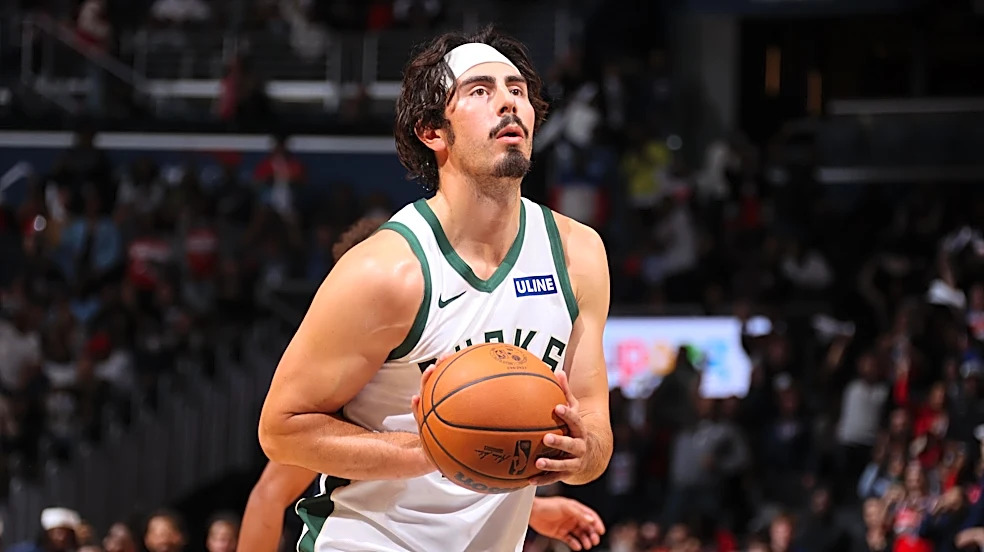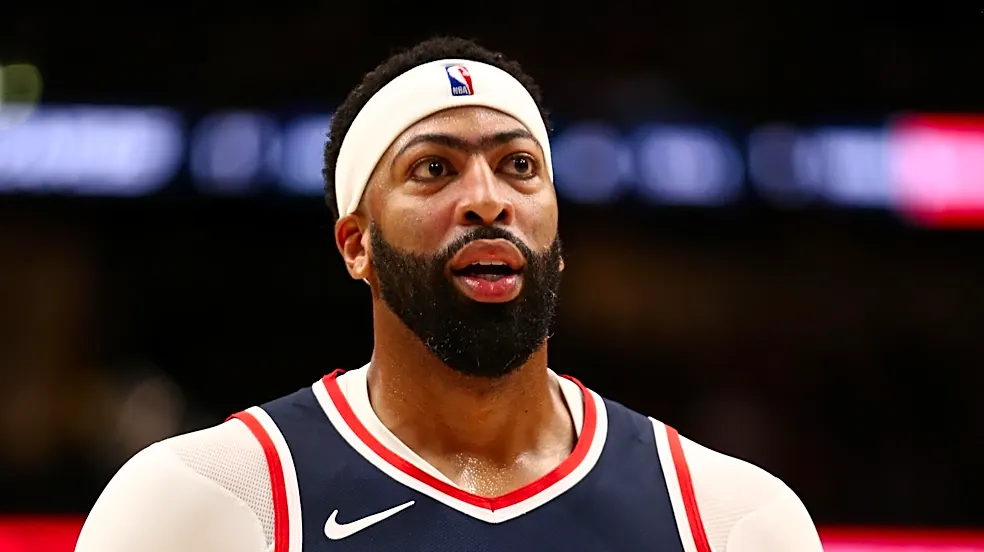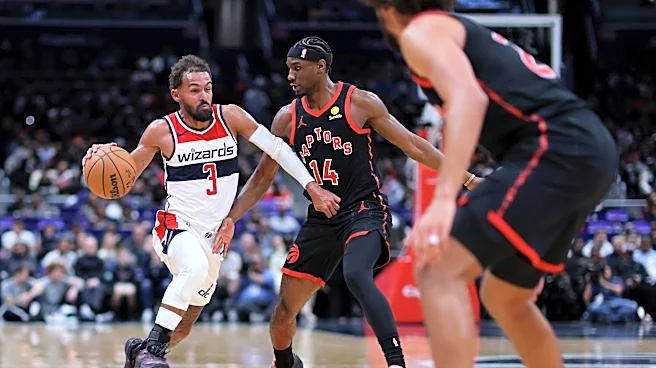


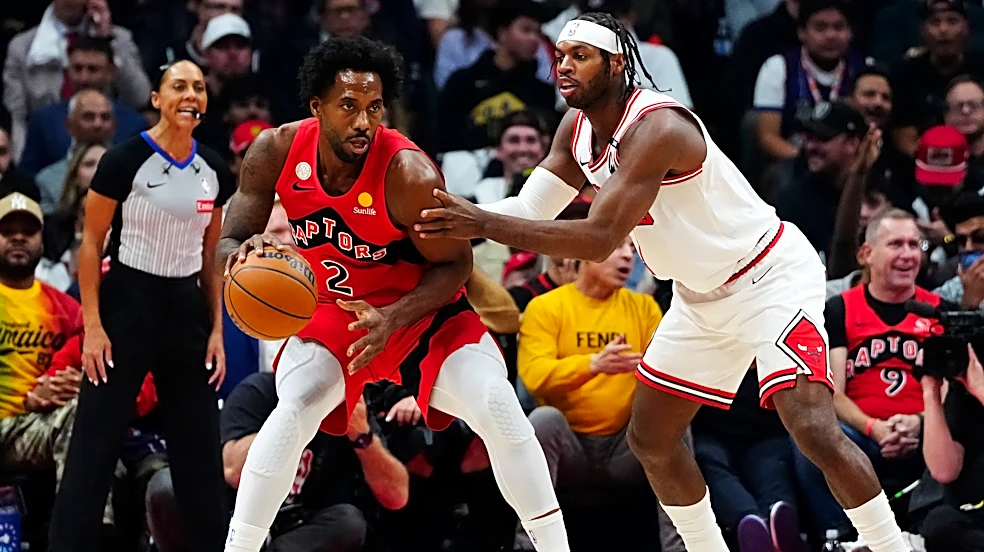

In the second game of the season, the Washington Wizards’ offense staggered, wheezed, and stalled, and they lost to the Toronto Raptors, 112-102.
This was Washington’s first real test of the season. The Raptors were good last season, and added Kawhi Leonard. That should be enough to elevate them into Eastern Conference contention, at least if Leonard can stay healthy.

The difference in quality was evident early and often, despite Toronto shooting just 20.6% from three-point range. Despite making five
fewer threes than the Wizards, the Raptors had the higher effective field goal percentage. They also won the battle on the glass and committed fewer turnovers. What kept Washington as close as they were was 35 free throw attempts to Toronto’s 21.
Credit Trae Young and some wordclass grifting for that free throw differential. He drew three fouls pulling up for jumpers when being closely followed by a chase defender. He got another by intentionally bumping into a defender and falling down.
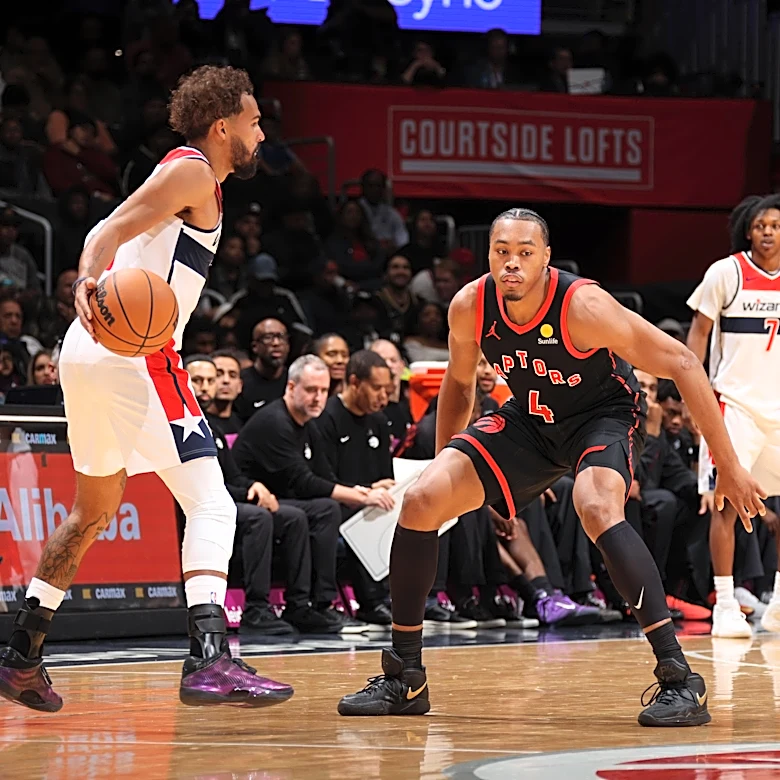
Washington’s offensive struggles were pervasive. More than a little credit goes to the Raptors, which is well stocked with long, athletic players who play hard, smart, and tough. Washington had multiple possessions in which they could not even get their primary action initiated because of strong ball pressure by guys like Ja’Kobe Walter, Jamal Shead, and Scottie Barnes, as well as effective denial one pass away.
In a potentially worrisome development, a few of those stalled, stagnant possessions involved Young and Anthony Davis trying to get into a pick-and-roll set. They’re supposed to be the veteran duo that knows how to attack a stout defense. Last night, they missed shots and committed turnovers.
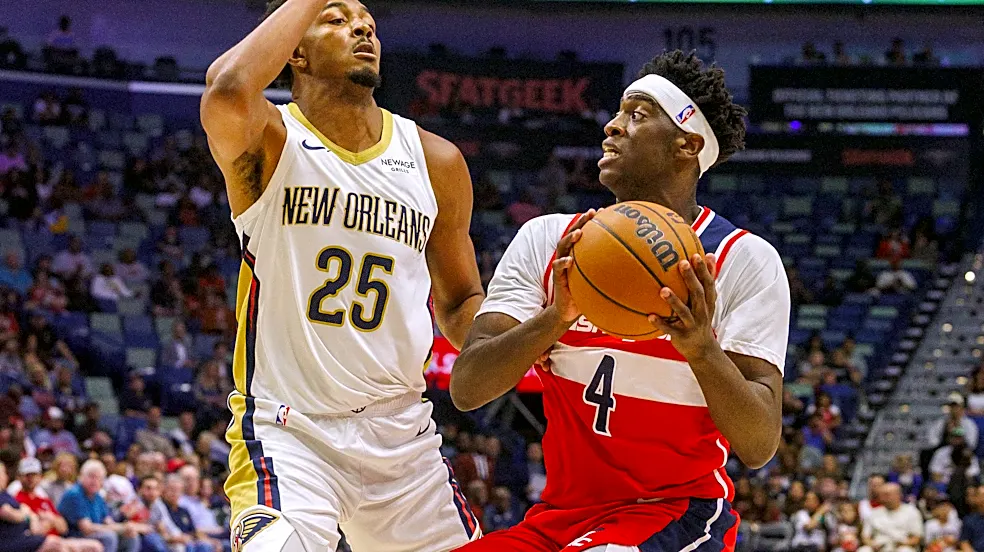
Kyshawn George had a very bad game — 2-9 from the floor plus 8 turnovers and 5 fouls. One word kept showing up in my notes about George’s miscues: “sloppy.” In a particularly destructive two-minute stretch of the third quarter, George had three turnovers. He needs a crash course in post entry passes — at least two of his turnovers were attempts to feed Davis inside. In both cases in my notes, Davis was being fronted and George made terrible passes directly to Raptors.
Notes & Observations
- Barnes is really, really good. He shot well from the midrange, and despite eight turnovers, made what felt like every important play throughout the game.
- Young is a bad defender. He’s short, slender, and…not strong. This season, he pledged to work on that end, and at least in the early going, he was true to his word. I liked one possession where Toronto ran a pick-and-roll. Young switched onto Barrett aggressively and forced him to pick up his dribble. It hobbled the possession. On another, Young got screened, and Immanuel Quickley popped free for what looked like a wide open three-point attempt. Young sprinted back into the play and contested from the side. Quickley missed.
- Young’s defense was far from perfect. Later in the first quarter, his attention drifted, and Quickley backcut him for a layup. The play was eerily similar to one from Washington’s opening night win against the Milwaukee Bucks.
- The Wizards opened the second half with a well-designed set play. Young started in the left corner and came up for a dribble hand off from Davis. He then turned the corner and drew the attention of both his defender and Davis’ — forcing the defense to make decisions on the move. Davis rolled, and Young threw a perfect lob for a slam.
- One nice offensive sequence from the kids. Bilal Coulibaly made a perfect post feed to Alex Sarr, who then made a strong move into the middle. That move drew weakside help, and Sarr recognized it and passed to the open man: George on the wing. George missed the shot, but it was good basketball that resulted in a wide open look.
- Young grifted two fouls by RJ Barrett in just six seconds on the game clock.
Four Factors
Below are the four factors that decide wins and losses in basketball — shooting (efg), rebounding (offensive rebounds), ball handling (turnovers), fouling (free throws made).
The four factors are measured by:
- eFG% (effective field goal percentage, which accounts for the three-point shot)
- OREB% (offensive rebound percentage)
- TOV% (turnover percentage — turnovers divided by possessions)
- FTM/FGA (free throws made divided by field goal attempts)
Stats & Metrics
PPA is my overall production metric, which credits players for things they do that help a team win (scoring, rebounding, playmaking, defending) and dings them for things that hurt (missed shots, turnovers, bad defense, fouls).
PPA is a per possession metric designed for larger data sets. In small sample sizes, the numbers can get weird. In PPA, 100 is average, higher is better and replacement level is 45. For a single game, replacement level isn’t much use, and I reiterate the caution about small samples sometimes producing weird results.
POSS is the number of possessions each player was on the floor in this game.
ORTG = offensive rating, which is points produced per individual possessions x 100. League average so far this season is listed in the Four Factors table above. Points produced is not the same as points scored. It includes the value of assists and offensive rebounds, as well as sharing credit when receiving an assist.
USG = offensive usage rate. Average is 20%. Median so far this season is 17.7%.
ORTG and USG are versions of stats created by former Wizards assistant coach Dean Oliver and modified by me. ORTG is an efficiency measure that accounts for the value of shooting, offensive rebounds, assists and turnovers. USG includes shooting from the floor and free throw line, offensive rebounds, assists and turnovers.
+PTS = “Plus Points” is a measure of the points gained or lost by each player based on their efficiency in this game compared to league average efficiency on the same number of possessions. A player with an offensive rating (points produced per possession x 100) of 100 who uses 20 possessions would produce 20 points. If the league average efficiency is 115, the league — on average — would produced 23.0 points in the same 20 possessions. So, the player in this hypothetical would have a +PTS score of -3.0.
Players are sorted by total production in the game.