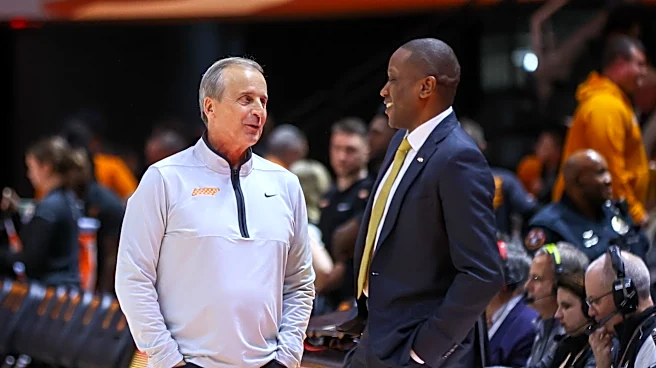





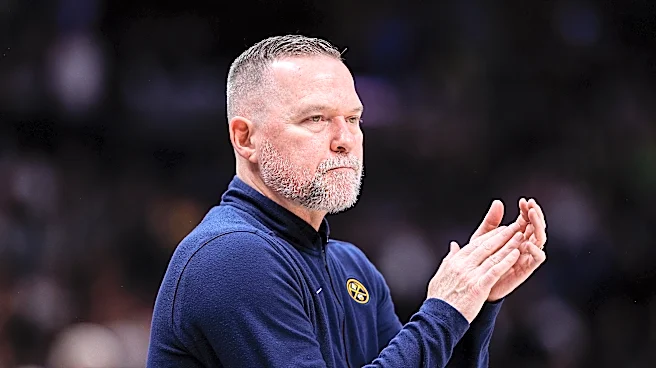

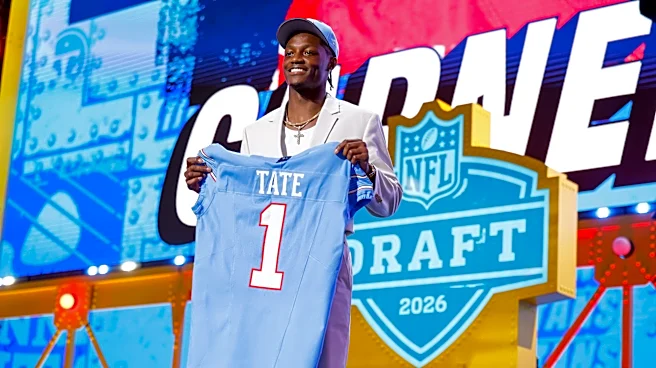
When Will Wade left North Carolina State to return to LSU, much was made about his NIL and revenue sharing budget set up to help him build the roster. Last season at NC State, it was rumored Wade was dealing with a roster in the $9-10 million range. LSU was apparently offering $12 million.
Why $12 million? Well, that’s the new number you “have” to hit…

In trouble if you’re under $12 million says this Big 10 coach.
For as long as I’ve written here, and even before that, I’ve talked about a level of investment
into your program that is required to compete at the highest levels. However, we’ve also known for years that the higher you go in spending, the more returns are diminishing. This was true 20 years ago with no money going to players, and it’s true today. On top of financial commitment, you also need universal alignment from the athletic department and university. But lots of money helps.
The problem being while there are an unlimited amount of players available, the number of good players who can help you win at a high level is a lot lower. We have yet to really see a limit to what you have to spend in order to field a competitive roster. Two years ago spending a million on a player was nearly unheard of, this year it’s the expectation.
Rumors are rumors, and unconfirmed reports are all over the place, but this offseason it’s been reported that multiple players were asking for north of $5 million, and there’s at least a couple guys on the Tigers roster who are certainly north of $2.5 million.
All of the money quoted have typically been in the dark. Most of the NIL + Revenue sharing agreements aren’t shared publicly. But Tennessee reportedly is going to pay Juke Harris $5 million. You’re in trouble if you’re under $12 million, and Tennessee just committed 40% of that to one guy. Let’s keep in mind that Juke was a really good player for a really bad team last year. But the Vols have also added high priced Jalen Haralson, Terrence Hill, and high scoring Dai Dai Ames, plus hot shooting Tyler Lundblade, athletic big man Miles Rubin, plus a mid major combo forward in Braden Lue. That’s 7 portal players, and signing players out of the portal is costlier than resigning your own guys… mostly.
So from $12 million or you’re in trouble, to more than $14 million to compete at the top of the big league?
On3 had a recent report on schools passing the $20 million mark that I wanted to highlight here:
An ACC front office staffer told On3 they expect roughly 15 college basketball programs to exceed $20 million and 25 programs to top $15 million in the 2026-27 season.
…
The $20 million club: Texas’ roster is pushing the $20 million mark, similar to Tennessee and Louisville, and consistent with what Sean Miller referenced publicly. Duke, which has traditionally built through the high school ranks and again holds the No. 1 class in the Rivals Industry Team Recruiting Rankings, is also expected to crack $20 million. The Blue Devils were active in the portal too, adding Wisconsin guard John Blackwell on a deal sources said is upward of $4 million.
If there are 15 College Basketball programs who are going to spend $20 million or more this season on their roster, that means there are going to be 11 programs AT LEAST who are going to spend $20 million and not make a Final Four, or 14 who are going to spend $20 million and not win a national championship.
The report continues to include teams spending up to $15 million with programs like Indiana, Texas A&M, Miami… even South Carolina is expected to spend upwards of $10 million or more on their roster. North Carolina, Louisville, Tennessee, Texas,
So if LSU is spending $12 million and South Carolina is spending $10 million, what are they getting in return?
For LSU they’ve signed Abdi Bashir, a shooter from Kansas State. Devine Ugochukwu, the backup point guard from Michigan State. And Mo Dioubate, a defensive minded forward who played at Kentucky and Alabama. Plus Marcio Santos, an international big man. That’s it so far.
South Carolina’s best signee is Kory Mincy, a combo guard who starred for George Mason last year. And maybe Davion Hannah, another combo guard who couldn’t get into the rotation at Alabama.
I don’t think South Carolina has spent $10 million so much as has that much available to them. But if that’s what it takes to just not be an embarrassment, versus spending another $12 million to not be in trouble, versus spending $14 million to compete at the top, these are all diminishing numbers just to end up with the same result at the end of the season as most everyone else.
When everyone has money, and everyone is spending money, you’re diluting the talent base enough to raise the floor for a lot of teams, lower the ceiling for more, and make the high major leagues a mishmash of teams fighting it out for the top half of the league. It’s how you get 4-14 Ole Miss getting to the SEC Semi-finals, beating three NCAA Tournament teams to get there. It’s how you get a .500 SEC team in the Sweet 16, and a 10-10 Big 10 team in the Elite 8.
And then the funny thing with sports is someone has to lose. Most teams lose. How much money are you willing to spend to change when you lose?
Last year Kentucky reportedly spent more than $20 million for their roster which lost in the round of 32. It’s all but certain there’s a team who is going to spend that much to fall well short this season. Success is fleeting and far from guaranteed. The money is there to reduce the likelihood of failure as much as possible, but not eliminate it altogether.