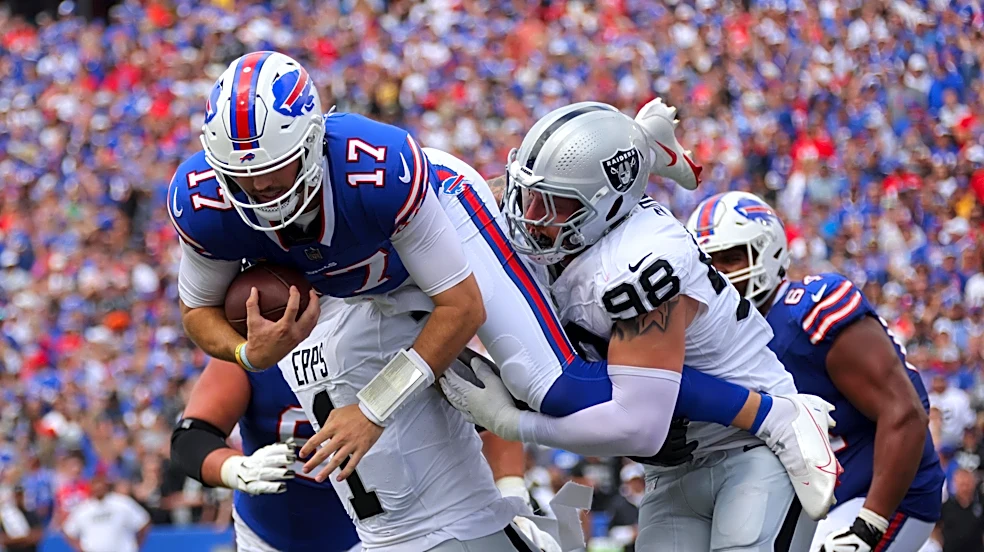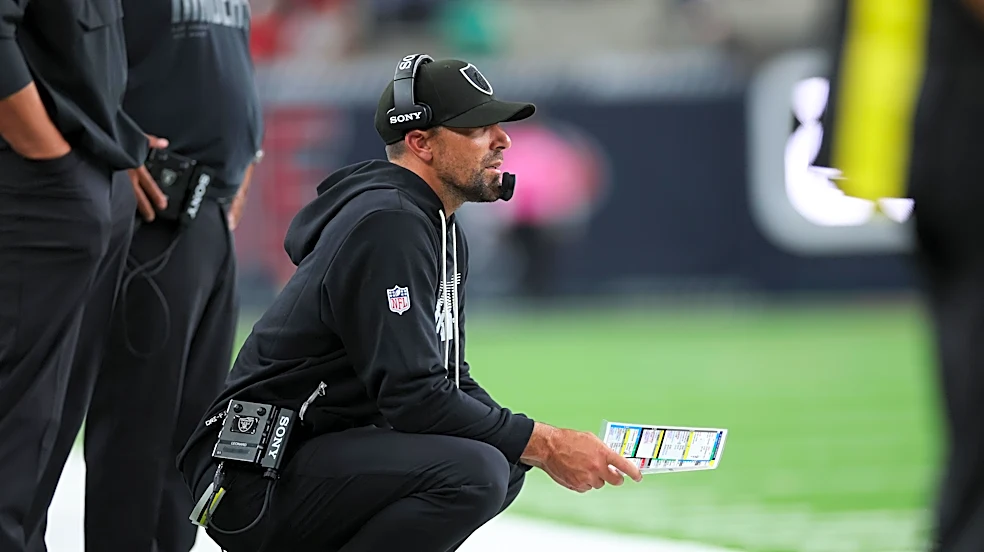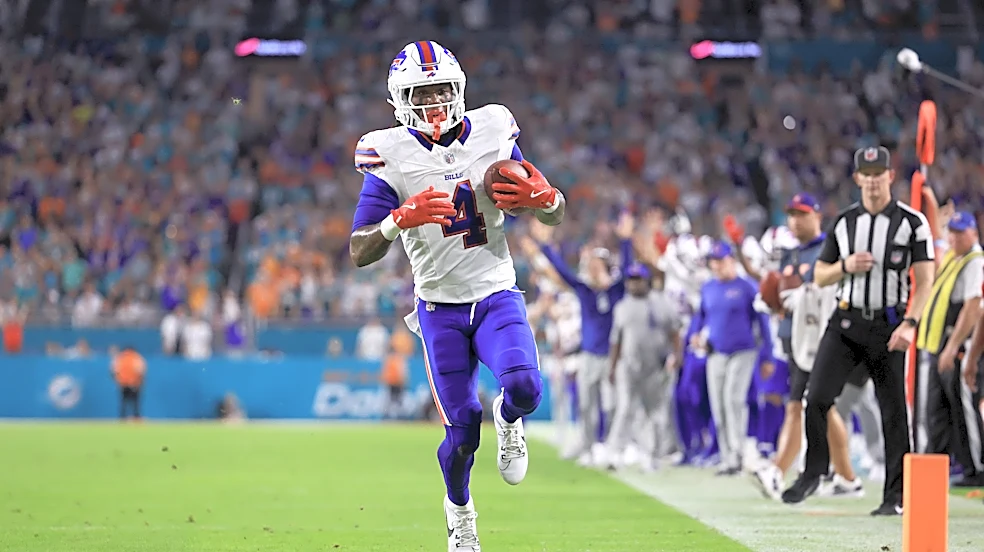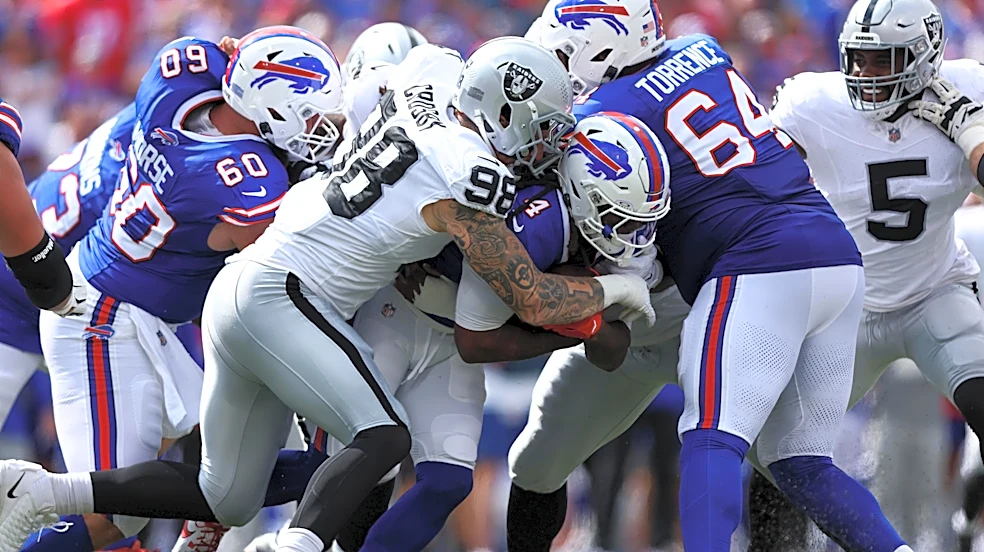



The Las Vegas Raiders aim to avoid a three-game losing streak in Week 6 against the Buffalo Bills. To preview the game for Raider Nation, Silver and Black Pride reached out to our friends at Buffalo Rumblings, and Matt Byham was kind enough to answer a few questions about the Bills.
Q: On paper, it doesn’t seem like Josh Allen has a go-to target this season since no pass-catcher enters Sunday with 20 receptions or 300 yards through five games. However, five players have double-digit catches and triple-digit
receiving yards. So, is there a receiver or two who you think will make a big impact in Las Vegas? On a similar note, is there an alpha in the group that Allen will turn to if he needs a big play?
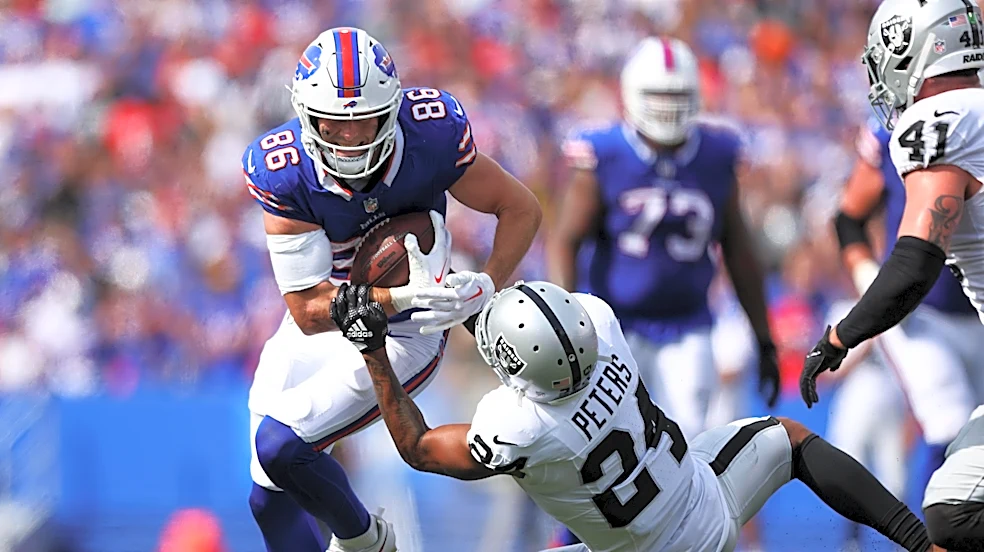
A: At the start of the season, the Bills’ passing attack was humming along well with wide receiver DJ Moore and tight end Dalton Kincaid leading the charge. Moore finally brought back the WR1 skill set lacking since Stefon Diggs’ departure. Defenses were forced to account for him whenever and wherever he lined up.
Moore’s addition really opened things up for Kincaid, who profiles like a huge and athletic wide receiver. Kincaid became the deep threat, and an efficient one at that. Moore suffered an AC joint sprain (separated shoulder) in Week 2, and that brought things crashing back down to Earth a bit.
Moore has missed only one game (Los Angeles Rams, Week 5), playing through the pain rather than landing on in-season Injured Reserve. However, he’s understandably not been the same player since Week 1. Now teams can devote additional resources to take Kincaid away, and that’s all but eliminated the deep passing play.
But all isn’t lost, with third-year wide receiver Keon Coleman taking a huge leap toward becoming a go-to target for Allen. Coleman isn’t a prototypical burner at receiver, but he’s someone who can play at any level of the passing attack.
Through five games, Coleman has made 15 catches on 18 targets for 224 yards and two touchdowns. That’s a highly efficient stat line, which is made more impressive by his 11 catches for a first down. Coleman has proven to be reliable and an important part of the passing game this season. He also climbs an astonishingly high ladder, making contested catches look like routine grabs. I expect Coleman to play a featured role, regardless of Moore’s status.
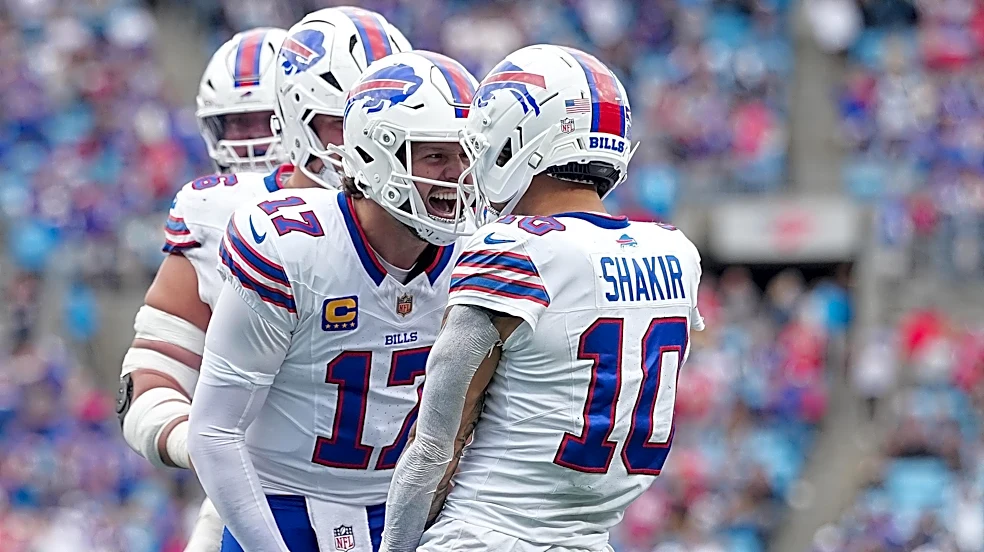
There’s also wide receiver Khalil Shakir, who may well fit the role of alpha. He often operates as Allen’s go-to in the early stages and in crunch time, and his chemistry with Allen acts as an irreplaceable rhythm setter. He’s a typical modern-day slot receiver, though Brady and Allen have tried to involve him downfield more. Shakir can take it to the house from the backfield if the defense doesn’t respect his speed and elusiveness in space.
Then there’s running back Ty Johnson, the team’s third-down specialist. He’s an incredible receiver out of the backfield and the speediest player in the team’s running backs room. Johnson is a legit problem for defenses, and he’s likely to play a big role if Allen struggles to get things going with more traditional receiving options.
Q: James Cook is a year removed from winning the NFL rushing title and is averaging 11 more rushing yards per game (95.4 to 106.4) so far in 2026. What makes him such a dynamic running back, and what’s led to the bump in efficiency this year, since he’s also averaging about a half-yard more per carry?

A: James Cook is incredibly talented, and it often looks like he’s on ice skates while everyone around him is stuck in mud. Cook’s agility and center of gravity are nearly unrivaled, able to take it to the house on one cut from any distance in a way that reminds me of Terrell Davis or even Marcus Allen.
Regarding the efficiency bump, you can likely point to fresh legs at the start of the season and his lethal one-cut approach. He also has a strong group of offensive linemen who thoroughly enjoy slobber-knocking defenders to clear a path for Cook. To boot, Brady is doing a better job mixing plays up on first down in 2026, where in 2025 he’d often have Cook shoulder the load.
Cook could be even better with added opportunity, despite a concerning amount of fumbles. He was discussed as the best dual-threat running back in his class, yet Cook is often an afterthought in the passing game. That and a perceived (and incorrect) notion that he’s a liability blocking on 3rd & Long means Cook comes off the field more than is ideal for a featured back.
Briefly returning to the fumbles, it’s one of the biggest issues facing the offense right now. Early comments by Brady suggested that Cook needs to get it under control or risk losing snaps. He walked that back a bit and said that Cook’s too good to sideline for too long (and likely benefits from supportive encouragement rather than the doghouse approach McDermott employed).
Defenders are tuned in to Cook’s fumble issue, and he faces a ton of punches on every carry. How he responds to that adversity this weekend could go a long way toward defining his season. Cook seems committed to improving, but it’s going to be an issue for him until he proves it’s fixed.
Q: One matchup I’ll be keeping an eye on this Sunday is the Raiders’ edge rushers (Maxx Crosby and Malcolm Koonce) against the Bills’ offensive tackles (Dion Dawkins and Spencer Brown). What would you say Dawkins’ and Brown’s strengths and weaknesses are, especially in pass protection?
A: I love this question and wish I were better-equipped to discuss the finer nuances of offensive line play. Dawkins is a force of nature. He’s bigger than life and one of the key engines to the Bills’ offense and a massive ambassador for the Buffalo area. He lost roughly 45 pounds in the offseason, which has allowed him to play with quicker feet and better twitch.
Dawkins isn’t perfect and will occasionally surrender pressures to highly athletic, twitchy edge rushers. He’s best as a brick wall, whether backpedaling or bull rushing, but he can be beat if a defender forces him into sloppy technique.
Spencer Brown looks like a professional wrestler who’s a better right tackle. A freak of nature in so many respects, Brown is a tsunami as a run blocker, and he’s athletic enough to take almost any defensive end to task headed his way en route to Allen. His height (6’8”) can be a detriment from time to time against edge rushers who like to anchor low pivots toward the pocket.
Where Brown struggles most is with injuries. He’s dealt with a back issue in multiple seasons, with a flare-up forcing him out early against the Rams. Brown will play Sunday; it’s just a matter of how well his back holds up.
Q: On the other side of the trenches, and in a similar vein, two Buffalo defensive linemen who have really caught fire this season are defensive end Greg Rousseau and defensive tackle Deone Walker. How would you describe their respective skill sets, and what has led to their ascension?

A: More massive human beings! Greg Rousseau (Bills Mafia calls him Groot) is a 6’7” nightmare for an offense. It’s fair to say that Rousseau was miscast in prior head coach Sean McDermott’s 4-3 system. Now playing outside linebacker for the first time in his career, Rousseau has more space to operate and cause havoc for linemen trying to engage with him.
Rousseau is extremely fast for a defensive end, and his speed is magnified operating away from the trenches a bit. He’s playing a brand of football most had never seen before, combining a relentless motor with a physical profile seen only among the top 1% of his peers. Rousseau is a fun watch, and it’s possible he’s just getting started on a path to true greatness.
Then there’s Deone Walker. Why did teams pass him up in the draft? Well, his size was part of the issue. At almost 6’8” and over 330 pounds, many wondered how and where Walker would fit in on the defensive line. Would he be able to hold anchor with a high center of gravity, and could he meet the athletic demands required of an NFL defensive lineman?
Walker, an absolute unit, carved his own path, becoming a handful as a pass rusher no one could contain. Forget pegging him in as a run-stuffing defensive tackle. Walker is his own brand of special, and he refuses the confinement of pigeonholes. The best is yet to come with Walker, who also shed weight in the offseason. Now he looks the part of a 3-4 defensive lineman ready to be shot out of a cannon. If Walker’s on the field, he’s coming for the quarterback.
In general, both players’ ascension ties back to the defensive change to an attacking mentality under new defensive coordinator Jim Leonhard. The defense, and Leonhard, have come under a lot of fire early on — though they are sneaky good defending the run. That said, the defensive line (and by association the outside linebackers) is playing better football than anything seen in McDermott’s system (which was better against the pass). Leonhard’s system, which is essentially a hybrid of what he wants to ultimately run, has allowed Rousseau and Walker’s best attributes to shine. Once Leonhard gets more of the players he covets on defense, we could see another level unlocked for Rousseau and Walker.
Q: That being said, the Bills’ defense comes into the game ranking 28th in points per game allowed (28.2) and 30th in yards allowed per game (404.0). If you were Klint Kubiak, how would you go about attacking Buffalo’s defense?
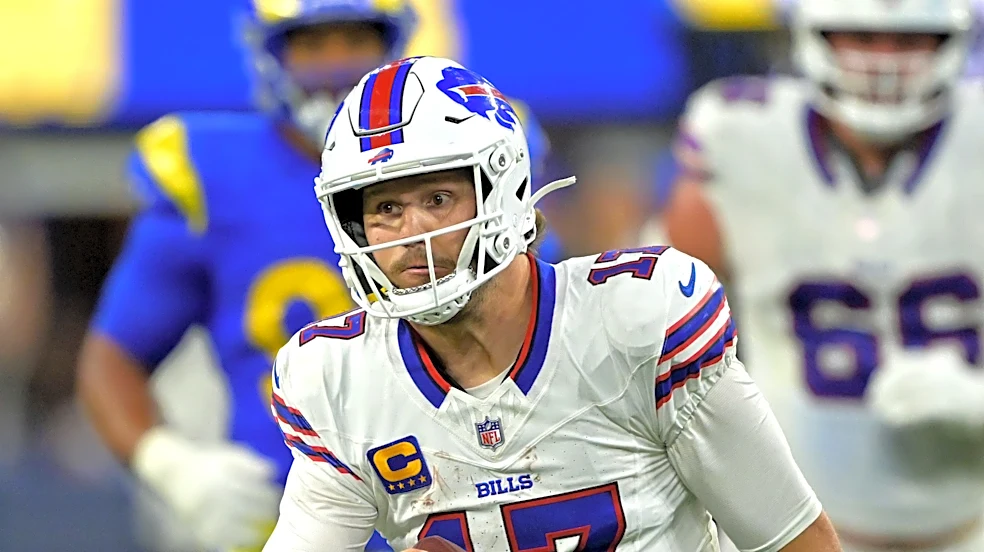
A: I’d plan for a shootout and be well aware of how many consecutive wins the Bills have when giving up 31 points or more to opponents. It’s eight, including two such games this season. As such, I’m going down swinging for the fences because of Josh Allen.
Interestingly, the Rams played keep-away with Allen Monday night. It worked to limit his opportunities in the first half, but they couldn’t keep Allen and the offense out of scoring range. That effort simply shortened the game, while failing to secure a lead at halftime. Keeping Allen on the sideline is a decent plan, but so far this season it only works well if the offense scores touchdowns on each possession.
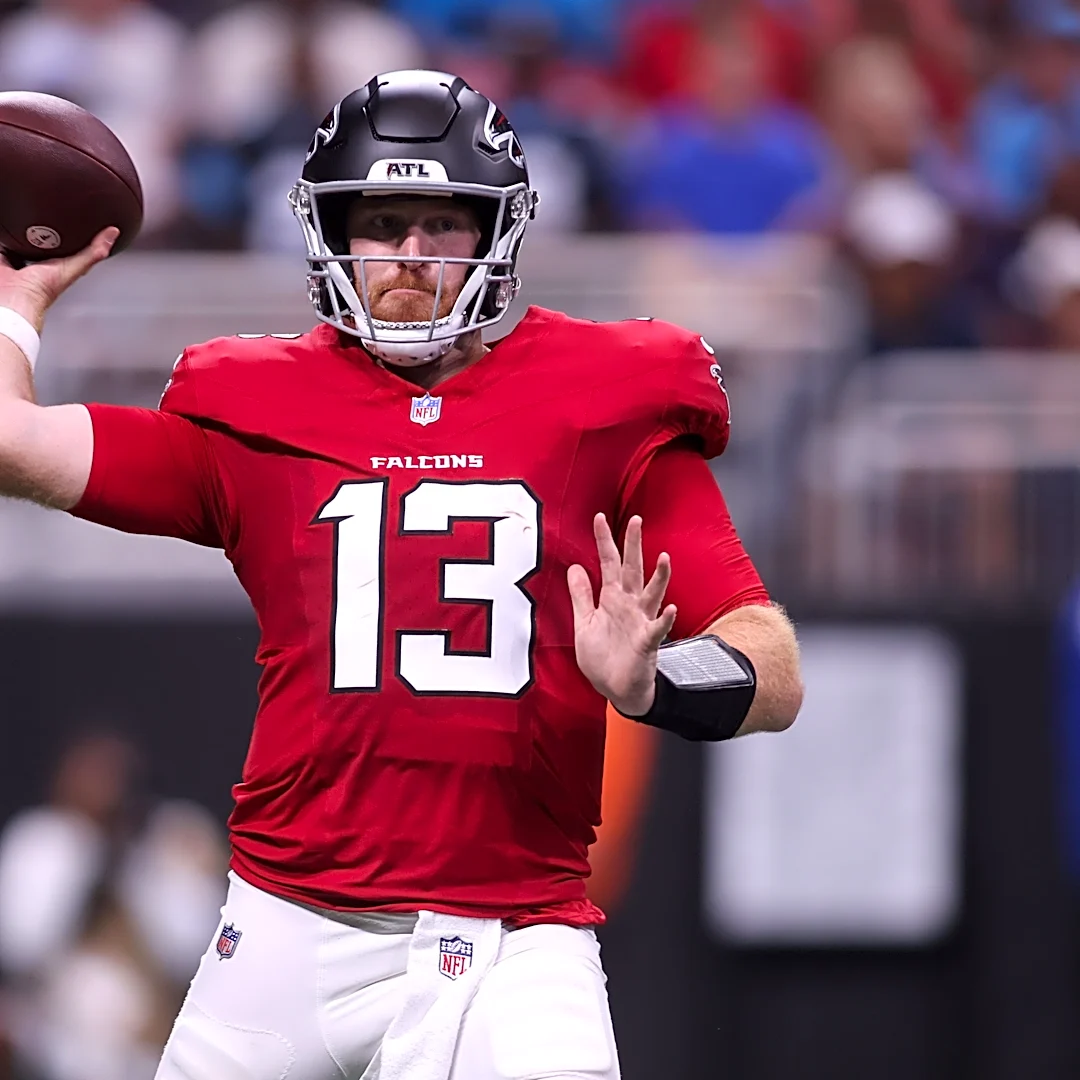
To that point, I wouldn’t waste a ton of time trying to establish a running game. Instead, I’d devote whatever resources are necessary to account for Rousseau and Walker, while testing the inside linebackers and defensive backs early and often. Kirk Cousins may not have a rocket for an arm, but he’s dangerous enough to find the flaws in Buffalo’s secondary.
I fully expect Brock Bowers to take advantage of whoever tries to cover him. It might be smart to use Jeanty in the passing game to perhaps further open up plays downfield to other receivers.
On defense, I’d constantly have a spy on Allen, and I’d fool him with pre-snap coverage “lies” that throw off his mojo post-snap. I’d have also probably spent a lot of time studying the film from Buffalo’s games against the Los Angeles Chargers and New England Patriots.
If all else fails, then I’m spray-painting something on Allen’s jersey to tick off Maxx Crosby. This should be a fun game with a lot of offensive fireworks!