







With the current Collective Bargaining Agreement (CBA) set to expire in December, MLB and the player’s union have begun initial labor talks. The last labor talks were five years ago, when players were locked out through mid-March, pushing the start of the season back a week, but avoiding the loss of any games. This negotiation may end up being even more contentious. Owners will reportedly push pretty hard for a salary cap, despite Commissioner Rob Manfred dancing around the issue.
“When I talk to
the players, I don’t try to convince them that a salary cap system would be a good thing. I identify a problem in the media business and explain to them that owners need to change to address that problem. I then identify a second problem that we need to work together and that is that there are fans in a lot of our markets who feel like we have a competitive balance problem.”
Both sides have collected up large piles of cash in case there is a long fight. That allows them to dig in and keep the players or team employees paid and taken care of when and if revenues dry up. Currently, the MLBPA has about $415 million in its war chest and the MLB central fund has around $75 million per club set aside. Everyone is assuming there will be a lockout and are acting accordingly.
The league is going to push for a cap, arguing for more competitive balance. The Dodgers are spending super aggressively leading into this negotiation and pushing the upper bounds of team salary disparity, making me a bit conspiratorial that they are doing so to better make the case to rein in spending. Through profligate spending, they have won two World Series in a row, and are favorites to win another title, this fall. On the other hand – the Mets have spent a lot, without a lot of success. We all know the owners really want a salary cap because it benefits them, though it would almost certainly come with a floor that would force some of the miserly owners to spend more. Let’s be clear, this is negotiation between companies and some of their workers, fans and media do not matter and are not the reason any of this is happening. Everything right now is posturing, and everything they push for is really just trying to get as much of the pie onto their own plate rather than on the players’ plate.
The Padres may have changed the negotiations a bit with their recent sale. The Padres have been a unique team in lot of ways for most of the last decade. AJ Preller started handing out some large contracts in the late 2010s to guys like Eric Hosmer (oops) and Manny Machado despite San Diego being a small media market by pro sports standards. They are currently ninth in payroll at an estimated $213 million for 2026.
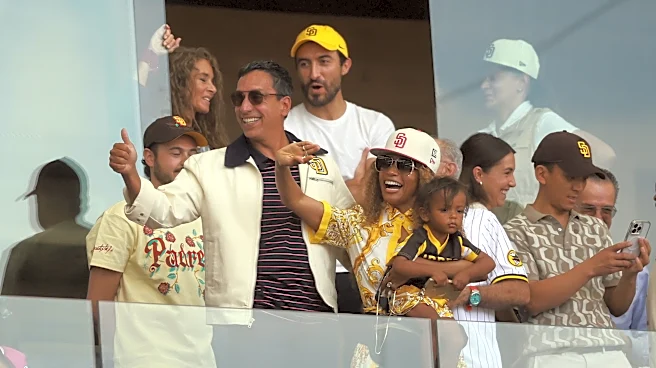
And yet, this small market team with a large payroll just sold for a record $3.9 billion dollars to an ownership group led by billionaire José E. Feliciano and entrepreneur Kwanza Jones. This is in part why the owners have to push for a salary cap using a competitive balance argument rather than a fiscal argument. Owning an MLB team is a great business to be in. As much as owners like to cry poor, they all walk away with giant windfalls or they continue to own the teams year after year, so it is hard to believe that they are really struggling in a real way. Just look at how well the Seidler family fared with this sale.
Peter and Tom Seidler were part of the group that bought San Diego for $800 million back in 2012. You will notice that $3.9 billion is a lot more than $800 million. So, the sale was for almost five times the original price at a compounded annual growth rate (CAGR) of 12%. Except that is the return if they made $0 for the entire 14 years of owning the team, which seems unlikely. Think about the Royals under David Glass. Dan Glass was installed as the team president, taking a salary for nearly 20 years. I would consider that compensation part of the return Glass got from owning the team, and also my dream job if you want to buy the Royals, dad! Similarly, both John and Peter Seidler spent time as chairman for the Padres and held various positions for O’Malley Seidler Partners, LLC, the entity that technically owned the team.
For an idea of what compensation looks like, I did go look at the publicly available information. Terry McGuirk is the chairman and CEO for the Atlanta Braves, who are a publicly traded company. In the latest disclosures for their annual meeting this year, you can see his 2025 fiscal year compensation was made up of a base salary of $1,000,050, a target bonus of $2,000,000, and long-term awards of $6,800,000. That is a grand total of $9,800,050 for the year. The other publicly traded team is the Toronto Blue Jays, but they are under the Rogers Communications umbrella, which made it so I could not figure out exactly what Mark Shapiro is making. All I am trying to say anyway is that these owners install themselves, or their family members, in positions to take many millions out year after year while owning the team. It a team “lost” money, part of that negative net income could be directly attributed to money the owners are basically paying themselves. That can be even more if there are any dividends or other form of distributions from earnings themselves.
Anyway, the previous ownership group walked away with a nice return and the principal owners also were making tens of millions per year in one way or another for the past 14 years. Turning that into a percent return isn’t possible without knowing how much of the original principal for the team they put in as a family. It should be fairly easy for the MLBPA to show that teams are doing great financially even with some of the weird problems with RSNs and MLB having to take on some of the broadcasting. Just pointing to San Diego selling for $3.9 billion and yelling scoreboard is not a terrible strategy. Also, around the last CBA discussion, I wrote that the split of revenue going to players in the MLB is lower than the NFL or NBA. I think that split has gotten even a little worse based on 2025 revenues and payrolls. The players should be getting more money as a group right now, not the owners.
It has been over 30 years since the league let a lock out actually take away baseball games, and I can’t imagine either side wants that to happen again next season, especially with the league setting up for expansion in the next few years. Will the players get locked out this offseason? Almost certainly yes. Will they have enough leverage to get a better deal than last time? I think they should, but it is hard to know the level of aggression that the owners plan on exhibiting in this go around.
It just seems foolish for them to push the players so hard that they endanger games when their assets are appreciating at a healthy rate and they are raking in as much revenue as they are as evidenced by the value of a small market team getting sold for such a high price tag. I also never underestimate the greed that people are capable of and recognize that the MLBPA could be unreasonable too. But for now, I am hopeful that the two sides can work something out this winter and I think the players got another arrow in their quiver out of this transaction.