





Tuesday night, the Boston Celtics drafted Chris Cenac Jr., a kid who’s just shy of 6’-11” with a rather exceptional 7’-5” wingspan.
In the summer of 2025, he was one of the top rated recruits in the country coming out of Link Academy, a small boarding school in the Ozarks just north of Branson, Missouri.
Cenac ended up there when his coach at Isidore Newman School in New Orleans was suspended. The school’s basketball coach, Randy Livingston, is a twelve-year NBA vet who ran afoul of the Louisiana High
School Activities Association. He is alleged to have committed recruiting violations, but under the rather draconian system in place, he was never accused of specific violations that could be contested. At the same time, the LHSAA imposes a strict prohibition on recruiting for athletic purposes, and Isidore Newman is a private school with a long and somewhat suspicious tradition of fielding very talented basketball players, given that recruiting for athletics is a major no-no.
With his coach suspended for the 2023/24 season, Cenac transferred to Link Academy, which doesn’t operate under the aegis of state high school activities oversight. Instead, Link competes in the rarefied air of the country’s sports academies, a group of schools that exist primarily to churn out professional athletes.
These schools bring in athletes from around the country and typically charge annual tuition fees that are equal to or in excess of the fees charged by colleges and universities. Tuition at Link Academy starts at $65,000 per year. The fee includes 19 meals a week and accommodation in ‘lodge style’ dorms along with intensive athletic training and “NCAA approved” academic coursework.
Link is a member of the Nike Elite Youth Basketball League Scholastic, a collection of 15 high schools that ranges from Arizona all the way to Massachusetts.
Cenac ticked all the corporate sponsored checkmarks that a kid under 18 could tick, from competing in a Nike-sponsored league, to participating in a Chipotle-sponsored national high school tournament and the Puma Pro16 circuit, to landing McDonald’s All-American status and participating in Jordan and Nike branded all-star games.
He participated in the USA’s U17 team and won a gold medal in 2024 as a bench player.

During Cenac’s junior and senior years in high school, he had a couple people assist in creating a seven part documentary, Strive, that presents game highlights interspersed with interviews and life moments. The same crew put together a two-part documentary leading up to the draft.
He spent his senior year in a basketball paradise, being whisked around the country and testing his skills against the best players his age and generally dominating them.
He was a five-star recruit, and judged the seventh best high school basketball player in the country by ESPN.
Now, there are players who come out of that environment with a swelled head and a sense of accomplishment. Their overriding goals have been met, and their focus is on showcasing their abilities during a year of college basketball. They’ve got people fawning over them, telling them how great they are, and just generally making a big deal out of them.
These players often choose universities where they are told that they will be the team’s focus—that they’ll be able to stand out for scouts and land a spot in the NBA lottery.
That’s not the choice Chris made.
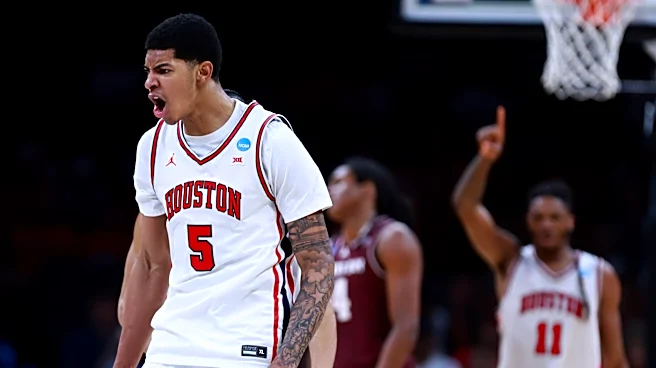
During his senior year at Link, Cenac committed to the University of Houston, coached by Kelvin Sampson.
Sampson, who’s been coaching since the 1970s, came out of UNC Pembroke, an institution founded for the benefit of the Lumbee Tribe, of which Sampson is a member, arriving at the University of Houston from a winding path that started off as a graduate assistant under Hall of Fame coach Jud Heathcote at Michigan State, and included stops at places as diverse as Montana Tech and the Milwaukee Bucks.
Sampson has a career record of 828-362 as a head coach, with a 33-21 record in the NCAA tournament.
He also has a reputation for being a hard-nosed guy that pushes his players to get the best out of them.
Cenac had been recruited by dozens of universities, with the most notable also-rans being Arkansas, Tennessee, Kentucky, LSU and Baylor.
Cenac chose Houston specifically because of Sampson’s coaching style. “I know Coach Sampson is going to coach me hard. I want that and I need that. I am a coachable player.”
Chris didn’t choose a school that would give him star treatment. He went with a coach who promised only that he would make him a better player. College was not a reward for being one of the best of the best, it was just another stop on the road.
At a commitment celebration held at a Buffalo Wild Wings which already had a NIL deal in place with Cenac, he praised Sampson and his staff, saying, “they know what I need to work on to get to the next level.” In a Bleacher Report video chat with Sampson after his commitment, Cenac said, “I’m ready to work. I’m ready to get better.” For his part, Sampson said, “Chris is a coach’s dream.”
Sampson added, “He wants to be good. He’s got the talent. He’s got the drive.”
When asked for a parting message to Sampson, Cenac reiterated, “I’m ready to work.”

In a podcast appearance leading up to the draft, Cenac told Ball Is Life hosts Tor’i “Bionic” Brooks and Devin Williams (“DevintheLab”) about a memorable occasion when Sampson ‘ran him’ because he failed to hustle after a rebound he had no chance of retrieving. This was, Cenac said, an example of Sampson holding players accountable.
Cenac was projected as a top lottery pick before the season started at Houston—but his draft stock fell based on game-time performance. He was overshadowed by teammate Kingston Flemings who went to the Hawks with the eighth pick. His own stats were a rather pedestrian 9.5 points and 7.9 rebounds per game.
Cenac contextualized those numbers during his Ball Is Life podcast appearance, noting that Sampson had a system, and that his primary focus as a player was defense. Asked what had improved the most during his season with Houston, Cenac said it was his basketball IQ and his ability to play the “grit” part of the game.
Cenac pointed out that his game changed significantly from high school to college, before adding that he was “fitting into a role” in college. Cenac said that his goal was to help his team win, “however they need me to.”
These words ought to be music to the ears of anyone who favors the green and white.
After the Celtics drafted Cenac, Sampson called Boston “the best fit” for Chris, and continued to praise Cenac, “He’s never had one ounce of bad body language. He’s never ever been late. He’s always one of the first ones there, last ones to leave. He’s like a huge sponge.”
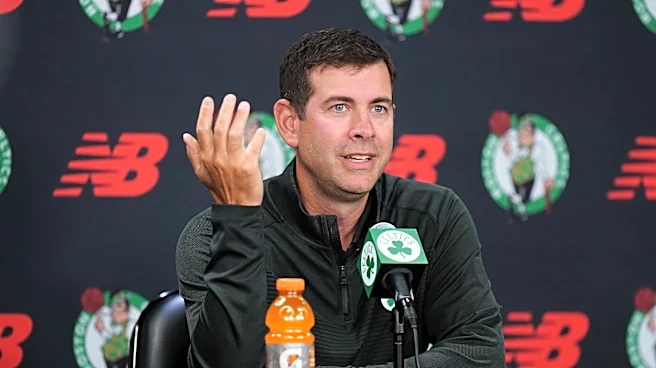
Celtics GM Brad Stevens noted that, at his age, Cenac was still a fairly raw product. “I hope we’re good enough that it’s hard for any 18-year-old or 19-year-old to come in here and be really good out of the gate.”
Even though Stevens said that there was no expectation that Cenac would be able to ‘add value’ right away, the team has high hopes for Chris. “He’s been taught well and been held to a high standard. I like that, and he will undoubtedly come here and be eager to jump into it.”
“I’m not where I want to be,” Cenac told the Ball Is Life crew. “I can’t get complacent.”