



Despite a great showing of hockey over the last four weeks, the New Jersey Devils are almost certainly not making the playoffs this season. With seven games to go and eight points to gain on eighth place, too many teams need to lose too many games while the Devils would need to win out for their one-in-a-million (or worse?) chances to play out favorably. Although this season has been frustrating at the least and infuriating at the worst, we have learned more about the team after the Olympic break.
The system the Devils were playing under for the majority season was not just getting poor results, it was a tough watch. I wrote about it and Tim did a deeper dive. From Tim’s article, this particular point plagued the Devils during that time:
One of the reasons why I think there is a systems mismatch is what we use is designed to favor O-zone cycling up high. Hockey has evolved quickly, and this low-to-high/point shot system is already outdated and most modern, 2026 systems, call for slot line and “royal road” chances that make the goalies move. Further, we have minimal personnel down low to create traffic in the offensive zone and our defensive and neutral zone systems don’t lend themselves to creating rush offense and exploiting team speed which should be where this team excels.
If you have continued to watch the team despite their place in the standings, you might have noticed the systems change that has been put in place since the Olympics. The Devils have embraced the rush, and they have moved away from the high cycle. Only one Devils forward in Jack Hughes has the combination of speed and hands to keep the puck by the blueline, so he still works from that position from time to time. The difference now is that Jack does not look for shots down the middle (and more importantly, neither does Jesper Bratt). Instead, Jack uses the middle of the ice to vary his attack angle, using his wings for one-timers and quick strikes on the goaltender. Get the goalie moving, shoot from all angles: that’s the Jack Hughes way.
Other players have benefitted greatly from the changes, too. Timo Meier looks more like himself, and Nico Hischier is scoring like a 90-point center since March 1 rather than a 60-point center. Cody Glass’s line looks great on the rush, and this has even continued even with Arseny Gritsyuk ending his season by electing for an early surgery. It’s not often you see three righties move on the rush like this. But looking at all of the Devils’ seven goals from last night, how many times do you see a third skater by the blueline? Or how often do you see three or four attacking skaters?
You can see the difference in approach on Hamilton’s goal, even as Jack handles the puck out by the blueline. Jonas Siegenthaler sees the play developing and starts going to the net: this is a play on which he would have been stapled to the blueline from November to February. Bratt is a bit slower to pick up that he should get into an attacking position, but he is at least moving in the right direction and opening himself as a passing option that can cut down toward the dots for a shot. Before the Devils’ system opened up, that general play might have still happened, but it would have been a telegraphed 73-MPH flutter shot from Bratt with three Devils on the blueline rather than a quick 85-MPH strike from Hamilton with three Devils taking up space in the lane.
Let’s look at another Jack and Siegenthaler-created goal from recent times.
The wide range of this line, working from wall to wall and using the middle of the ice to create their shots makes life difficult for opposing goalies. Again, the Devils benefit from Jonas Siegenthaler being willing to join the attack. If Brown is left waiting there, like he would have been earlier in the season, that play turns into a weak shot for the meager hope of a rebound, if not a turnover. But Siegenthaler coming down the middle allows Bratt to stay by the net while Brown and Hughes work from the wings. The fake shot from Siegenthaler makes Annunen hesitate, and Bratt comes out from behind the net just in time for Jack’s one-timer. It’s great work and another example of how Jack Hughes needs that “royal road” to maximize his productive potential.
The Tough Part: Who Gets the Credit?
I have not shied away from criticizing Sheldon Keefe throughout this season, but my instinct would be to say that he deserves some credit for unlocking the team’s offense since the Olympic break. But, if I were a reporter in the locker room, instead of stirring the pot on Simon Nemec trade rumors, I might be asking Sheldon Keefe: why not make these changes in November or December? Why not January? Why was the team playing such a conservative offensive system?
When things were getting heated in postgame interviews a few months ago, and it looked like a coaching change might be on the way, Keefe said something that has stuck with me throughout every minute of Devils hockey since. I quoted it in my piece that touched on the coaching staff, which is linked at the top of the article. Keefe said:
I know what this team needs, and I’ve gotta get them going. But I’m also well aware of the business, and how it works. To me, this is…uh…we can use this as an organization as a great opportunity to take great steps in the big picture. And, because, we have a lot of things we need to do better at, you know. And uh when we lose focus on that and we get ahead of ourselves these kind of things happen. We got work to do to become a real hockey team. I think there’s a perception that we were a real hockey team before the work was put in and you get exposed.
Just a month later, Sheldon Keefe had the “opportunity” to take a step back and tweak the system during the Olympic break, and the Devils have been scoring over four goals per game since March 1 as a result of those tweaks. This begs some really good questions that I would appreciate Devils beats focusing on instead of, again, fanning the flames of anger on the Simon Nemec situation since they already exhausted Dougie Hamilton earlier this season. Those questions are:
- Who wanted the conservative, three-high system earlier this season? Was it Keefe’s design or something Fitzgerald pushed down?
- What was Keefe referring to when he said he knew what the team needed? Was it a personnel change to make the old system work, or was it the system change implemented after the Olympics?
These are important questions to ask, and it’s even more important for David Blitzer to know the answer. Depending on what NHL rumor mill you’re listening to, one of Sheldon Keefe or Tom Fitzgerald seems to have a very hot seat.
Or, if you put stock into Pagnotta:
Where Does the Organization Go From Here?
So, the Devils have to figure this out internally, because I have very little faith that any answers will be found out through the media. I would have agreed with a coaching change in January, or even December because of the point that Pagnotta made. But now, I have questions about who was directing what throughout this season. Was Fitzgerald so shell shocked by the team’s losses to Carolina that he instructed the staff to run a system for a gritty team from the 1990s? Or was it Keefe’s idea to play some misguided “real hockey” only to find out that this team is built to score quick strike goals on the rush? The problem with their style of play is probably not both their faults.
Some things are squarely Fitzgerald’s fault, though. He always sits on his hands until it’s way too late, and that reared its head again this year. I’ll credit him for the Palat move, but your best move of the season should be something more than a cap dump. In general, he takes too long to admit mistakes and entrenches himself to try and prove that he makes good decisions (see: Markstrom extension), which only compound those mistakes.
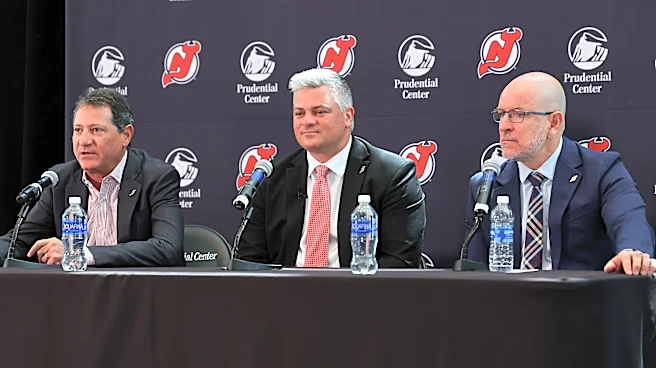
At this point, it almost seems like the Devils need a third party to come in and judge which one of the two is more at fault for the team’s dysfunction and how long it took to get to this good hockey. With the recent rumors that, if Fitzgerald stays, the team may decouple his roles as General Manager and President of Hockey Operations, I can think of one guy a lot of Devils fans used to trust. This guy has no issue with firing people, too. Performance and command of the locker room dictates all, and I would trust him to make these decisions more than David Blitzer, who has his hands in too many cookie jars to be that invested in this team’s day-to-day activities or the gritty details of their on-ice systems. Just maybe, this team needs a familiar face as that President of Hockey Operations.

This team needs a hard-nosed fixer to sort this out. He doesn’t need to get too involved beyond that, but if there’s one guy I trust to have a strong hand in pursuit of high-quality hockey, it’s Lou.
Would ownership go for it? Probably not. But they should consider it. Somebody needs to come in and check everything everyone has been doing, from the top to the bottom.