



The walk up to the Stadium of Light felt different.
Well, it was different as I crossed over the Keel Crossing for the first time — but the game carried a weight that settled into people’s steps and conversations, a sense that this wasn’t just another fixture on a long calendar.
The men had done their job the previous weekend and the feeling of victory still hummed through the city like a low current. It sharpened the anticipation, raised the stakes and reminded everyone that derbies aren’t polite
disagreements between neighbours.
Instead, they’re collisions of identity and pride. Moments that can define a season and opportunities to tilt the balance of bragging rights and to disrupt the ambitions of the other side.
Sunderland Women had the chance to do all of that in one afternoon. Three points would’ve been sweet; hindering Newcastle’s promotion hopes would’ve been even sweeter, and the chance to claim a first league derby win since they joined the pyramid would’ve been the sweetest of all.
The noise inside the ground before kick-off reflected that feeling.
It wasn’t the usual pre-match hum. It had an edge; a pulse, the kind of energy that makes you stand a little taller, and when the team news filtered through, the atmosphere shifted again.
In goal, Demi Lambourne brought a sense of calmness. Caragh Hamilton at left back and Jessica Brown at right back offered balance and pace. Brianna Westrup at centre back provided experience and authority — then came the name that made every Sunderland supporter straighten up with pride.
Chloe Paxton. Seventeen years old. A product of the club’s pathway and a player whose potential has been whispered about for months. Making her senior debut. In a derby. At centre back. At the Stadium of Light. In front of thousands.
It was impossible not to feel a surge of emotion for her and for her family. This club has always been at its best when young players rise through the ranks and take their place on the biggest stages, and Seeing Paxton walk out with the team felt like a reminder of who Sunderland are at their core.
In midfield, Marissa Sheva and Natasha Fenton formed the pairing that’s become so familiar. Katie Kitching operated as the ten; Mared Griffiths was on the left wing, Katy Watson the right and Eleanor Dale led the line. It was a team built on graft, pace and belief — a team that looked ready to meet the moment.
When the whistle blew, Newcastle came out with a sharpness that forced Sunderland onto the back foot.
The visitors pressed high and earned a string of corners in the opening ten minutes. Each one felt like a test of nerve with the ball flashing across the box more than once and a couple of half-chances drifting wide. Lambourne didn’t need to make a dramatic save but she certainly had to stay alert. The pressure and the danger were real.
The opening spell belonged to Newcastle and Sunderland needed time to settle, yet once the Lasses found their footing, the match shifted.
The wings became the route forward, with Watson’s acceleration and Griffiths’ directness beginning to stretch Newcastle’s shape. The passing became sharper, the confidence grew, and the crowd sensed the change and responded with a lift in volume.
The space that opened on the flanks also created room for Kitching to operate centrally.
The New Zealand international thrives when she can glide between the lines — and she began to do exactly that. She picked up the ball near the centre of the pitch, drove forward and skipped past two Newcastle players with a burst of control and intent.
It looked like she might carve out a chance herself, but the final touch escaped her and the ball was cleared to Sheva, who didn’t hesitate, shaping her body and delivering a cross that deserved to be replayed again and again.
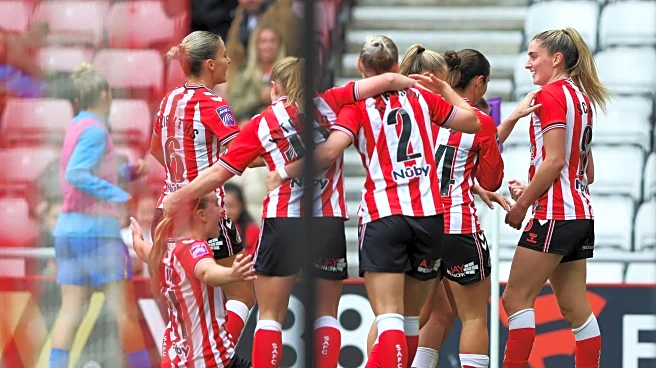
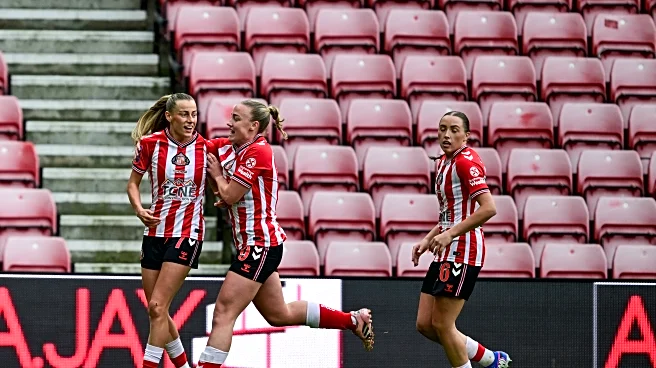
The ball curled beautifully toward the back post, dropping into the perfect space as Watson arrived with conviction and hammered it home — with the eruption inside the Stadium of Light instant, wild and cathartic.
Sunderland had never taken the lead against Newcastle in a competitive league meeting. To do it at home, seventeen minutes into the match with a goal that came from pace, intelligence and sheer desire made it even sweeter.

The goal lifted Sunderland.
The players moved with more assurance, the crowd roared with every tackle and every forward run and the Lasses pushed Newcastle back without carving out another clear chance, but still controlling the tempo and dictating the emotional tone of the match.
Newcastle had more of the ball as the half wore on, yet they still struggled to trouble Lambourne.
Their possession felt sterile and their attacks lacked incision. Sunderland’s defensive structure held firm and at the heart of it stood Paxton, who played with a composure that defied her age. She tracked runs, stepped into challenges and read the game with a maturity that made it easy to forget she was making her debut.
Shania Hayles barely had a moment of comfort as Paxton handled her with a calmness that stunned even seasoned supporters. Indeed, if she checks her pockets tonight, she might still find Hayles in there.
The half ended with Sunderland ahead and the crowd buzzing with pride. The players walked off with their heads high and the supporters applauded with a sense of satisfaction that had been missing in previous derbies. The feeling wasn’t just one of hope. — it was of belief.
The second half began with Sunderland on the front foot again — Watson, Brown, Sheva and Kitching combining with fluidity and purpose.
The movement was sharp, the passing had intent and crosses kept flying across the Newcastle goalmouth — each one begging for a finishing touch. Some skimmed past outstretched boots. Some drifted inches wide and some flashed through the six yard box untouched.
The frustration grew — not because Sunderland were playing poorly — but because they were playing well enough to put the game out of sight. Anna Tamminen in the Newcastle goal wasn’t forced into anything spectacular, but she was certainly living a charmed life and Sunderland were doing everything except applying the final touch.
The longer it went on, a familiar sense of fear crept in. Missed chances have a habit of haunting teams and the match had that feeling — the kind that makes supporters shift in their seats, that makes every misplaced pass feel heavier and that makes every missed opportunity feel like a warning.
Then came the substitution that raised eyebrows as in the sixty fifth minute and in what felt like a surprising decision, Mel Reay replaced Kitching with Emily Scarr.
Kitching had been one of Sunderland’s brightest sparks, creating space, linking play and driving the team forward. Removing her altered the shape as Griffiths moved into the ten Scarr moved left and Watson stayed on the right. The rhythm and flow of the game changed, and the crowd felt it.
Newcastle thought they’d equalised shortly after, only for the flag to go up. Relief washed through the stadium, but it came with a warning. The momentum was beginning to tilt and everyone — visitors, supporters and players alike — sensed it.
As the match entered its final ten minutes, the tension thickened.
Sunderland struggled to play out from the back whereas Newcastle pressed with more aggression. Clearances became rushed; passes lost their accuracy and the energy that had carried Sunderland through the first hour began to fade. The fear that had been lingering in the background stepped forward and the missed chances earlier in the match felt more costly with every passing minute.

Then came the blow.
Jordan Nobbs, formerly a Sunderland player and now wearing black and white, sent a ball into the box whicj should’ve been cleared but wasn’t, with Oona Sevenius reacting quickest and guiding it into the bottom right corner.
The groan that rolled through the stadium felt like a punch to the ribs. It was the kind of goal that leaves supporters staring at the pitch in disbelief; the kind of moment that drains the colour from a match.
Reay responded with three more changes as Fenton, Watson and Griffiths made way for Jamie Finn, Libbi McInnes and Ellen Jones.
The fresh legs added energy, but not enough to carve out a final chance. Both teams continued to push each other, both vying for that final goal to see one of them victorious, and the match became a scrap rather than a showcase in those final stages.
The ball bounced (and flew, given the gale-force winds), whilst the tackles also flew in, those thankfully staying to ground. There was a stoppage in play after Mared Griffiths went down in the Newcastle box with a head injury after a collision with the goalkeeper — and then the final time whistle went.
Sunderland Women 1-1 Newcastle Women.
Walking out of the stadium, the feeling was complicated. Pride in the performance. Frustration at the missed chances. Admiration for Paxton’s debut. Annoyance at letting the lead slip. Relief that the team didn’t crumble and disappointment that the first derby win against Newcastle in the league still hadn’t arrived.
Newcastle didn’t impress and even their own supporters admitted it.
Sunderland looked more cohesive for long stretches; more purposeful and more connected. The issue wasn’t one of creativity or the effort or the desire — it was the finishing.
The Lasses are creating chances and building attacks with intelligence and intent as well as getting into dangerous positions. But they’re not turning those moments into goals often enough. It’s a small gripe, but one that continues to shape results.
The draw felt fair on the balance of play but it also felt like an opportunity missed. Sunderland had the chance to make a statement; to tilt the narrative and to match the men’s result from the previous weekend. They came very close, but didn’t quite get there.
Yet the performance offered reasons to believe.
The defensive organisation and bravery in possession. The willingness to run, fight and challenge, and even the emergence of a seventeen-year-old centre back who looked like she’d been playing senior football for years! Paxton’s debut was a reminder that the club’s future isn’t just bright — it’s fearless. She played with a calmness that settled the entire back line and with a confidence that lifted the crowd.
Sunderland don’t have time to dwell as they now face Birmingham City away on Wednesday night.
The turnaround is tight, yet there’s pride to carry forward and a belief to build on. This wasn’t the win everyone wanted, but it was a reminder of what this team is capable of; a reminder of the spirit that defines Sunderland and that the gap between these two clubs is not as wide as some would like to believe.
The Lasses walked off the pitch with their heads high — and they’d earned that right.
The supporters walked out with a mixture of frustration and pride, which was also earned. The derby didn’t deliver the perfect ending, but it delivered a performance that showed heart, courage and identity.