



Earlier this week Syracuse Orange basketball head coach Gerry McNamara made a guest appearance on Adam Schein’s “Rise and Schein” podcast where he discussed a medley of topical matters related to Syracuse and college basketball.
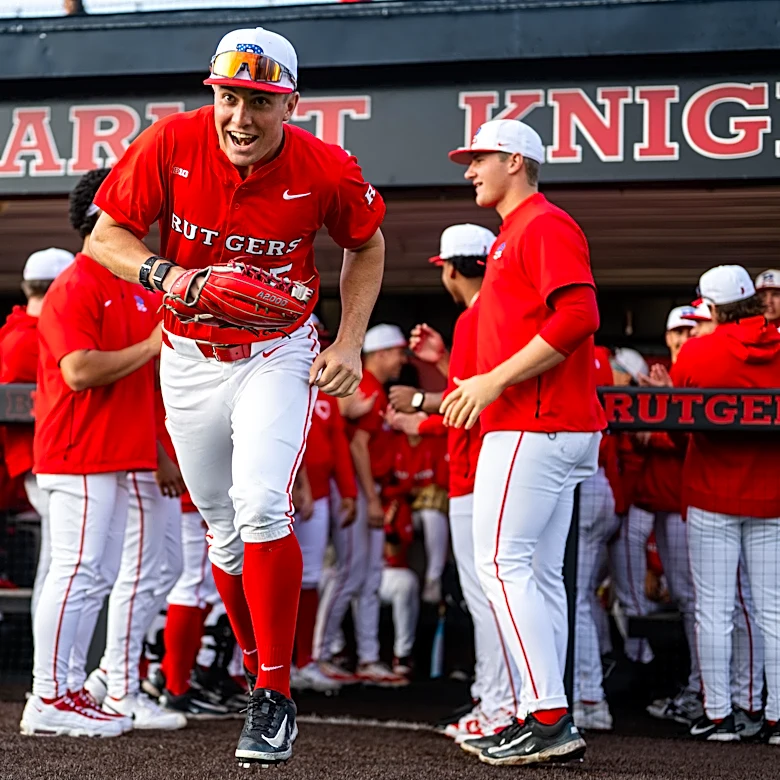
The Syracuse coach talked about what he looked for when building out his staff at Syracuse as well as the roster. He dished on the non-conference scheduling and why it was important to book the likes of St. John’s at Madison Square Garden, Rutgers at Barclays, Providence at TD
Garden and Indiana at Gainbridge Fieldhouse.
McNamara also described his coaching style and what it means to be the head coach at his alma mater. More on that below. Let’s dive right in.
On what it means to coach at McNamara’s alma mater
McNamara described the gratitude he feels to be in the position he’s in, coaching the program he once played for at the school he graduated from and in the community that he says helped raise his kids.
“The way I looked at it, I came in I was a high school kid, 18 — you know, green. Didn’t know a thing. I had the ability but the way I was embraced throughout my playing career here, like I was just so grateful for that,” McNamara said. “Then I think it hit a different, deeper level when I came back to coach and through the process of living here for 15 years I raised a family here. The place that once took care of me as a player embraced me then helped me raise my family in terms of our community.”
On the student experience at Syracuse and why MBB should make the NCAA Tournament
“To really think that the [class of 2026] students that graduated from Syracuse University didn’t see in the NCAA Tournament — and to me it was something that I always took pride in as a player. You could almost walk through campus with your chest up and your head held high because you knew you did right by the people that showed up to support it. So that was somewhat devastating to me to think about that,” McNamara said.
“We worked too hard. Coach Boeheim worked too hard for too long to build this thing to look a certain way. Now there’s a lot that’s changed in this sport,” McNamara said. “But the people that have been here through the great times understand how special it is.”
McNamara continued on with the academic side of things and how basketball should be a part of the student experience
“It’s always going to feel right academically here,” McNamara continued. “We have to be able to match those two things because the most important thing as the university moves forward is that students get the full experience. The full experience needs to be both academically and athletically. It means too much to the people that attend here. It means too much to the people that live here.”
On building the coaching staff
This offseason McNamara quickly assembled a staff of Ben Lee, Arinze Onuaku, Jamal Brunt and Ryan Daly as his assistants while Ryan Blackwell joins as Director of Player Engagement, Peter Corsaniti was retained while moving to the new role of Associate Director of Operations and Greg Fahey joined as General Manager.
What was important to McNamara when bringing his staff to SU?
“You’re talking on 20 years of relationships with certain people,” McNamara said. “Obviously when I got to Siena it was important to me, I started with Ben Lee who I just knew was a young and hungry (kid) who worked with Mike Hopkins at Washington. That’s how he and I met. Ben and I kind of worked hand-in-hand early on trying to piece together a roster, added Ryan Blackwell and Arinze Onuaku, Ryan Beaury.”
On Blackwell and Onuaku:
I gave two guys — Arinze and Ryan — an opportunity in college, they hadn’t been at that level. But I knew how good of a coach Ryan Blackwlel was (for) what he did with Liverpool High School. But more importantly because of how long I knew him, I knew how he’d be in a livingroom with people. He’s such a good person.”
“Arinze, I knew, if we’re going to preach skill development I know this is a young and hungry coach who I played with. I know how much he puts into it. It was pretty evident how clear he was serious about being a coach. He worked in the G-League, he came back and worked at Gonzaaga in (Washington) D.C., one of the premier high school programs. So I thought adding him immediately from a guy I could trust, from the big guy spot, in terms of development.”
On Jamal Brunt:
“In terms of recruiting piece in coming here, it was the same thing,” McNamara said. “I want someone like Jamal Brunt who I had such great respect for where I watched Jamal.
“But I also wanted someone that was my age that’s been through this the same way I have that’s just going to knock it out of the park in terms of just relationships, how he trains guys, the recruiting piece, how well respected he is.”
On Ryan Daly:
“Along the lines of Ben Lee, I thought Ryan Daly was young, up-and-coming hungry (kid) and another guy who I had a long history of a relationship with.”
McNamara said he initially wanted to hire Daly at Siena but didn’t want to hire him away from University at Albany where he was an assistant at that time.
McNamara said he filled his staff with Greg Fagey and Pete Corsaniti, noting that he trained Corsaniti when he first started at Syracuse.
“He’s one of the most organized people I’ve ever been around,” McNamara said.
“Greg Fahey I think is going to be a knock-it-out-the-park GM. He thinks differently than I do just from a business standpoint,” McNamara said. “So when he brings stuff to me and they go over around my head I go ‘Listen man, call Bryan (Blair).’”
The things McNamara valued centered on recruiting, relationships, respect, trust and how hungry these guys are and the vision they have for Syracuse.
On roster construction
McNamara shared that when he first took over at Siena he decided he wouldn’t recruit players already in the portal, implying he took a similar approach when taking over the Syracuse job.
“To me it was important: who loves Syracuse first? Who’s willing to see what the transition would be like? That’s important to me. For that reason, you know what it means. You’ve been here. You know what it means. Do you love it? That was my first thought process,” McNamara said.
McNamara shared a bit of the conversations with players, what they see and what he sees and if they’re aligned there, and with money.
“I watched every game. If I didn’t have a game at Siena, I watched ever single that Syracuse played last year. I love the program. I loved Adrian [Autry]. I love his staff because they’re friends of mine. I was supporting them from the outside because I wanted them to do well.
“That next conversation becomes about the NIL piece. So if that conversation just gets crazy right away I’m just like no. It’s a no. Simple,” McNamara said.
“And it’s kind of easy that way. And a lot of it’s not the kid. The kid is going through (agent) representation. If we’re not even in the ballpark, (a deal can’t get done).”
McNamara said there was no question that Gavin Doty would be coming with him from Siena, and having familiarity with Tasman Goodrick and Francis Folefac can help facilitate communication to the rest of the team to help them understand what McNamara wants.
“The team and product that I put on the court is a representation of the community. Like you have to go out there, that’s first and foremost, they have to be proud of what they’re watching. So for me, what makes me happy? Guys that play hard every second of every possession. There’s no nonsense. It’s maturity. It’s professionalism and you play both ends. I think that’s what we put together with this roster.”
Every guy could be back for year two under McNamara
“Every guy on this roster has multiple years. Even Garwey [Dual] where you have the five-and-five,” McNamara said. “If that comes into effect, he’d have another year. So there’s a lot of players, if you hit right and you coach them the right way and they enjoy playing for you, the retention is key. That’s why we won in year two at Siena.”
“I know for a fact the group I put together, they are going to fight for us,” McNamara said. “That’s a non-negotiable.”
McNamara on his coaching style
McNamara was asked abut his coaching style, to which he described as transparent.
“I tell the guys, respect and maturity,” McNamara said. “Those two things I have to have it. But I also say I’m the easiest guy in the world to play for if you give me those two things. If you’re doing those two things for me, I don’t need to talk at you. Kids don’t like to be talked at. I can talk to you.
“You don’t give me one of those? The decibel is going to go up. That’s different. But if those two things are good, we can coach through that.”
He said his play-style is less about pace and more about efficiency. And the importance of doing things in-game that are worked on in practice, such as rebounding with two hands.
“I think the kids that play for me understand that certain things do make me angry,” McNamara said. “If you don’t play hard you’re going to see a different version of me. As long as we’re clear on that, we’re fine. If you just do that, you look me in eyes when I coach you, now it calms me down. Now I can tell you what I want and we can go from there.”
McNamara went on to add that the experience the kids get under him is important and always a consideration.
“You spend more time with these guys than your own family,” McNamara said, “so the most important thing is the experience that they go through. I got four kids. These kids have to have a good experience under me.”
On the coaching similarities between McNamara and Jim Boeheim
“I’d say our coaching styles are maybe a little different just in terms of communication. I think I communicate probably a little bit differently than coach. But we’re more similar in ways than we are different. I think he and I always got along so well because of the competitive side,” McNamara said. “So I think that’s how we’re the most similar. We’re just naturally competitive and the expectation of how hard you have to play to get the result you want to achieve which is winning. That’s just where we’re most alike.”
Drawing from the well of Boeheim
McNamara says he still goes back to his experiences as a player and coach under Jim Boeheim for lessons (and perhaps inspiration) in his current coaching career. He told the story of the 2013 Big East Tournament and Final Four run.
“We had lost four of five in the Big East going into the Big East Tournament and James Southerland goes bananas in the Big East Tournament,” McNamara said.
In part, that was due to a coaching adjustment made by Boeheim. McNamara did his best impersonation, explaining Boeheim’s coaching to Michael Carter-Williams and Southerland.
“Mike, you’re going to pass to the wing and you’re just going to pindown for James,” McNamara recalled, channeling his Boeheim voice.
“Mike hits the wing, he goes and pins away, James comes off a curl and hits a three,” McNamara recalls. “The next time he does it again he gets another shot. Then we come out of the next timeout and he counters off of it. And it’s like, ‘Now you’re going to pindown, James you’re going to catch it, swing it back to Mike, go down the middle and now you got floppy action.‘”
McNamara said Syracuse found its groove because of that adjustment by Boeheim.
“I’m thinking we’re falling apart going into the Big East Tournament,” McNamara said. “We actually hit our stride in the Big East Tournament and then make a Final Four run. It put in perspective, learning under him of how you truly can impact a team and how you have to always keep them even-keeled — you can’t let them get too high or too low — because you can help them change quickly.
“He was really big on adjustments late in the year. He would change a lot things going into the final stretch so we weren’t predictable, and all of a sudden you’ve got a different wrinkle. I tried to do that a little bit late with Siena this year where I put in one or two different sets for us.”
Non-conference scheduling
McNamara said there’s still areas that Syracuse needs to play in and there are arenas that they need to play in.
“When Syracuse plays in the Garden. Yeah, you know, I know. We’re showing out. Syracuse? We’re going to have our crowd,” McNamara said.
The Orange will return to Madison Square Garden this season for the first time since 2021.
“It’s a different feel. Like you feel like I’m on the biggest stage in the sport with our crowd showing how big our brand truly is. That was the feeling I always got,” McNamara said.
Would UConn be in the mix for future scheduling?
“I’ve talked to Danny [Hurley] this offseason,” McNamara said. It’s something obviously that both fan bases would love. I despised UConn (as a player). And they despised me. I think part of it is — it’s undeniable and i said this about Georgetown rivalry — I have a great appreciation for that program. Part of the appreciation was how good and talented they were. And they were hard to beat. So when you lose to a team you get pissed off and you hate them.”
“I want to play against the best teams and coach against the best coaches. Rick Pitino is elite. Danny Hurley is elite. I want to be among the elite. The way you do that is you continue to challenge your program and put yourself on that stage.”
On getting to coach Kiyan Anthony
McNamara gets a full circle moment at Syracuse where he’ll get to coach the son of Carmelo Anthony, his freshman year teammate on the 2003 National Championship team.
What is that like getting to coach Kiyan Anthony?
“I’d say terrifying where we’re at the stage (of life) where it’s happened so fast where I get a chance to coach Kiy,” McNamara quipped. “But I think really unique, really cool, really kind of full circle that Kiy always wanted and grew up with his father being the face of our program. He led us to what no one was able to do here. For him to follow those steps and come here and be a part of that. I just think it’s awesome. It’s an awesome story.
“And he’s really talented. I think he’s a really talented player. I think he takes a lot of criticism, probably unwarranted from last year. He’s a freshman in college. … There’s a learning curve and a process now and some of these teams are older. Offensively he’s just gifted. He’s got the ability to isolate and be a guy one-on-one. He and I have talked. I think his ability to stretch and shoot (is key). He’s so good with the basketball you’re naturally going to gravitate to it.”
McNamara expanded on Anthony’s game and what he sees the progression for him in his sophomore campaign.
“I think the most important thing for him in a system is spacing,” McNamara said. “So can you be the guy that both plays with the basketball with the opportunity to attack the space and you can be the guy that’s off the ball while someone else is attacking space. So to me, if you’re the guy that’s off the ball while someone else is attacking space? So for me, if you’re the guy that’s off the ball now be an elite shooter too.”
Videos have recently surfaced online of Anthony getting runs at the famed Life Time gym in Manhattan. Anthony is also working out and getting skill development work with NBA trainer Chris Brickley, who also worked extensively with Carmelo. In a post on Instagram, Brickley states that Anthony is up to 195 lbs. He was listed at 185 lbs entering his freshman season at Syracuse.
“I think he’s working on all of it,” McNamara said. “He’s back home now (in New York). He’s working on his body. He’s got the best skill development trainer on the planet with his father and his footwork. I’m happy for him to see the jump that he’s going to make.”
Anthony is currently back in Syracuse for the first summer session, along with most of his 2026-27 Orange teammates.
NCAA Tournament expansion
The NCAA Tournament will move to 76 teams from the 68 format starting in 2027 with the First Four becoming the 12-game Opening Round. That might end up being a benefactor for a struggling Syracuse program looking to punch back toward relevancy.
That said, is McNamara a fan of NCAA Tournament expansion?
“No,” McNamara said. “Don’t touch it.”
Interestingly, McNamara doesn’t like the expansion despite what that might mean for a program that has missed March Madness for the last five seasons, perhaps showing that McNamara is willing to tell people publicly what he really thinks. Or that he’s confident Syracuse can get there whether there are 76 or 68 bids.