


I think conspiracy theories are dumb.
Well, I say that, but I also 100% believe Stevie Wonder can actually see, and there’s no evidence you can provide that will dissuade me from that opinion.

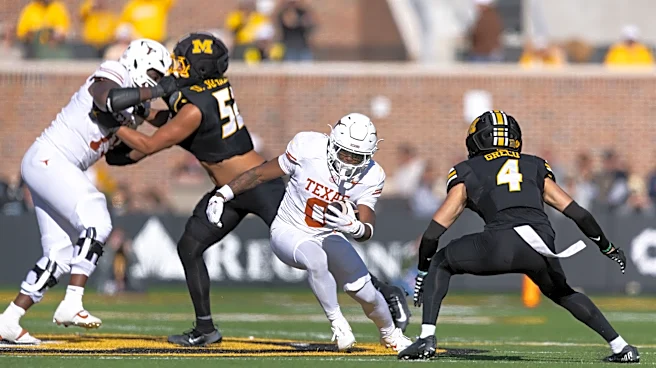
But even the allegedly blind Rock and Roll Hall of Famer could see how incompetent the officiating crew was on Saturday.
Hell, Jesse Palmer – a man employed by the largest, most powerful sports network on the planet, whose employment relies on impartial analysis – made a comment ON AIR about how one-sided the outcomes
of Saturday’s reviews were.
And, look, only losers complain about the officiating. Because they lost the game. And “IF ONLY” blah blah blah their team would have won. I still maintain that stance today, by the way.
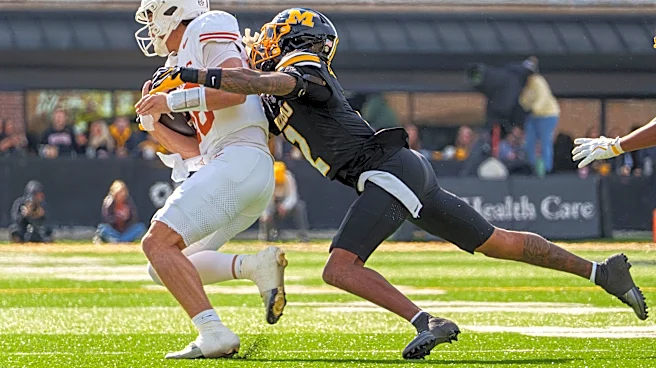
But two things can be true at the same time: Missouri did not play it’s best game and was hanging with the 7th-best team in the country and was constantly kicking itself in the dick in clutch moments WHILE ALSO a befuddling stupid and over-litigious review team insisted on inserting itself at times when it was not needed and landing on the wrong call.
So, no, I don’t think the storied-money class in Austin is greasing the wheels to insure that their team gets every single impactful call to go their way. I also don’t think this crew was any good. And I also believe Missouri’s deficiencies heading into this game are still its deficiencies leaving this game and were the root cause of a two-score loss (that, spiritually, was a one-score loss).
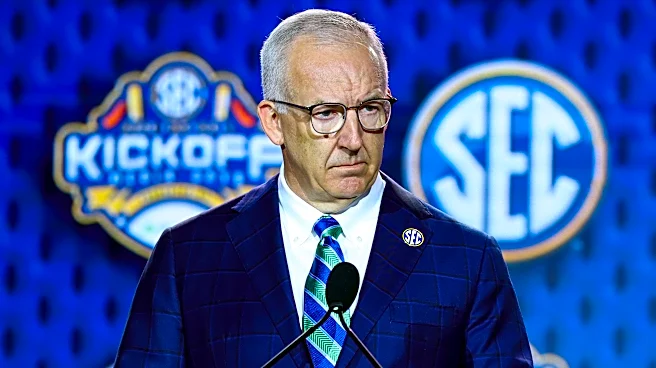
The SEC is the only power conference at this point that doesn’t allow viewers to listen in on their replay assessments. If they truly think that their conference is the best, they should change that. Football is too important and impactful to have important decisions be made in a black box without observation.
I also believe that the head of each officiating crew should be made available for comment after each game. There’s no reason why coaches and players have to talk about why they sucked and an entire aspect of the game gets off scot free.
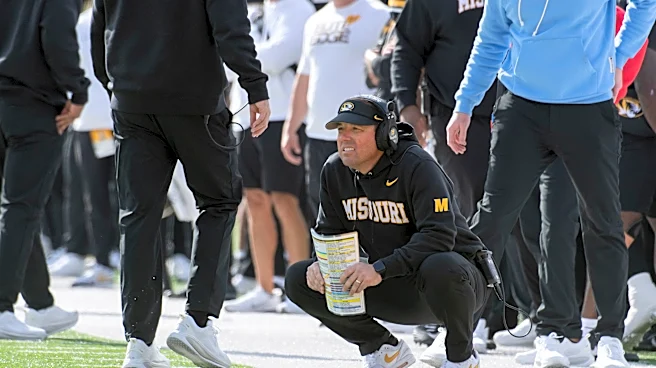
I also think Missouri needs to seriously reassess their offense in scoring opportunities, including the decision matrix on when to kick field goals.
Here’s the advanced box score:

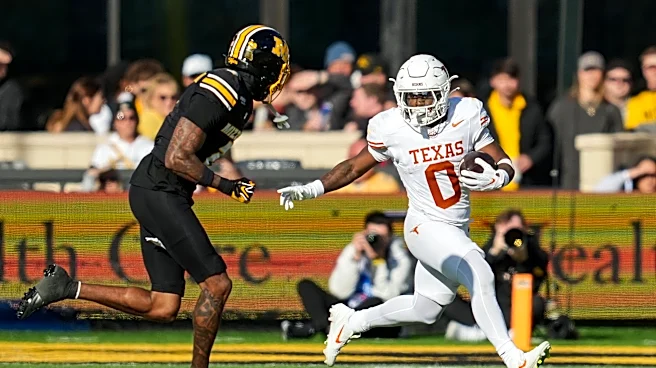
Man, this was a super close, competitive game. Texas’ defense got stronger as the game went on but, for the most part, it was evenly matched for 85% of the game.
The differences here – non officiating category – are threefold. The first, 3rd-down conversions. I made it one of my three goals for Mizzou’s offense and the Tigers missed that goal nearly as bad as Blake Craig misses from inside 30 yards. 3 for 16. THREE SUCCESSFULL THIRD DOWNS IN 16 ATTEMPTS. That’s a great way to lose possession and give the other team multiple opportunities, of which Texas took advantage of, thanks in part to their 6-13 performance on 3rd down.
The second: points per scoring opportunity. While Mizzou was able to steal two extra possessions, both teams created six scoring opportunities. While that might be a negative data point in itself, here’s the real kicker: Texas averaged 5.7 points per scoring opportunity while Missouri averaged 3.3.
Third: Texas’ averaging starting field positions was their 47 yard line. Missouri’s: their 38. That’s a 9-yard advantage Texas had over their 9 possessions, meaning – on average – the Longhorns had a hidden 81 extra yards in their favor.
And that was the difference.
When Missouri Has the Ball

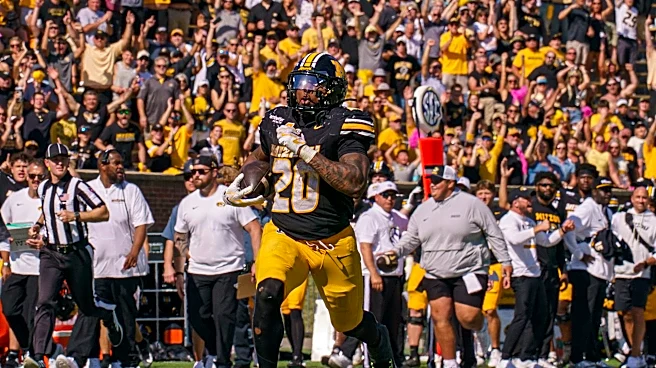
In Missouri’s wins over FBS competition, Jamal Roberts is averaging 162.4 rushing yards per game. In Missouri’s losses, Jamal Roberts is averaging 65.7 rushing yards per game. Essentially, Roberts either breaks a massive explosive play(s) and creates another scoring opportunity and Mizzou wins, or he doesn’t and Mizzou loses.
Mizzou’s offense can move at will outside of the opponent’s 40-yard line when Roberts is a explosive play waiting to happen and Cayden Lee can be schemed open with tons of space for the other receivers to create mismatches for him. But once the field shrinks and the big play is no longer a threat, defenses can jam a stick in the machine and grind this offense to a halt. It’s a real bummer to have that limitation occur every week, and hurts doubly so when your kicker can’t reliably make anything short of 40 yards.
Missing that efficiency-based ground attack of previous years has really hurt Mizzou this year, and whether that’s an Ahmad Hardy-related problem or not, it would be nice to see it fixed over these next three weeks.
Generate Explosives
Goal: 6 explosive plays created
Actual: 5 explosives plays created – three passes, two runs for a combined 146 yards
Winner: Texas
Convert Third Downs
Goal: 40% success rate on 3rd-down
Actual: 18.8% success rate on 3rd-down (3 for 16! Gah!)
Winner: Texas
Finish Your Dang Drives
Goal: 4 points per scoring opportunity
Actual: 3.3 points per scoring opportunity
Winner: Texas
When Texas Has the Ball

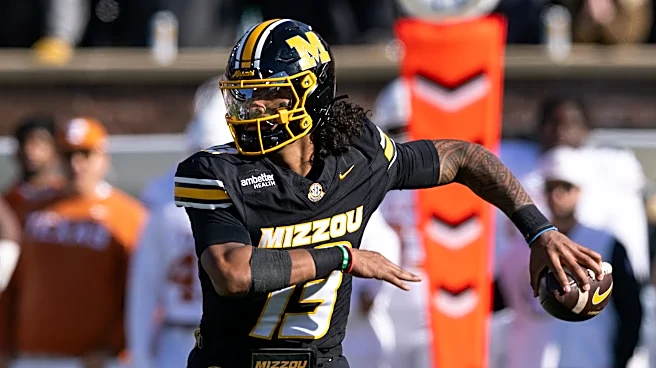
For as much as it felt like Arch Manning was picking apart Missouri’s slap dash secondary, he actually didn’t have that great of a day, finishing with a 34.1% success rate for the game. The issue, of course, is that while the passing efficiency wasn’t there, the passing explosiveness was there, to the tune of six explosive plays for 147 yards. Put another way, that’s 49% of the day’s total passing yards on 15% of the throws.
Missouri did manage a decent amount of havoc and, even despite their weaknesses, held on long enough to give Missouri’s offense a chance to win. But having to fight Texas on shortened fields over time simply wore them out.
Limit Explosives
Goal: 7 explosive plays allowed or fewer
Actual: 9 explosive plays allowed – six passes, three runs for a combined 194 yards
Winner: Texas
Win On 3rd Down
Goal: 39.6% success rate allowed on 3rd-downs
Actual: 46.2% success rate allowed on 3rd-downs
Winner: Texas
The Little Things


As mentioned in the opening, field position and points per scoring opportunity doomed the Tigers’ effort at the upset here. And a +1 in the turnover category wasn’t enough, especially when Mizzou only managed to walk away with 3 points off of those two turnovers.
Extra Points

Missouri was either tied or ahead for 55 minutes of game time. With 5:03 left in the game and Texas having just scored to go up 7, Missouri proceeded to go 3-and-out, fumble, 4-and-out. The two 4th-quarter drives before that sequence ended in two punts. Just an awful offensive performance to close out the game, thanks to Will Muschamp and the Texas defense being elite-tier football terrorists.

Mizzou’s 3-16 performance on 3rd down is reflected well here with a net total of 35 yards gained on their 16 tries, aka 2.2 yards per play when the Tigers average 3rd-down distance was 6.9.

Similarly, when you are tied or down by 7 for the majority of the 4th-quarter and you only muster 30 total yards of offense, you’re probably going to lose. Especially when your opponent posts up 113 yards in that same time span.

We’ve hit a new almost-low in 1st-down generation on the year, with Mizzou positing 13 1st-downs generated on the day against Texas. That would be the absolute low point of the 2026 season if it wasn’t for that insurmountable, terrifying behemoth of a Troy Trojan defense that held Mizzou to 9 1st-downs generated (and currently ranks 82 in defensive SP+).
Conclusion
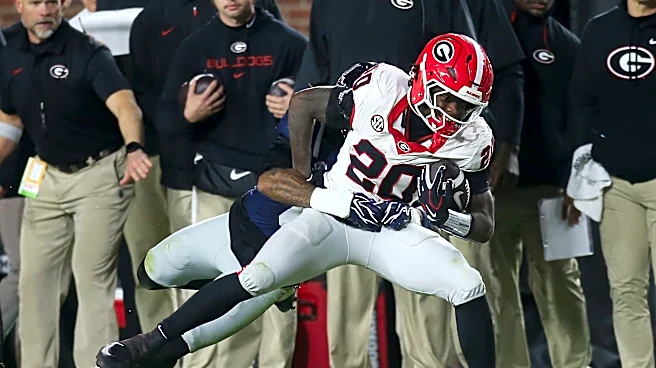
Missouri’s path to the Playoff is done unless they can beat Georgia this week. The Texas game was annoying and disappointing and all sort of other -ing emotions but the good news is that you never have to talk about it ever again if you don’t want to.
Missouri has three games in three weeks and could absolutely flip the season on its head of it wins out.
But, even if they don’t, remember that a majority of this team could absolutely return next year, with a year’s experience under their belt, and be awesome in 2027.
There’s always something to look forward to.